
arizona water softener and filter quote
Arizona Water Softener and Filter Quote Checklist for Homes

Short answer: for an Arizona softener and filter quote, require the water test results, system sizing, flow rating, drain plan, maintenance schedule, warranty terms, and the exact job of every component. If the quote cannot connect each item to your water data, ask for the missing explanation before buying.
That does not mean every home needs the same equipment. The better move is to compare quotes by the water problem, not by the tallest tanks in the garage. Here is a plain-English checklist for reading an Arizona water softener and filter quote before you commit.
Why Arizona Water Treatment Quotes Can Look So Different
Arizona water is not one single water type. A home in Phoenix, Mesa, Tucson, Flagstaff, Yuma, or on a private well can see different hardness, TDS, chlorine, sediment, iron, manganese, sodium, chloride, or pH readings. Even within one metro area, a utility may blend surface water and groundwater differently by season.
That is why two neighbors can get different recommendations without either quote being automatically wrong. One home may need a salt-based softener because hardness is the main issue. Another may need carbon filtration first because city-water taste, odor, chlorine, or chloramine is the complaint. A private-well home may need iron, sulfur, manganese, sediment, or pH testing before anyone can size equipment honestly.
The first red flag is a quote that starts with a package name before it starts with your numbers. A water treatment plan should be tied to at least four basics: hardness, TDS, pH, and the specific contaminant or aesthetic issue you are trying to solve. For city water, your annual Consumer Confidence Report can help. For private wells, a lab test matters more because the homeowner is responsible for testing and upkeep.
Hardness is normally handled as a household performance issue, not a primary drinking-water contaminant. That distinction is easy to misread. “No legal limit” does not mean “no household problem.” Scale can still affect water heaters, fixtures, dishwashers, laundry, glassware, and the feel of water in daily use.
Start With Water Test Results, Not Tank Count
Before comparing quotes, ask each company to show which test result drives each piece of equipment. If the quote includes a softener, what was the hardness in grains per gallon or mg/L as calcium carbonate? If it includes carbon filtration, what taste, odor, chlorine, chloramine, VOC, or general city-water concern is it meant to address? If it includes a sediment filter, what visible sediment or lab result supports it?
For Arizona homeowners on municipal water, start with your utility’s latest water quality report and a point-of-use test at the house. Utility reports are system-level documents, not a guarantee of what leaves your own faucet, but they give useful context about source water, disinfectant, hardness, and regulated contaminants.
For private wells, do not let a free dip-strip test be the only data point. The University of Arizona Cooperative Extension notes that private well owners are responsible for managing and protecting their own wells, and routine water quality testing is recommended because no state or local agency is checking every private well for the owner. That puts the burden on the homeowner to test first and buy equipment second.
A useful quote should answer these questions:
- What exact water problem is this system solving?
- Which test result supports that recommendation?
- Is this issue whole-home, drinking-water-only, or both?
- Does the equipment match the home’s peak flow rate?
- What maintenance will the homeowner actually do?
- Where will the system drain, backwash, or discharge if it needs to?
If the quote cannot connect equipment to those answers, pause. You may still need treatment, but you do not yet have a clean reason for that exact system.
Match the Treatment Type to the Problem
Hardness is usually a softener problem. The main signs are scale on fixtures, soap that does not lather well, spotted dishes, mineral buildup on faucets, and recurring water heater scale. A salt-based softener exchanges hardness minerals so the home sees less scale-forming hardness downstream.
Taste, odor, chlorine, chloramine, and many city-water aesthetic complaints point toward carbon filtration. Carbon is not a softener. It will not make hard water soft. A quote that says carbon will “fix hard water” is mixing up two different jobs.
Sediment is a filtration and source-control problem. If water turns brown after utility work, after a storm, or when a well pump cycles, the right first step is to identify whether the sediment is coming from the source, the plumbing, the water heater, or a failed filter. A sediment prefilter may be appropriate, but it should not be framed as a fix-all.
Iron, sulfur odor, and manganese on well water require their own testing. Orange staining, black staining, rotten-egg odor, or metallic taste may require well-specific treatment that is different from a city-water softener and carbon setup.
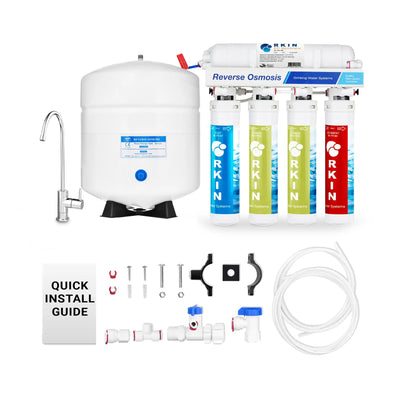
High TDS or salty water is a separate lane. A softener can change the form of hardness, but it does not remove total dissolved solids. Reverse osmosis is the usual technology for drinking-water TDS reduction. Whole-home reverse osmosis can fit certain severe cases, but it is not the first guess for a standard hard-water quote.
This is the quote comparison rule: one problem, one matching technology, one reason it belongs in your home.
Check Flow Rate, Bathroom Count, and Drain Planning
Arizona homes often run into quote confusion because sizing gets reduced to “how many bathrooms?” Bathroom count is useful, but it is not the whole story. Peak flow rate matters. A home with multiple showers, a large tub, irrigation branches, outdoor spigots, or high-flow fixtures can outgrow a small system even if the bathroom count looks normal.
Ask how the quote handles pressure drop. A whole-house system should support the flow the home actually uses. If a filter is too small, you may notice pressure loss when a shower, dishwasher, washing machine, or hose bib runs at the same time.
Drain planning matters too. Salt-based water softeners regenerate and need a legal, practical drain route. Some whole-house filters backwash. If the quote does not discuss drain location, air gap, local code, elevation, distance, and where discharge water goes, it is not finished.
This is where salt-free conditioners can enter the conversation. A salt-free conditioner is not the same as a salt-based softener and should not be sold as one. It does not remove hardness minerals. It conditions hardness behavior to reduce scale adhesion, and it does not use salt or create a brine discharge. For homes where drain-line planning is difficult, that difference can matter.
Still, do not pick salt-based or salt-free by convenience alone. Pick based on the goal. If you want the soft-water feel and measured hardness reduction, look at a softener. If the primary concern is scale control without salt or brine discharge, a conditioner may be worth discussing.
Questions to Ask Before You Say Yes
A strong water treatment quote is easy to explain. The salesperson or technician should be able to walk you through the test, the sizing, the install location, the drain plan, and the maintenance without vague language.
Use these questions before signing:
- What were my hardness, TDS, pH, iron, manganese, and chlorine or chloramine readings?
- Are these results from my faucet, my well, my utility report, or a test strip?
- Which problem does each tank or cartridge solve?
- What is the rated service flow for the system?
- What happens to pressure when multiple fixtures run?
- What maintenance parts need replacement, and on what schedule?
- Does the system need salt, electricity, backwash, or a drain?
- If I am on a private well, what should be retested after installation?
- If I am on city water, how does the plan address taste and odor versus hardness?
- What would you remove from the quote if my goal were only scale control?
The last question is important. An honest water treatment plan should be willing to say what you do not need. Me personally, I would ask what can be removed from the quote and why. A quote that only grows larger every time you ask a question is not helping you make a clean decision.
Where RKIN Fits for Arizona Homeowners
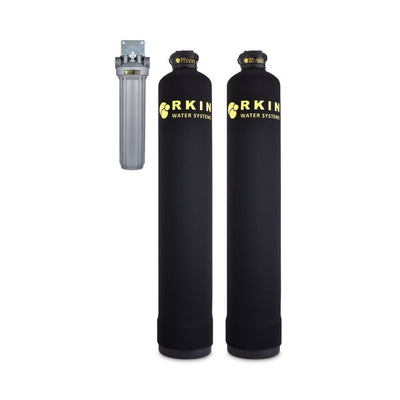
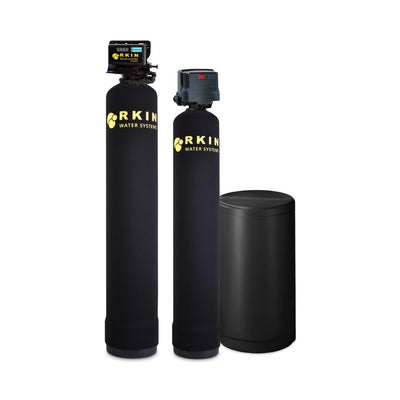
RKIN is a good fit when you want the system matched to the problem rather than a one-size package. For city-water homes with hard water plus taste or odor concerns, the Water Softener and Whole House Carbon Filter System pairs hardness treatment with whole-house carbon filtration. For homes where hardness is the primary issue, the Water Softener System is the simpler lane.
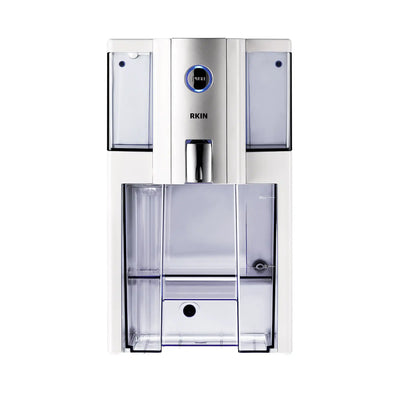
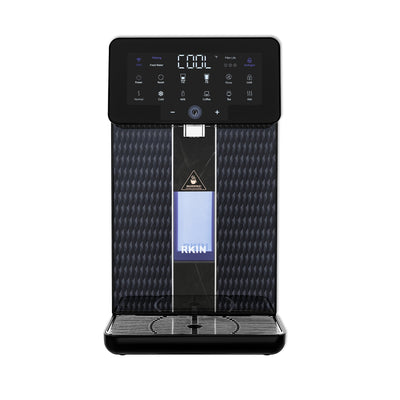
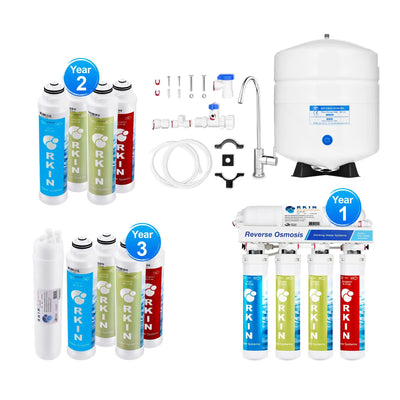
If you are still comparing options, start at RKIN’s Whole House Water Treatment collection and match the product category to your test results. If your water is on a private well, get iron, sulfur, manganese, hardness, pH, TDS, and bacteria-related testing first. If your issue is drinking-water TDS, taste, or specific dissolved contaminants at one faucet, a reverse osmosis system may be the right separate discussion.
The goal is not to buy the most equipment. It is to solve the actual water problem with a system your home can support and maintain.
Frequently Asked Questions
Do Arizona homes need a water softener?
Many Arizona homes have hard or very hard water, but the decision should be based on a test from your home or your utility’s reported range. If hardness is causing scale, spotting, soap problems, or water heater buildup, a water softener may fit. If taste or odor is the main issue, carbon filtration may be a better first step.
What should be included in a water softener quote?
A useful quote should include the water test results, system size, rated flow rate, install location, drain plan, maintenance schedule, warranty terms, and the exact problem each component solves. If the quote lists equipment without tying it to your water data, ask for the missing explanation before moving forward.
Is a whole-house carbon filter the same as a softener?
No. A whole-house carbon filter is used for taste, odor, chlorine, chloramine, and certain chemical concerns depending on the system. A softener is used for hardness minerals that cause scale. Some homes need both, but they do different jobs.
Should I choose a salt-free conditioner instead of a softener?
Choose by the goal. A salt-based softener reduces measured hardness and gives the classic soft-water feel. A salt-free conditioner is mainly for scale control and does not create brine discharge. If drain planning is hard or you want to avoid salt, ask whether a conditioner fits your water results.
Can a high TDS reading be fixed with a water softener?
Not usually. A softener targets hardness minerals; it does not remove total dissolved solids. If high TDS is the concern, reverse osmosis is the normal drinking-water treatment path. Whole-home reverse osmosis can fit select homes, but it should be based on lab results and design needs.
Ready to Compare Your Water Treatment Options?
Bring the quote back to the basics: test result, treatment type, flow rate, drain plan, and maintenance. If those five pieces line up, the decision gets easier.
Start with RKIN’s Whole House Water Treatment systems, or contact RKIN with your latest water test so we can help you match the system to the problem before you buy.




0 comments