


clothes smell after washing
Hard Water Laundry Smell: Why Clean Clothes Still Stink

Clean clothes that still smell musty usually point to one of three things: water hardness, detergent residue, or washer buildup. Hard water does not create odor by itself, but it can make detergent work harder and leave residue behind in towels, workout clothes, and bedding.
That is why changing detergent can feel like a fix for two loads, then the smell comes right back. If the water is part of the problem, the laundry room is only where you notice it first. The same minerals often show up as spots on dishes, white crust around faucets, and scale in hot-water equipment.
Can hard water make laundry smell bad?
Hard water can make laundry smell bad indirectly. The minerals in hard water, mainly calcium and magnesium, can interfere with how detergent rinses out of fabric. When residue stays behind, it gives odor something to cling to.
Penn State Extension’s water softening guide explains that calcium and magnesium are the main minerals behind water hardness, and that hard water can cause scale deposits and soap-scum problems. In the laundry room, that same pattern can show up as dull towels, stiff fabric, and detergent that never seems to rinse clean.
Michigan State University Extension’s hard-water laundry guidance points to the practical issue: hard water changes the way laundry products perform. More detergent is not always the answer. Too much detergent can add more residue, especially in high-efficiency washers that use less water per cycle.
The frustrating part is that a musty load can look clean. The clothes are not stained. The washer finished. The scent beads or detergent smell strong for a day. Then a towel gets damp, a shirt warms up, or a basket sits overnight, and the old smell comes back.
That is the clue. You are not only fighting dirt. You may be fighting a rinse problem.
Why towels and workout clothes show it first
Towels, athletic shirts, socks, and bedding are usually the first fabrics to complain because they hold more moisture and body oils than a plain cotton T-shirt. They also spend more time damp.
Hard water minerals can bind with detergent and soil. If that mix is not rinsed away, it can settle into the fibers. Towels start to feel less absorbent. Workout clothes smell fine out of the dryer, then smell sour once they warm up. Sheets feel a little stiff even when you use the same cycle you always have.
There is also a washer-side piece. Front-load washers and high-efficiency top-loaders use less water by design. That is useful, but it gives you less margin for error. If the load is too large, the detergent dose is too high, or the water is hard, rinse quality can drop fast.
The reason I am asking about fabric type first is because not every laundry smell has the same fix. If only one gym shirt smells, that may be fabric buildup. If every towel in the house smells and the shower head is also crusty, the water deserves a look.
What usually does not fix it for long
The first common move is switching detergent. That can help if your old detergent was wrong for your washer or fabric type. But if hardness is the driver, a new bottle may only change the scent layered over the residue.
The second move is adding more detergent. That often backfires. More soap in hard water can mean more material left behind, not cleaner clothes. If your washer already has residue in the drum, door gasket, dispenser, or drain path, extra detergent can feed the cycle.
The third move is using scent beads or heavy fabric softener. Those can make the load smell better for a short time, but they are not a rinse-quality fix. They can also coat towels, making them feel less absorbent.
The fourth move is blaming the washer before checking the water. Sometimes the washer really is the issue. A dirty gasket, clogged dispenser, blocked drain path, or load left wet overnight can create odor even with good water. But if laundry odor shows up alongside hard-water signs in the rest of the house, do not stop at the detergent aisle.
In my house, I would not replace a washer until I had checked the simple things: water hardness, detergent dose, washer cleaning, and whether other fixtures are showing scale. Simple checks first, parts second.
How to test whether water hardness is involved
Start with the rest of the home. Hardness rarely keeps its complaint to the laundry room.
Look for these clues:
- White crust around faucet aerators or shower heads
- Spots on dishes or glassware after drying
- Soap that feels like it takes longer to rinse off
- Towels that feel stiff even when fully dry
- A water heater that pops, rumbles, or loses hot-water performance over time
- Scale inside a kettle, coffee maker, or humidifier
Then test the water instead of guessing. A basic hardness test strip can give a rough answer. A more complete water test is better if you are on a private well, see staining, or have odor issues beyond laundry. Your city’s annual water quality report may also list hardness or related mineral data, though your home’s plumbing can still affect the water at the tap.
Use the test result to separate two questions:
- Is the water hard enough to explain laundry residue?
- Is there a washer maintenance issue happening at the same time?
Those can both be true. A hard-water home can also have a washer that needs cleaning. Fixing only one side may leave you annoyed two weeks later.
What actually helps with hard-water laundry smell
If the smell is mostly washer buildup, clean the washer first. Run the manufacturer’s cleaning cycle, wipe the door gasket, clean the dispenser, and stop leaving wet loads sitting after the cycle ends. Keep the detergent dose modest, especially in a high-efficiency machine.
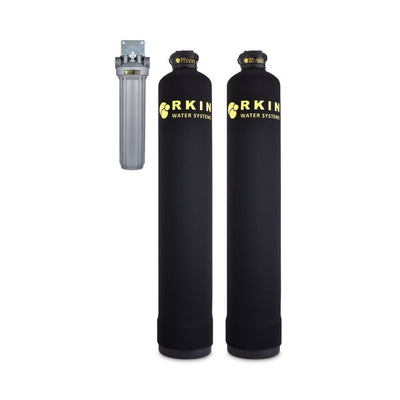
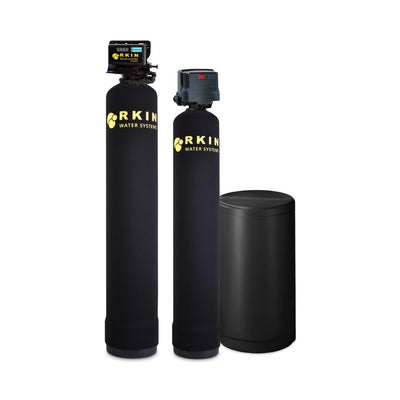
If the smell is tied to hard water, the better long-term fix is treating hardness before the water reaches the washer. That can mean a salt-based softener, a salt-free conditioner, or a broader whole-home system depending on the water test and the problems you are trying to solve.
A salt-based softener removes hardness minerals inside the system before the water reaches the laundry room. That is the traditional route when the goal is truly softened water and better detergent performance.
A salt-free conditioner does not remove calcium and magnesium in the same way. It changes how scale-forming minerals behave so they are less likely to stick to surfaces. That can be a fit when the main goal is scale control without salt handling, but it is not the same laundry feel as salt-softened water.
That distinction matters. If the complaint is stiff towels and poor detergent performance, a salt-based softener may be the stronger match. If the complaint is mostly scale on fixtures and appliances, a salt-free conditioner may fit. No right way or wrong way — just different jobs.
Where RKIN fits
This is what RKIN whole-home water treatment is built to sort out: the difference between a laundry product problem and a water problem.
If your water test points to hardness, start with RKIN’s Whole House Water Treatment options. The RKIN Water Softener System is the salt-based path for homes that want true softening. The RKIN OnliSoft Salt-Free Water Conditioner is the salt-free direction for homes focused on scale control. If you also have chlorine taste, sediment, or broader city-water concerns, the right setup may combine more than one treatment stage.
If it is okay, the first question is simple: what are you trying to fix besides laundry? Towels alone are one clue. Towels plus crusty fixtures, spotted dishes, and water-heater scale point to a whole-home pattern.
Frequently Asked Questions
Why do my clothes smell after washing?
Clothes can smell after washing because detergent residue, body oils, washer buildup, or hard water minerals were not fully rinsed away. Hard water does not usually create odor alone, but it can make detergent less effective and leave residue in fabric.
Can hard water make towels smell musty?
Yes, hard water can contribute to musty towels when mineral and detergent residue stay in the fibers. Towels hold more moisture than many fabrics, so residue problems show up quickly once the towel gets damp again.
Should I use more detergent with hard water?
Not automatically. More detergent can leave more residue, especially in high-efficiency washers. Check your detergent label, load size, washer type, and hardness level before increasing the dose. If the water is very hard, treating the water may work better than adding more product.
Will a water softener fix laundry smell?
A water softener can help if hardness is the reason detergent is not rinsing cleanly. It will not fix every odor source. A dirty washer gasket, overloaded machine, damp loads left overnight, or fabric buildup still need to be addressed.
Is a salt-free conditioner the same as a water softener for laundry?
No. A salt-free conditioner is mainly for scale control. A salt-based softener removes hardness minerals and usually has a stronger effect on soap and detergent behavior. The better choice depends on your water test and what you want the system to solve.
Do I need a whole-house system for laundry odor?
You do not need a whole-house system for one smelly shirt. You should consider whole-home treatment when laundry odor appears with other hard-water signs: crusty fixtures, spotted dishes, stiff towels, poor lather, or scale in hot-water equipment.
Ready to Fix the Water Side of Laundry?
If your clean clothes still smell and the rest of the house shows hard-water signs, stop guessing at detergent. Test the water, clean the washer, then match the fix to the result.
Start with RKIN’s Whole House Water Treatment options, or contact RKIN if you want help reading your water test before choosing a system.





0 comments