


certified lead water filter
Lead Service Line Replacement Filter: What to Know

A lead service line replacement does not automatically end the filtration question. Use the utility's flushing instructions, test water from your tap, and choose a filter only if its label carries the exact lead-reduction claim you need.
The honest answer is yes, a certified filter can be part of the plan for drinking and cooking water, but it is not a substitute for replacing the lead source. Use the filter as a risk-reduction step while you confirm service line material, follow utility instructions, and keep records after the work is done.
Why this topic is showing up now
In October 2024, the EPA announced the final Lead and Copper Rule Improvements, including a requirement for water systems to identify and replace lead pipes over a 10-year timeline. The EPA’s announcement also described stronger testing and communication requirements so communities get clearer information about lead service lines and replacement plans.
That is why more homeowners are seeing utility maps, service line material notices, curbside inspections, and replacement schedules. Some letters say the line is lead. Others say the material is unknown. Either way, the next step is not panic. It is verification.
A service line is the pipe that connects the water main to the home. Depending on local rules and the exact property, part of it may be utility-owned and part may be customer-owned. The material matters because lead can enter drinking water when plumbing materials that contain lead corrode, especially under certain water chemistry conditions.
A filter helps only when it matches the problem
The EPA’s consumer tool for filters certified to reduce lead points homeowners toward point-of-use and pitcher filters that have been certified for lead reduction. The key is the exact certification and product listing, not a generic “better tasting water” claim.
That does not mean any filter with a nice label is enough. Lead claims are specific. Taste-and-odor filtration is not the same as lead reduction. A filter can be certified for chlorine taste and still not be certified for lead. The EPA also maintains a page on home treatment devices used to control lead in drinking water, which is useful when you are comparing labels and claims.
For lead, look for the exact claim and standard, then use the product according to instructions. Capacity, flow rate, cartridge life, and replacement timing matter. A certified filter that is used past its rated life is not the same product from a performance standpoint.
What to do before replacement work starts
Start by finding out what your utility already knows. Many water providers now publish service line inventories or customer lookup tools. Search for your utility name plus “lead service line inventory.” If your home is listed as lead, galvanized requiring replacement, or unknown, save that record.
Then ask the utility these questions:
- What material is recorded for the public side and private side?
- Is replacement planned for my address or block?
- Will the replacement be full or partial?
- What flushing instructions apply before and after work?
- Will certified filters or cartridges be provided during the project?
- What sampling is offered after replacement?
The EPA’s page on planning and conducting lead service line replacement explains that the 2024 LCRI requires systems with lead, galvanized requiring replacement, or unknown service lines to submit replacement plans at the compliance date. Homeowners should still confirm what the local plan means for their exact address.
If you are doing interior plumbing work, fixture replacement, or service line work on the customer-owned side, tell the plumber you are tracking lead risk. Disturbance can matter. Follow official flushing instructions after the work, and do not assume one clear-looking glass proves the system is settled.
What not to do
Do not use hot tap water for drinking or cooking when lead is a concern. Use cold water, then follow the filter, flushing, and testing instructions that apply to your home and utility notice.
Do not boil water to remove lead. Boiling will not reduce lead in water. If anything, reducing water volume can make dissolved substances more concentrated in what remains.
Do not rely on a refrigerator filter unless it has the specific lead claim. A fridge cartridge may improve taste and ice quality while not being the right lead-reduction product.
Do not treat a lead service line letter as a product-shopping problem only. The source still matters. Replacement, certified filtration, cold-water use, flushing instructions, and testing all work together.
Do not confuse NSF/ANSI 372 with lead reduction. That standard relates to lead content in materials. For reducing lead from water, look for the correct reduction claim under the relevant treatment standard.
Point-of-use versus whole-house lead filtration
Many lead guidance pages focus on point-of-use filtration because drinking and cooking water drive the most direct exposure path. A point-of-use system filters water at one tap, usually the kitchen. That can be the right first step while service line status is being confirmed.
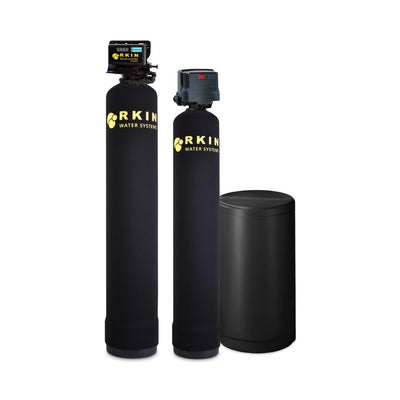
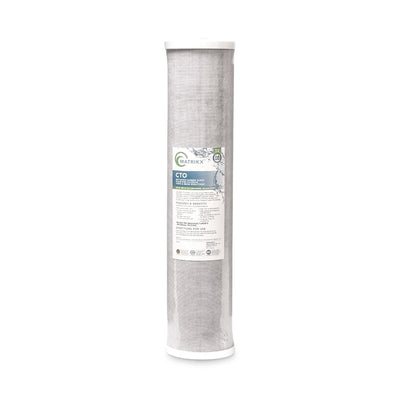
Whole-house filtration is a different decision. It filters water before it reaches fixtures throughout the home. That can matter for some homeowners who want a broader lead-reduction setup, but it needs careful sizing, certification review, installation, and maintenance. Do not assume a large tank or cartridge is certified for lead just because it serves the whole home.
A whole-house lead system must be matched to flow demand. Showers, laundry, toilets, and kitchen use can run at the same time. If the system is undersized, pressure can suffer. If the cartridge is not changed on schedule, performance can suffer. If the incoming water has sediment, the treatment train may need prefiltration.
The filter decision should come after three facts: what material serves your home, what the water test shows, and what claim the filter is certified to make.
Where RKIN fits
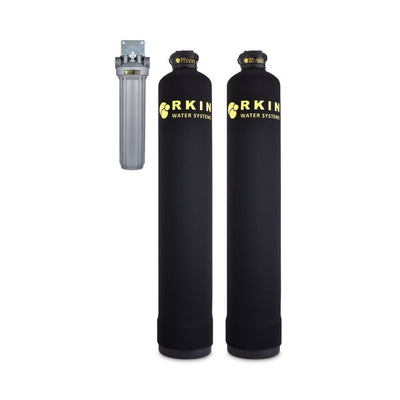
For homes that want whole-home lead-focused treatment, the RKIN OP1L Certified Whole House Lead and Cyst Removal System is the RKIN product category built for lead, cyst, PFOA, and PFOS reduction at the whole-house level. It should be selected based on source water, flow demand, cartridge maintenance, and the exact problem you are solving.
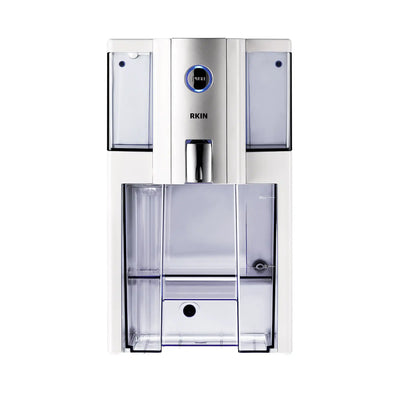
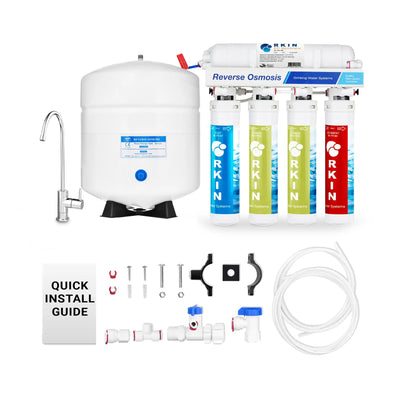
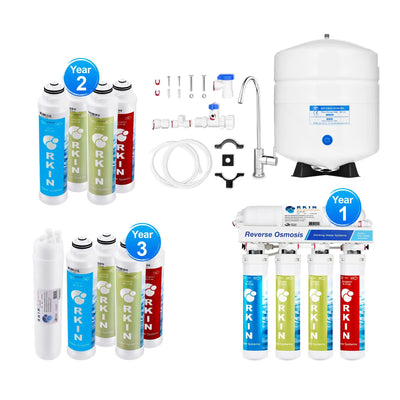
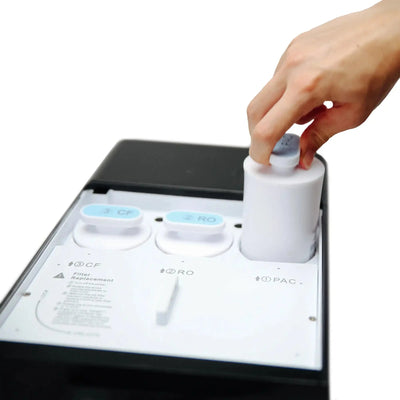
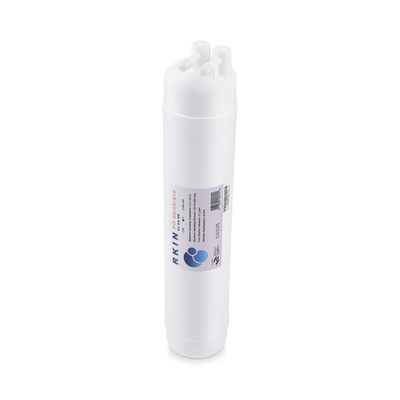
For drinking and cooking water at the kitchen, reverse osmosis can also be part of a lead plan when the system carries the right tested claim and is maintained. The RKIN Zero Installation Purifier Countertop Reverse Osmosis Water Filter is a no-plumbing countertop RO option, while the RKIN Flash Undersink RO System is the installed under-sink RO option.
If you are not sure which category fits, collect the utility notice, any lab results, photos of the service line entry point, and your household flow needs. Then contact RKIN with the actual information instead of guessing from an online chart.
After replacement: do not skip readback
Replacement work is not the end of the process. After a lead service line is replaced or disturbed, follow the utility’s flushing instructions exactly. Ask when to sample, where to sample, and what lab or kit they recommend. Keep copies of results.
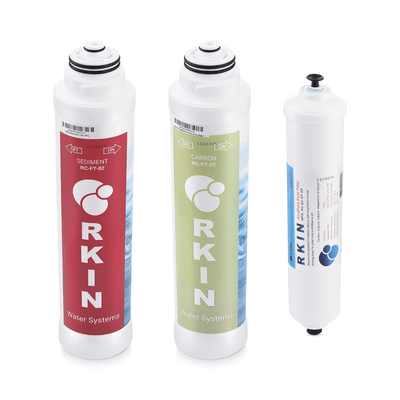
If you use a certified filter during the transition, write the install date and cartridge replacement date where you will see them. Many problems with filters are not product problems. They are maintenance problems.
Also check other possible lead sources inside the home. Older fixtures, solder, brass parts, and some private well components can matter. Removing one source is good, but the final water quality picture comes from the whole plumbing path.
Me personally, I would follow the utility's flushing steps, then test the tap before choosing a filter.
Frequently Asked Questions
Do I need a filter if my service line is unknown?
If your utility lists the material as unknown, treat that as a reason to verify, not as proof either way. Ask about inspection options and testing. If you are concerned about drinking and cooking water during the process, use a filter certified for lead reduction and follow the replacement schedule.
What kind of filter should I use for lead?
Look for a filter certified by an independent testing organization for lead reduction. Use the EPA filter lookup tool and the product’s own performance data to confirm the exact lead-reduction claim. For RO systems, confirm the exact claim rather than assuming every RO unit has the same lead reduction listing.
Does boiling remove lead from tap water?
No. Boiling does not reduce lead in water. Use cold tap water for drinking and cooking, follow utility instructions, and use a properly certified filter if lead is a concern.
Is whole-house lead filtration better than an under-sink filter?
Not automatically. Point-of-use filtration is often the first drinking-water step because it filters the water used for drinking and cooking. Whole-house lead treatment may make sense for some homes, but it must be correctly certified, sized, installed, and maintained.
Should I test water after the lead line is replaced?
Yes, follow the sampling timeline your utility or local health department recommends. Testing gives you readback after the work. Also keep using and maintaining any filter according to its instructions until you have clear guidance from the water provider.
Ready to Make a Lead Plan?
Start with facts: service line material, utility replacement schedule, any lab results, and the exact filter claim you need. Then choose the smallest treatment plan that fits those facts.
Review the RKIN OP1L Certified Whole House Lead and Cyst Removal System for whole-home lead-focused treatment, or compare RKIN drinking-water RO options if your priority is the kitchen tap.





0 comments