


best water for espresso machine
Is Reverse Osmosis Water Good for Espresso?

Reverse osmosis water can be a useful starting point for espresso, but do not feed very low-mineral water to a machine unless its manufacturer allows it. Follow the machine's water ranges, then use a separate blending, remineralization, or coffee-treatment step if needed.
Reverse osmosis is useful because it creates a clean starting point. Espresso is different because taste and scale management depend on what happens after that starting point. Coffee professionals track water chemistry because it changes extraction, flavor, and consistency. For a home espresso setup, the better question is not “RO or no RO?” It is “which water lane goes where?”
Why espresso water is its own problem
Coffee is mostly water, so small water changes can show up fast. Too much hardness can leave scale in boilers, valves, and kettles. Too little mineral content can taste flat in the cup and may not match what your machine maker recommends. Chlorine taste, high dissolved solids, and seasonal city-water shifts can also change what you taste.
That creates a tension. For drinking water, many homeowners want reverse osmosis because it can reduce a broad range of dissolved substances when the system is designed and maintained for that purpose. For espresso, the goal is more narrow: consistent water that tastes good and stays within the equipment maker’s water guidance.
Those goals overlap, but they are not identical.
A single kitchen line can feed a faucet, ice maker, refrigerator, coffee brewer, and espresso machine. The mistake is assuming one finished-water profile is perfect for every one of those uses. A coffee bar may need a separate branch, a blending step, or a remineralization plan.
What people usually try first
The first move is tap water. It is convenient, but it can shift through the year. City-water utilities publish annual Consumer Confidence Reports, and the EPA explains how those reports work. The report is helpful, but it does not tell you exactly what is happening at your espresso machine after your building plumbing, water heater, filters, or local seasonal changes.
The second move is bottled water. Some bottled waters taste good for coffee. Others carry mineral levels that are too high, too low, or inconsistent for your machine. Labels also do not always give coffee-specific guidance, and stocking bottles for daily espresso becomes a chore.
The third move is pure RO water directly to the espresso machine. That can reduce scale compared with hard water, but it may not taste the way you expect. Many espresso machines and coffee professionals recommend some mineral content rather than ultra-low-mineral water.
The fourth move is a generic inline filter. Inline carbon or scale filters can be useful, but they are not the same as reverse osmosis, and they may not solve high dissolved solids, sodium, nitrate, fluoride, PFAS concerns, or other specific drinking-water goals.
The better setup: separate water lanes
A coffee-water lane is a plumbing plan, not just a filter purchase.
Think of the kitchen in three lanes.
First is the source lane. This is your incoming city or well water. You need to know the baseline: hardness, TDS, chlorine or chloramine if city water, iron if well water, pH, and any local issues flagged in the water report or lab test.
Second is the RO lane. Reverse osmosis gives you a low-mineral starting point for drinking water. That can be sent to a dedicated faucet, refrigerator, ice maker, or coffee branch depending on the system and plumbing plan.
Third is the finished coffee lane. This is where espresso gets special treatment. Depending on your machine and taste goals, that may mean remineralizing RO water, blending a controlled amount of filtered source water, or using a coffee-specific cartridge after RO. The exact choice depends on your machine manual and water test, not a one-size rule.
The point is simple: build from clean water, then finish it for the use case.
What to test before plumbing your espresso machine
Before adding tubing under the counter, get a baseline.
For city water, read the current Consumer Confidence Report, then test at the tap if your concern is taste, hardness, TDS, chlorine, lead from older plumbing, or another house-specific issue. For well water, use a lab and include hardness, iron, manganese, pH, total dissolved solids, and anything your local health department recommends.
For espresso, hardness is the headline, but it is not the only number. Alkalinity, pH, and total dissolved solids can influence how the water behaves in the machine and cup. Your machine manual may list target ranges or warn against certain water types. Follow that guidance first.
Also decide how many fixtures need water. A dedicated espresso machine may use very little water compared with a drinking faucet. A coffee bar with espresso, batch brew, kettle, ice, and drinking water may need more capacity and a cleaner under-sink layout.
This is why a separate branch helps. You can keep drinking water simple for the family while tuning coffee water more precisely.
Where reverse osmosis fits
Reverse osmosis is not a coffee recipe by itself. It is a starting point.
The RO membrane reduces many dissolved substances, which is useful when your source water is hard, inconsistent, or has specific drinking-water concerns. From there, you can decide whether the RO water should stay low-mineral for one use, be remineralized for taste, or be blended for espresso.
That sequence is cleaner than trying to fix hard tap water after it already reaches the coffee machine. It also gives you more control than relying on bottled water or a small inline filter without knowing the source-water numbers.
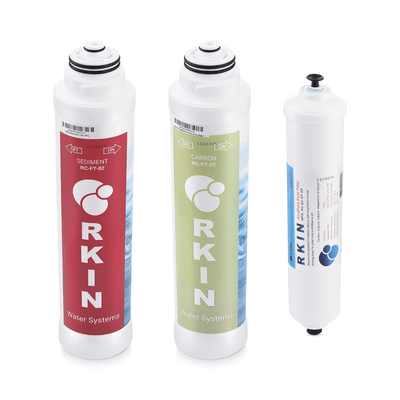
If you are shopping for a system, look for a design that is serviceable, has clear filter replacement requirements, and fits your under-sink space. Also check certifications, testing information, and whether the system can support the flow and storage needs of your kitchen.
For certified product research, the Water Quality Association Gold Seal product finder can help homeowners verify product claims instead of relying only on marketing language.
How RKIN Flash fits into a coffee-water plan
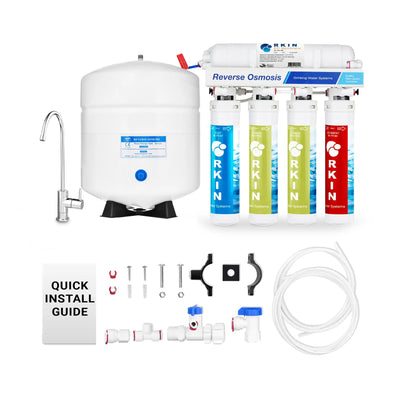
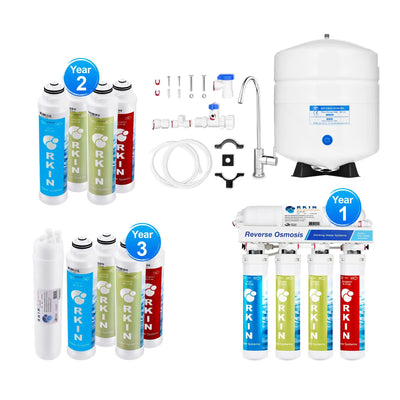
This is what the RKIN Flash Undersink RO System is designed for: homeowners who want under-sink reverse osmosis for a dedicated kitchen drinking-water setup.
For a coffee-focused kitchen, the RKIN Flash Undersink RO System can provide the RO lane. From there, you can plan the finished coffee lane based on your espresso machine’s water guidance. That may mean sending RO water to the included faucet for drinking and using a separate coffee-water finishing step before the espresso machine.
The key is to plan this before installation. Decide whether the espresso machine will be plumbed directly, filled manually from a faucet, or fed through a coffee-specific treatment branch. If you wait until after the system is installed, the tubing path, tee placement, and service access may be harder to clean up.
Mistakes to avoid
Do not assume lower TDS always means better espresso. TDS is useful, but it does not tell the whole coffee story. Very low-mineral water may not extract the way you like.
Do not send hard tap water to an espresso machine just because the taste seems fine. Scale can build over time, and descaling is not the same as starting with a better water plan.
Do not ignore the machine manual. Espresso machines vary. Some have boilers, heat exchangers, cartridges, sensors, or warranty language tied to water quality.
Do not build an under-sink maze. Every tee, valve, cartridge, and tube should be reachable. If you cannot service it without emptying the whole cabinet, the setup is too complicated.
Do not copy a forum recipe without testing your own water. A recipe that works for one city may miss your hardness, alkalinity, or chlorine profile.
A simple espresso water plan
Use this order:
- Read your water report or test your well.
- Test hardness, TDS, pH, and any machine-specific parameters your manual names.
- Decide which fixtures need RO water and which need finished coffee water.
- Install the RO system where filters and valves stay reachable.
- Add any remineralization, blending, or coffee-specific finishing step after RO, not before.
- Taste, measure, and adjust slowly.
- Keep replacement filters and service intervals written down.
That plan gives you cleaner plumbing and more repeatable coffee.
Frequently Asked Questions
Is reverse osmosis water good for espresso?
Reverse osmosis water can be a strong starting point for espresso, especially when source water is hard or inconsistent. Many coffee setups still need minerals added back or blended in, because espresso taste and machine guidance often call for a finished water profile rather than ultra-low-mineral water.
Can I connect an RO system directly to an espresso machine?
Sometimes, but check the espresso machine manual first. Some machines need a certain pressure, flow, hardness, or mineral profile. A direct connection may need a remineralization or coffee-specific treatment step after RO.
What is the best water for an espresso machine?
The best water is stable, tastes good, and fits the machine maker’s guidance for hardness, alkalinity, pH, and dissolved solids. Start with a water test, then use RO, remineralization, blending, or a coffee cartridge as needed.
Does RO water stop espresso machine scale?
RO can reduce the minerals that form scale, but the final result depends on the source water, system performance, and any minerals added back. Scale control is one reason to test and tune the finished coffee lane instead of guessing.
Should coffee water and drinking water be separate?
Often, yes. Drinking water and espresso water can have different goals. A separate branch lets you keep RO drinking water available while adjusting coffee water for flavor and machine guidance.
Ready to build a cleaner coffee-water lane?
If you are plumbing an espresso setup, do not treat the coffee machine as an afterthought. Start with the water report or test, build a clean RO lane, then finish the coffee branch for taste and machine guidance.
Explore the RKIN Flash Undersink RO System if you want under-sink reverse osmosis as the base for a dedicated kitchen water plan.





0 comments