


best water purifier for home
RO vs UF Water Purifier: Which Filter Fits Your Home?

RO vs UF water purifier searches usually start with one question: which filter actually fits my tap water? The short answer is that reverse osmosis and ultrafiltration solve different problems. Choosing by price, size, or a sales label alone can leave the main issue untouched.
Reverse osmosis is stronger for dissolved contaminants and TDS. Ultrafiltration can be useful for particles and microbes when the water chemistry is otherwise acceptable. The better choice depends on what is in your water, how much space you have, and whether you need drinking-water treatment only or house-wide treatment.
RO vs UF: The Plain-English Difference
Reverse osmosis uses pressure to push water through a semi-permeable membrane. Many dissolved substances are separated from the treated water stream. That is why RO is commonly used when homeowners are worried about dissolved solids, PFAS, lead, arsenic, fluoride, nitrate, or taste issues that do not go away with carbon alone.
Ultrafiltration also uses a membrane, but the pores are larger than an RO membrane. UF is good at reducing sediment, turbidity, and many microscopic particles. It does not reduce dissolved salts and minerals the same way RO does, so TDS often stays close to the starting number.
That one difference explains most buying confusion. If your question is, "Why does my water leave spots, taste mineral-heavy, or show high TDS?" UF is usually not the primary answer. If your question is, "How do I reduce fine particles while keeping minerals in the water?" UF may be enough, depending on testing.
Think of RO as a tighter barrier for dissolved issues. Think of UF as a particle-focused membrane. Both can be useful. They are not interchangeable.
What Each Technology Is Good At
RO is a strong fit when the problem is dissolved. The EPA's 2024 water filter fact sheet lists reverse osmosis as a treatment technology that can reduce certain PFAS when products are properly selected and maintained. RO is also commonly used for TDS reduction because dissolved solids are exactly the kind of issue a tighter membrane is meant to address.
UF is a strong fit when the problem is physical. Sediment, cloudiness from suspended particles, and some microbial concerns can point toward a membrane that blocks larger material without removing dissolved minerals. UF systems may also use less water than many RO systems because they do not produce the same reject stream.
Carbon still matters in both setups. Carbon can reduce chlorine taste and odor, and many systems pair carbon with a membrane because homeowners rarely have only one water complaint. A home may have chlorine taste, dissolved minerals, and aging plumbing at the same time.
The EPA's National Primary Drinking Water Regulations show why contaminant identity matters. Different contaminants have different rules, and no single filter label tells you everything about performance.
When RO Is the Better Fit
Choose RO first when your water concern is dissolved contaminants, TDS, or taste that points beyond chlorine. Common clues include mineral taste, white spotting after water dries, high TDS readings, PFAS concern, nitrate concern, fluoride concern, or a desire for a tighter drinking-water barrier.
RO also fits homeowners who want one controlled source for drinking, coffee, tea, cooking water, baby formula preparation, pet bowls, and ice. That does not mean RO is needed at every faucet. Most families only drink and cook with a small share of household water, so point-of-use RO can be a practical starting point.
There are trade-offs. RO systems need filter changes. Some require installation. They can reduce minerals that affect taste, which some people like and others want to balance with a post-filter or remineralization stage. Traditional RO systems also send some water to drain as part of the filtration process.
Those trade-offs are manageable when the problem calls for RO. They become annoying when the real issue was only sediment or chlorine taste. That is why testing should guide the purchase.
When UF May Be Enough
UF may be enough when a test shows that dissolved contaminants are not the concern and the main problem is particles, turbidity, or a need for membrane filtration without lowering TDS. Some homeowners choose UF because they want to keep minerals in the water, avoid a storage tank, or use a lower-pressure setup.
UF can also be a fit in multi-stage systems where another technology handles taste, odor, or specific chemistry. For example, carbon can handle chlorine taste while UF helps with particulates. The pairing can be useful, but it still does not turn UF into RO.
The limitation is important: UF does not reliably solve dissolved-solids complaints. If your water has a high TDS reading, leaves chalky film, or you are choosing a system for PFAS or nitrate reduction, do not assume UF is enough. Ask for performance data tied to the exact contaminant you care about.
Also be careful with vague marketing terms. "Purifier" can mean different things from one brand to the next. Look for the treatment technology, test data, certifications, and replacement schedule, not only the product name.
How to Choose Without Overbuying
Start with the water source. City water and private well water need different thinking. City water users should read the annual water quality report, then add a point-of-use test if they have old plumbing, taste complaints, or specific contaminant concerns. Well owners should test more directly because they are responsible for their own water quality.
Next, match the treatment to the complaint.
- High TDS or mineral taste: Start with reverse osmosis for drinking water.
- Chlorine taste or odor: Carbon may be enough, or it may be one stage in an RO setup.
- Particles or cloudiness: Sediment filtration or UF may be enough after testing.
- PFAS, lead, arsenic, fluoride, or nitrate concern: Look for contaminant-specific test data and RO where appropriate.
- Scale at fixtures and appliances: Consider whole-home treatment, not only a drinking-water unit.
Finally, decide where the filter should live. Countertop systems are easier for renters and homes where plumbing changes are not ideal. Undersink systems keep the counter clear but need installation. Whole-home systems treat water before it reaches the rest of the house.
Where RKIN Fits
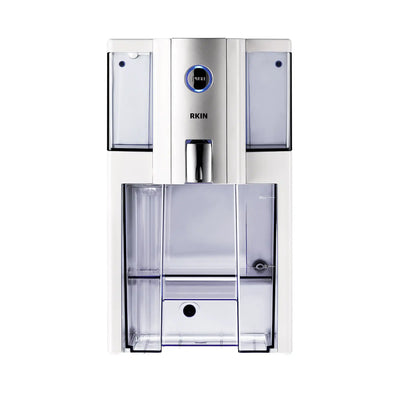
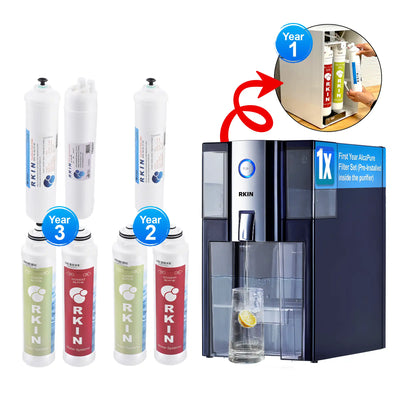
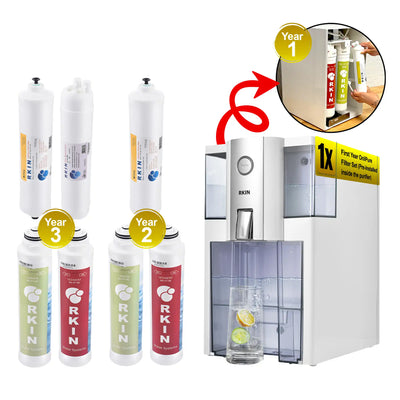
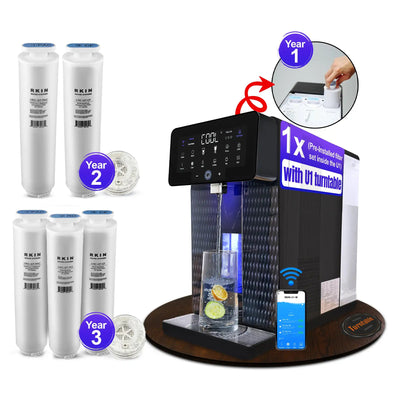
If your comparison points toward RO for drinking water, RKIN has two practical routes. The RKIN Zero Installation Purifier Countertop Reverse Osmosis Water Filter is built for countertop RO without plumbing work. It is a strong fit for apartments, rentals, and kitchens where you want a direct drinking-water upgrade without modifying the sink.
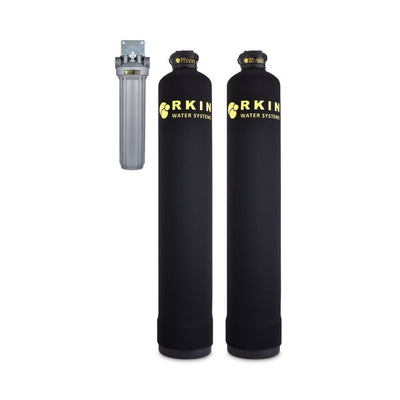
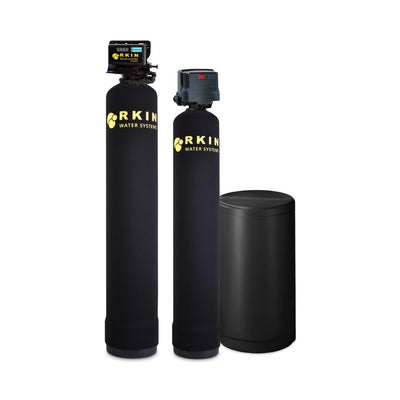
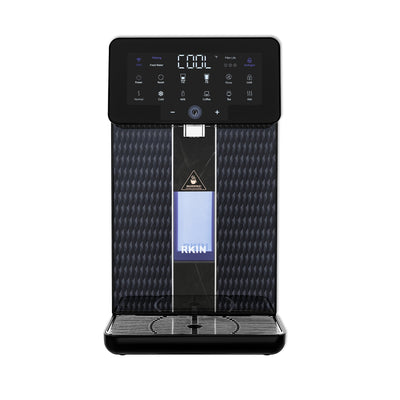
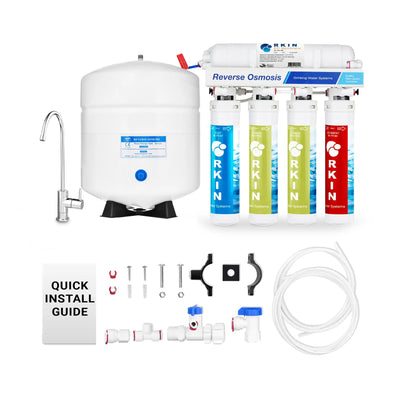
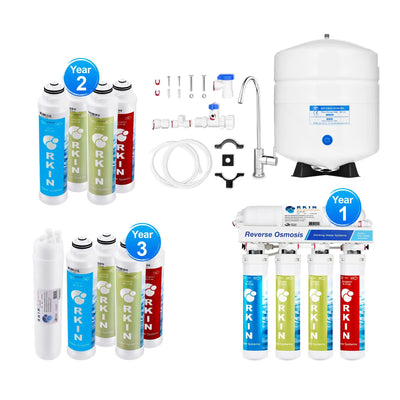
The RKIN Flash Undersink RO System is the better fit when you prefer an undersink RO setup connected to the cold water line. It includes a compact storage tank and keeps the system out of sight. For homes where the issue is bigger than drinking water, RKIN's whole house water treatment collection is the better starting point.
UF can be enough when the concern is particles and the source-water chemistry is otherwise acceptable. If the concern is dissolved substances or high TDS, evaluate RO first.
Maintenance Questions to Ask Before You Buy
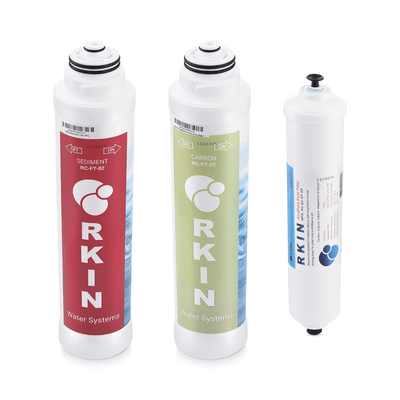
The filter you will maintain is better than the one you abandon. Before choosing RO or UF, ask what the replacement parts are, how often they change, and whether you can do the work yourself.
Also ask how the system handles taste. Some RO systems include a post-filter to polish water after the membrane. Some countertop systems use a fill tank. Some undersink systems use a storage tank. Those details affect daily use more than a spec sheet suggests.
For well water, ask about pretreatment. Sediment, iron, manganese, hardness, and low pressure can affect how a drinking-water system performs. A lab test and a conversation with a water specialist can save you from putting the wrong system in the wrong place.
For city water, ask whether your main concern is a current contaminant, an old-pipe concern, or taste. Those are not the same job. A good system choice starts with a clear problem statement.
Frequently Asked Questions
Is RO better than UF for drinking water?
RO is usually better when the concern is dissolved contaminants, high TDS, mineral taste, or PFAS reduction. UF may be enough when the main concern is particles or turbidity and testing does not show a dissolved-contaminant issue. Better depends on the water problem, not the filter label.
Does UF remove TDS from water?
UF generally does not lower TDS the way reverse osmosis does. TDS measures dissolved solids, and UF is mainly a particle-focused membrane. If your goal is lower TDS or less mineral residue in drinking water, RO is usually the technology to compare first.
Does RO remove PFAS?
Reverse osmosis can reduce certain PFAS when the system is properly selected, used, and maintained. The EPA lists RO among filter technologies used for PFAS reduction. Always look for product-specific test data and keep up with filter replacement schedules.
Is UF water safe without boiling?
Do not use UF as a substitute for water testing or boil-water notices. Whether water needs boiling depends on the contamination event and local instructions. During a boil advisory, follow your utility or public health guidance even if you use a home filter.
Should I choose countertop RO or undersink RO?
Choose countertop RO if you rent, want no plumbing changes, or want a system that can move with you. Choose undersink RO if you want the system hidden and are comfortable with installation. Both can be good choices when RO is the right technology for your water.
Ready to Choose the Right RO System?
RO vs UF gets easier once you name the real problem. If testing or your water report points toward dissolved contaminants, high TDS, or drinking-water taste, start with RO.
Compare the RKIN Zero Installation Purifier Countertop Reverse Osmosis Water Filter for no-plumbing countertop use, or the RKIN Flash Undersink RO System for an installed undersink setup.





0 comments