




sand coming out of faucet
Sand in Tap Water: Why It Shows Up at Every Faucet

Sand in tap water is not a normal texture problem. If grit shows up at one faucet, you may have a clogged aerator. If it shows up at every faucet, the problem is usually entering before the water splits through the house. That is when the fix changes from “clean the screen” to “find the source.”
This issue gets louder in summer because storms, irrigation season, well pump cycling, and municipal main work can all stir up sediment. The EPA’s private well guidance tells homeowners to pay attention to changes in color, taste, odor, or visible particles. Grit is one of those signs. It does not tell you everything about the water, but it does tell you something has moved.
Why Sand Can Come Out of Every Faucet
When homeowners search “sand in tap water,” they usually mean one of three things: real sand, mineral scale flakes, or rust-like sediment. The difference matters because each one points to a different source.
Real sand or fine grit often feels sharp between your fingers. It settles quickly in the bottom of a glass. In a well-water home, that can point to a pump intake set too low, a damaged well screen, heavy drawdown during dry weather, or sediment being pulled from the aquifer after a storm. The EPA notes that private well owners are responsible for testing and maintaining their own systems because private wells are not covered by the same public water utility rules.
Mineral scale looks more like white or tan flakes. It may appear after hot water use, near fixtures, or after a water heater has been disturbed. In hard-water homes, minerals can build up inside heaters, valves, and fixtures, then break loose as flakes. That is still a water-treatment clue, but it is not the same as sand entering from the well or street.
Dark brown, red, or black particles can come from pipe corrosion, old galvanized plumbing, or sediment dislodged during public water main work. If the particles arrive suddenly after hydrant flushing, a main break, or nearby construction, call your utility and ask whether work occurred on your line. If the home is on a private well, the same timing question applies to heavy rain, pump repairs, or pressure tank changes.
The fastest first test is simple: fill a clear glass from the cold side at three locations - a kitchen faucet, a bathroom faucet, and an outdoor hose bib if it is before any point-of-use filter. Let each glass sit for 15 minutes. If grit settles in all three, the issue is upstream of individual faucets.
What To Check Before You Buy Anything
Start with the lowest-cost checks. Unscrew the faucet aerators and rinse them in a bowl, not down the drain, so you can see what came out. If one aerator is full but the others are clean, you may have a local fixture issue. If every aerator keeps collecting grit, keep moving upstream.
Next, compare cold water and hot water. If cold water is mostly clear but hot water carries flakes, the water heater may be shedding mineral scale or sediment. A plumber can flush the heater and inspect the anode rod, valve, and piping. Do not assume a drinking-water filter should solve a heater problem.
If both hot and cold water show sediment, look for a filter housing, spin-down filter, cartridge filter, or softener already installed near the main line. A neglected prefilter can dump trapped debris when pressure changes. A bypassed filter can leave the house unprotected without anyone realizing it. Check whether valves are fully open, whether cartridges are loaded correctly, and whether the housing is cracked or clogged.
For public water, read your latest Consumer Confidence Report and call the utility if the grit appeared suddenly. The report will not diagnose one house, but it gives you baseline treatment information and utility contact points.
For private wells, testing matters. The EPA recommends routine well testing and testing again after flooding, repair work, or noticeable changes. A basic lab panel can help separate nuisance sediment from bacteria, nitrate, metals, or other issues that need a different response. Visible grit is a symptom, not a full water report.
What Usually Does Not Fix Whole-House Sediment
A pitcher filter is not a whole-house sediment plan. It may improve one drinking-water container, but it does not protect shower valves, washing machines, ice makers, water heaters, or appliance inlet screens. The grit still travels through the plumbing first.
Boiling water does not remove sand. It may be part of a public boil-water notice instruction, but it does not make particles disappear. If anything, boiling can leave minerals behind as water evaporates.
A refrigerator filter is also too late in the path. It can help the water from that dispenser, but it cannot stop grit before it reaches the fridge inlet valve. If sediment clogs that valve, the fridge can become the first appliance to complain.
A water softener is not a sediment filter either. Traditional softeners are built around ion exchange for hardness minerals, not sand capture. Running dirty water into a softener can damage valves and shorten service life. If sediment is the first problem, sediment control should happen before softening or conditioning.
The order matters: identify the source, remove larger particles at the entry point, then choose the right polishing step for drinking water or scale control.
The Better Approach: Sediment First, Then Specific Filtration
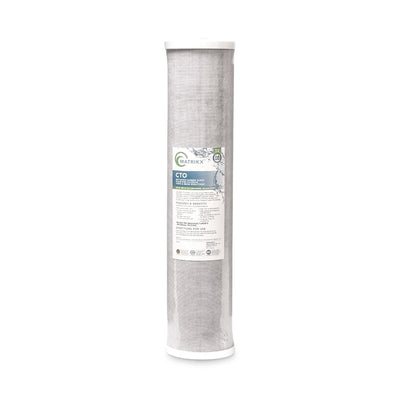
For grit at every faucet, think in layers. A whole-house sediment stage goes near the point where water enters the home. Its job is to catch particles before they spread through fixtures and appliances. The right micron rating depends on what is in the water, flow demand, and whether the home is on city water or a private well.
A spin-down sediment filter can be useful when particles are visible and recurring. It lets the homeowner flush collected material instead of replacing a cartridge every time the water stirs up. Cartridge sediment filters can provide finer capture, but they need the right size and replacement schedule. Too fine too early can create pressure drop. Too coarse can let the problem pass.
If the grit is coming from a private well, the filter is only one piece. A well professional may need to inspect the pump depth, pressure tank, casing, screen, and well cap. If the source is a public main event, the utility may flush the line or advise customers to run cold water after work is complete.
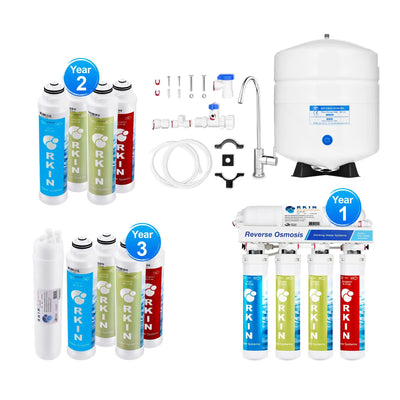
After sediment is controlled, you can decide whether the home also needs carbon filtration for taste and odor, scale control for hard-water minerals, or reverse osmosis for drinking-water reduction of dissolved contaminants. Do not start with the most advanced system before you know the first problem. Start where the water enters and where the evidence points.
Where RKIN Fits
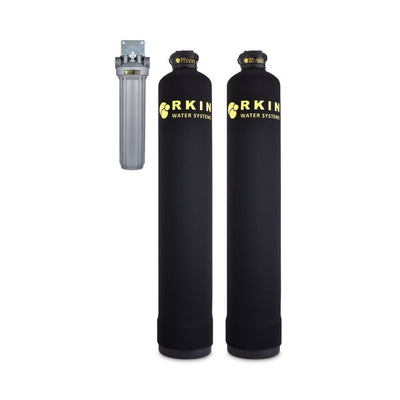
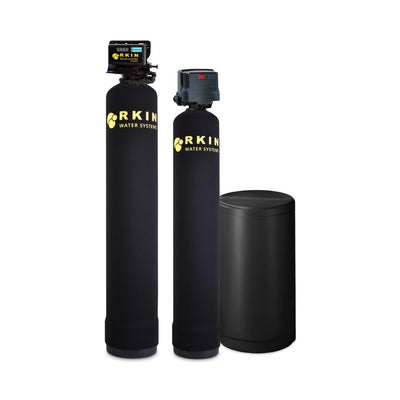
If sand is showing up across the whole house, look at entry-point protection first. RKIN’s whole house water treatment collection is built around that idea: filter water before it reaches fixtures, appliances, and point-of-use filters.
For visible sediment, the Self-Rinsing Spin Down 90 Micron Sediment Filter can be part of a sediment-first plan. For city-water homes that need carbon filtration after the larger particles are handled, the RKIN CBS Dual Carbon Whole House Water Filter is a whole-home option for taste, odor, and chlorine-related concerns.
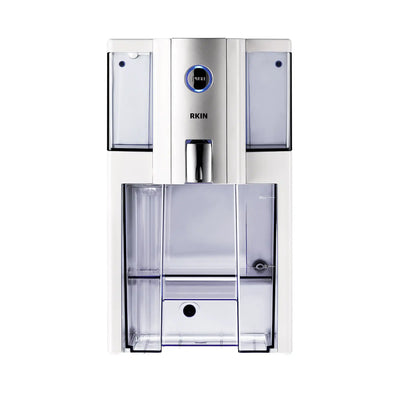
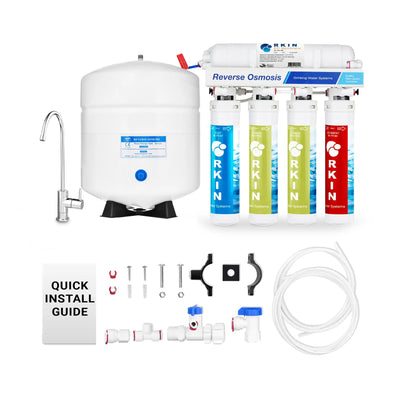
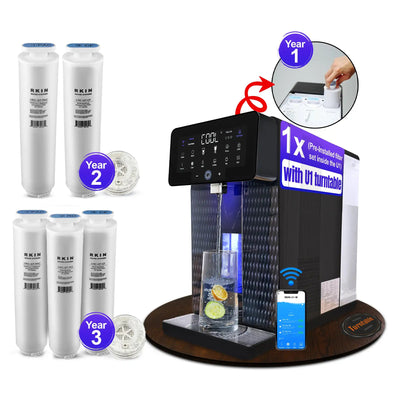
For drinking water at the sink, reverse osmosis is a separate layer. The RKIN Zero Installation Purifier Countertop Reverse Osmosis Water Filter is designed for homeowners and renters who want RO drinking water without plumbing work. It should not be used as the only answer to whole-house grit, but it can make sense after the entry-point issue is handled.
Frequently Asked Questions
Why is there sand in my tap water?
Sand in tap water can come from a private well screen, well pump disturbance, public water main work, old pipes, water heater sediment, or a clogged fixture aerator. If it appears at only one faucet, check that faucet first. If it appears at every faucet, check the main water line, existing filters, and water source.
Is sand in tap water dangerous?
Visible grit is a signal to investigate. It may be nuisance sediment, mineral scale, or pipe debris. It does not prove the water is unsafe, and it does not prove the water is fine. If the water changed suddenly, especially on a private well, test it and follow local guidance.
Will a water softener remove sand from water?
No. A traditional water softener is not designed as a sand filter. Sediment should be removed before water enters a softener or conditioner. If sand reaches valves and resin or media tanks, it can cause service problems.
What kind of filter removes sand from a whole house?
A whole-house sediment filter is the usual first step. Depending on particle size and water flow, that may be a spin-down filter, cartridge sediment filter, or a staged setup. The right choice depends on whether the particles are coarse grit, fine silt, mineral flakes, or rust.
Should I call a plumber or a well company first?
If you are on city water and the issue appeared suddenly, call the utility first, then a plumber if your neighbors are not affected. If you are on a private well and grit appears at several fixtures, call a well professional or water-treatment specialist who can inspect both the water source and the equipment.
Ready to Stop Guessing?
Sand in tap water is a source problem before it is a filter-shopping problem. Confirm whether it is one fixture, the hot water side, the public line, or the private well. Then choose the smallest system that solves the real issue.
Start with RKIN’s whole house water treatment options, or contact RKIN with your water source, symptoms, and any recent test results so we can point you toward the right next step.





0 comments