




salt-free water conditioner
Softened Water Tastes Salty? What to Check at Home

A glass of softened water should not taste like seawater. If it does, something is worth checking: the softener setting, the bypass valve, the drain cycle, the water heater, or the drinking-water path after the softener.
This question shows up more in late summer because people drink more cold water, make more ice, and notice taste changes faster. The first move is not to guess. The first move is to separate three different issues: actual sodium or potassium added by a softener, salty source water, and a taste problem that is coming from somewhere else in the plumbing.
Why Softened Water Can Taste Salty
A traditional salt-based softener does not “add salt” to water the way a cook salts pasta water. It uses an ion exchange process. Hardness minerals such as calcium and magnesium are exchanged for sodium or potassium ions as water passes through the resin bed. Penn State Extension’s water softening guide explains that softeners are designed to address hardness, not every water-quality issue in the home.
That distinction matters. Soft water can feel different on skin and dishes because the hardness minerals have changed. It can also taste different if your source water is already high in dissolved solids, if the softener is over-regenerating, if the brine rinse is not working correctly, or if the water you are drinking is being pulled right after a regeneration cycle.
Taste alone does not tell you the full water story. The exact change depends on the original hardness, the softening method, the softener settings, and whether your kitchen line is actually receiving softened water. In plain English: two homes can both have softeners and get very different taste results.
If the water suddenly tastes salty after years of normal use, treat that as a troubleshooting signal. Something changed.
Common Causes of a Salty Taste After a Softener
Start with the simplest causes before replacing equipment. A salty taste can come from setup, maintenance, source water, or the wrong water path.
- Incorrect hardness setting: If the softener is programmed for water that is harder than what you actually have, it may regenerate more than needed.
- Brine rinse problem: A stuck valve, clogged injector, drain restriction, or short rinse can leave brine where it does not belong.
- Water used too soon after regeneration: If someone drinks water while the unit is finishing a cycle, taste can be different.
- High source-water TDS: A softener changes hardness minerals, but it does not remove all dissolved solids. Salty source water can still taste salty after softening.
- Softened cold line to the kitchen: Some homes send softened water to every fixture, including the drinking-water tap and refrigerator.
- Water heater or hot-side issue: If only hot water tastes odd, the softener may not be the main source.
The fix depends on which cause is real. Guessing usually creates a second problem.
What Does Not Work
The most common mistake is turning the softener off without checking the water first. That can bring hardness scale back into the home while leaving the salty taste unanswered if the source water, water heater, or refrigerator line is the real issue.
The second mistake is assuming bottled water solves the decision. Bottled water may avoid the tap for drinking, but it does not tell you whether the softener is working correctly, whether the water report changed, or whether the same water is still feeding the ice maker, coffee maker, and cooking pot.
The third mistake is using a basic pitcher filter as the whole plan. A pitcher can help with taste in a narrow use case, but it is not a whole-house hardness solution and it is not the same as reverse osmosis. The treatment method has to match the problem you are trying to solve.
In my house, I would not replace the system because of one salty glass. I would test the water path first, then decide whether the issue is hardness treatment, drinking-water treatment, or source-water testing.
The Five Checks to Run First
Use this order before you buy anything.
- Compare softened and unsoftened water: Use a bypass, outdoor spigot, or known hard-water tap if your plumbing has one. Taste is subjective, so compare samples side by side.
- Check timing: Note whether the taste appears right after regeneration, all day, only in the morning, or only after hot water use.
- Look at the softener settings: Confirm hardness level, salt dose, regeneration time, and whether the unit is using sodium chloride or potassium chloride.
- Inspect the brine tank: Look for salt bridging, standing water that seems unusual for your model, or obvious clogging around the brine line.
- Pull the report or test: For city water, read the current Consumer Confidence Report. For well water, test the source water before blaming the equipment.
The EPA explains Consumer Confidence Reports as annual water quality summaries for community water systems. If you are on a private well, the EPA private wells guidance puts testing and maintenance on the homeowner. Those two paths are different, but the rule is the same: get facts before equipment changes.
If the taste appears only at the refrigerator, check the fridge line and cartridge. If it appears only at the sink, check whether the kitchen cold line is softened. If it appears everywhere, source water and softener function both deserve attention.
When a Salt-Free Conditioner Makes More Sense
A salt-free conditioner is not the same thing as a salt-based softener. It does not exchange hardness minerals for sodium or potassium. Instead, it is used to help with scale behavior so minerals are less likely to stick to surfaces. That difference is exactly why it belongs in the conversation when homeowners dislike the taste, brine tank, salt handling, or discharge side of a traditional softener.
The honest limitation: a salt-free conditioner is not reverse osmosis, and it does not turn problem drinking water into finished drinking water by itself. It is a whole-house scale lane. If the main problem is salty-tasting drinking water, dissolved solids, or a named contaminant on a report, you may still want a drinking-water system at the sink or counter.
A no-salt whole-house path can make sense when your complaint is hardness scale, salt maintenance, and whole-home water feel. It makes less sense if the only issue is one glass from one faucet. That is why testing and fixture-by-fixture checks matter.
How RKIN Fits This Decision
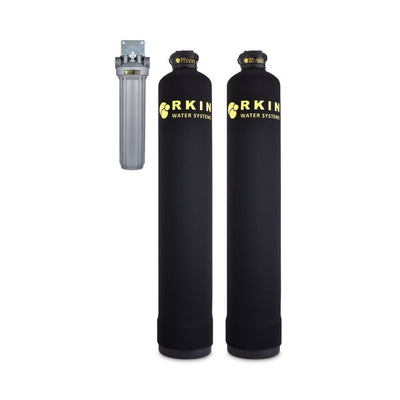
For homeowners who want whole-house scale control without a brine tank, the RKIN OnliSoft Salt-Free Water Conditioner System is the no-salt lane. It is built for homes focused on hardness scale symptoms without the salt handling and regeneration routine of a traditional softener.
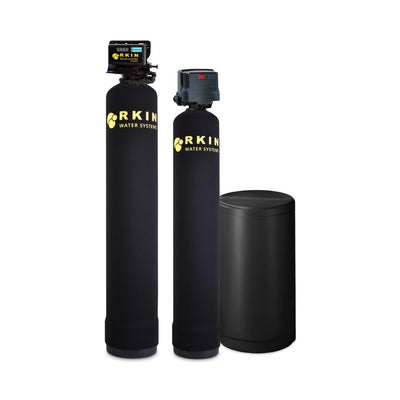
If you want salt-free conditioning plus broader whole-house carbon filtration, the RKIN OnliSoft Pro Salt-Free Water Conditioner and Whole House Carbon Filter System is the larger whole-home path. It is the better fit when scale is not the only concern and taste or odor shows up at multiple fixtures.
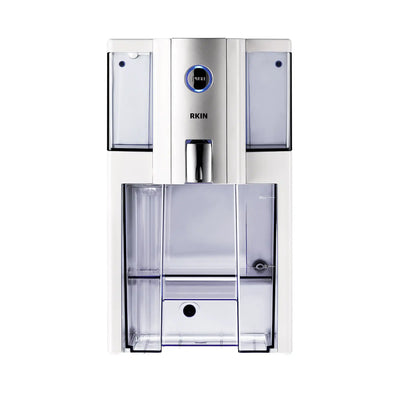
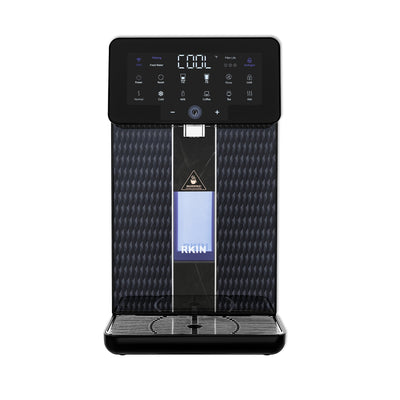
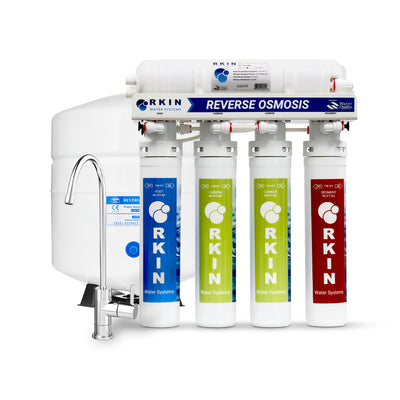
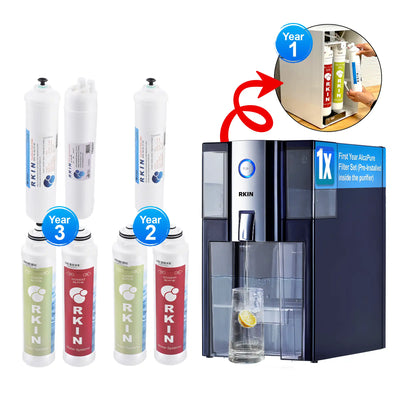
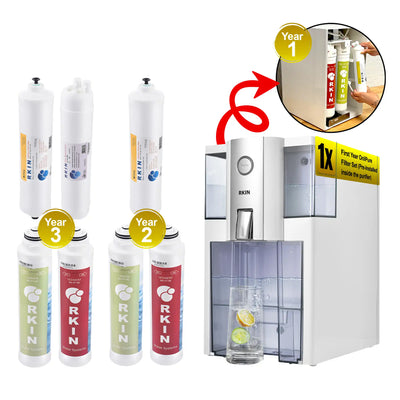
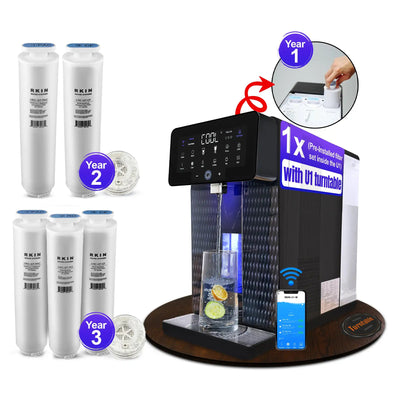
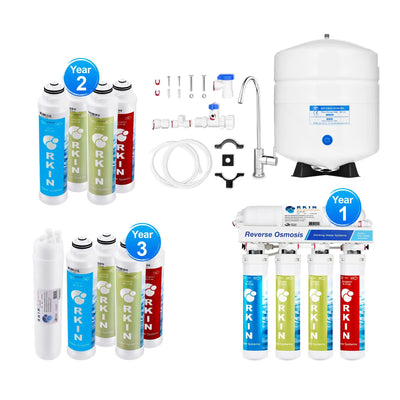
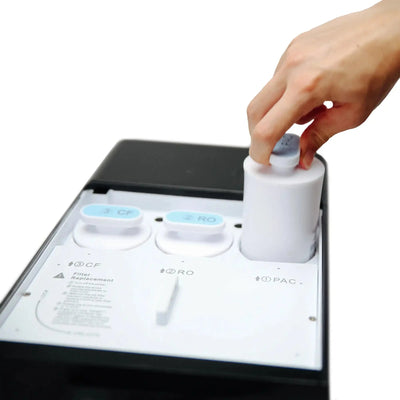
If the problem is drinking water specifically, look at point-of-use reverse osmosis instead. The RKIN Zero Installation Purifier Countertop Reverse Osmosis Water Filter is the no-plumbing countertop path, while the RKIN Flash Undersink RO System is the under-sink path for homeowners who want a dedicated faucet.
How to Choose the Right Fix
Use the symptom location to choose the next move.
- Only softened drinking water tastes salty: Check kitchen line routing, softener settings, and regeneration timing first. Then consider RO for drinking water.
- Every cold tap tastes salty: Test source water and inspect the softener. Do not assume the taste is only from the brine tank.
- Only hot water tastes off: Check the water heater and hot-side plumbing before changing whole-house equipment.
- Scale is the main complaint: Compare salt-based softening with a salt-free conditioning path.
- Well water is involved: Test for hardness, TDS, iron, manganese, chloride, sulfate, and other local concerns before choosing equipment.
The best answer is usually smaller than the panic answer. Fix the specific water path that is causing the problem.
Frequently Asked Questions
Why does my softened water taste salty?
Softened water can taste salty if the source water has high dissolved solids, the softener is set too high, the brine rinse is not working correctly, or the drinking-water tap is using softened water right after a regeneration cycle. Compare samples and check settings before replacing equipment.
Is soft water supposed to taste salty?
It should not taste strongly salty in normal use. It may taste different from hard water because the mineral profile has changed, but a strong salty taste deserves troubleshooting. Check regeneration timing, brine rinse, bypass position, and source-water test results.
Will a salt-free conditioner make water taste less salty?
Not automatically. A salt-free conditioner is mainly a whole-house scale-control path. It does not remove dissolved solids like reverse osmosis. If the salty taste is a drinking-water issue, test the water and consider point-of-use RO for the kitchen.
Should I drink softened water or use RO water?
That depends on your water test, plumbing path, and taste preference. Many homeowners use whole-house softening or conditioning for scale and point-of-use RO for drinking and cooking water. The two jobs are different, so match the system to the use.
Can a water softener cause salty ice?
Yes, if the refrigerator line receives softened water or if a softener issue affects the cold-water line feeding the fridge. Melt fresh ice in a clean glass and compare it with the kitchen faucet, RO faucet, and an unsoftened source if available.
Ready to Fix the Water Path?
If softened water tastes salty, do not start with a bigger system. Start with the line, the timing, the settings, and the report. Once you know whether the issue is scale control or drinking-water taste, the fix gets much clearer.
Choose the RKIN OnliSoft Salt-Free Water Conditioner System for no-salt scale control, or start with the RKIN Zero Installation Purifier Countertop Reverse Osmosis Water Filter if the main concern is drinking and cooking water without plumbing work.




0 comments