




hard water tankless heater
Tankless Water Heater Scale: Hard Water Warning Signs

Repeated flushing, chalky residue, lower hot-water flow, and recurring error codes can point to mineral buildup in a tankless water heater. Test the water hardness and follow the heater maker's flushing instructions before blaming the unit.
Hard water is water with higher levels of minerals such as calcium and magnesium. Penn State Extension notes that hard water can leave scale in plumbing and appliances, and Utah State University Extension explains that hardness is commonly measured as calcium carbonate. Those details matter because a tankless heater creates heat in a compact exchanger. If mineral scale builds there, the system can lose flow, heat unevenly, or ask for service sooner than expected.
If you live in a hard-water area and your tankless unit needs repeated flushing, the better question is not, "Which heater should I buy next?" It is, "What is happening before water reaches the heater?"
The Problem: Tankless Heaters Expose Hard Water Fast
A tank-style heater stores hot water in a large tank. A tankless heater heats water as it moves through a smaller path. ENERGY STAR's tankless water heater guidance focuses on whole-home demand units because flow and hot-water output are central to how these systems are chosen. That design is efficient and space-saving, but it also means the heater depends on steady flow through the heat exchanger.
Hard water minerals are usually invisible in a cold glass. They become easier to notice when water is heated or evaporates. That is why the same home may show white spots on shower glass, crust near fixtures, cloudy residue on dishes, and repeated hot-water equipment complaints.
A few signs point toward hard water scale rather than a random heater defect:
- Hot water starts strong, then drops in flow. Scale can narrow water passages and reduce the heater's ability to move water at the expected rate.
- The heater needs descaling more often than expected. Routine maintenance is normal. Repeated early service is a clue.
- Error codes show up during high hot-water demand. The heater may be struggling when the shower, laundry, and dishwasher pull at the same time.
- Fixtures show chalky residue. The white film on faucets is not proof by itself, but it lines up with the heater symptoms.
- New parts do not stay new for long. If valves, cartridges, or heater components keep fighting buildup, source water deserves a closer look.
The key is pattern recognition. One service call may be normal. A pattern across the heater, faucets, shower glass, and appliances usually means the water needs to be tested. This is especially true in summer, when showers, laundry, irrigation cleanup, guests, and vacation turnover can all push more water through the house. More use does not create hardness, but it can reveal a water problem that was already there.
What Does Not Work: Guessing From One Symptom
Homeowners often try three fixes before testing the water.
First, they flush the tankless heater. That may help if the exchanger is scaled, but it does not change the incoming water. If the same minerals keep entering the system, the buildup can come back.
Second, they replace parts. That may be needed for a true mechanical failure, but parts can become the messenger instead of the cause. A sensor, valve, or exchanger may be reacting to water conditions.
Third, they add a small point-of-use filter near one fixture. That may improve taste at a sink, but it will not protect hot-water equipment unless the right treatment is placed before the heater and sized for the home's flow.
The better starting point is a simple test. A hardness test, a review of your local water report, and a look at visible scale give you a clearer path than guessing. If you are on city water, your annual Consumer Confidence Report can also show general water quality information, though it may not tell the whole story inside your plumbing.
The Solution: Test Hardness, Then Treat the Right Part of the Home
The right setup depends on what you are trying to protect.
If the issue is drinking water taste, odor, or dissolved contaminants at the kitchen sink, a drinking-water system may be the right move. If the issue is scale throughout the home, including a tankless water heater, shower glass, fixtures, and appliances, you need to think whole-home.
A good hard-water plan starts with four checks:
- Measure hardness. A hardness test gives you a number instead of a guess. Ask for grains per gallon or parts per million so the result can be compared clearly.
- Check chlorine or chloramine. Disinfectants are common in city water and may affect taste and smell. They are a separate issue from hardness.
- Look at flow demand. Whole-home equipment needs to be sized for showers, laundry, and simultaneous use.
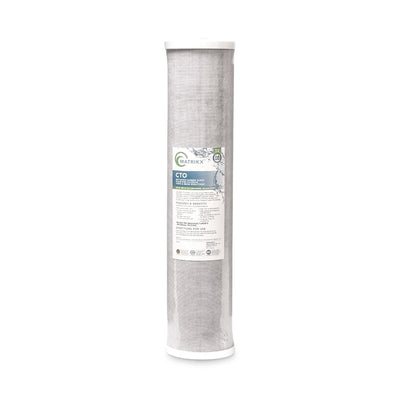
- Separate scale control from contaminant reduction. A softener or conditioner addresses scale behavior; carbon filtration handles a different set of taste, odor, and chemical concerns.
For tankless heater protection, placement matters. Treatment installed after the heater cannot protect the heater. Treatment only at the kitchen sink cannot protect showers or hot-water equipment. A whole-home system is installed on the main water line so water is treated before it reaches the heater and other fixtures.
That does not mean every home needs the biggest setup. Some homes need only a scale-control approach. Others benefit from a salt-free conditioner plus carbon filtration. Well water can need a different path because iron, sulfur odor, sediment, or low pH can change the recommendation.
This is where a water test prevents overbuying. The goal is not to stack filters. The goal is to solve the water problem you actually have.
Where RKIN Fits for Tankless Water Heater Scale
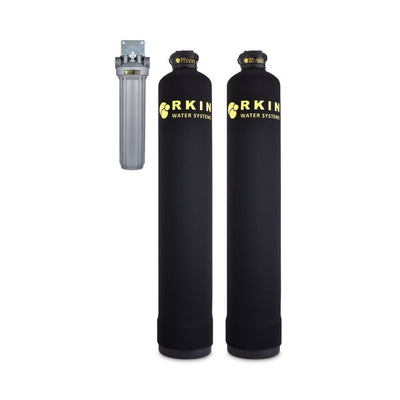
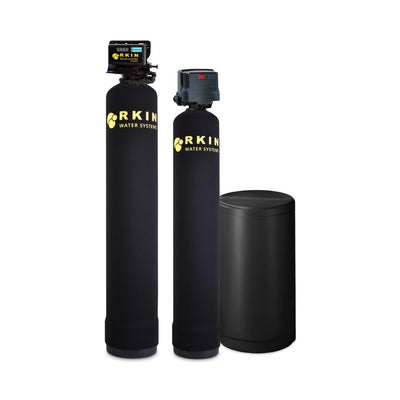
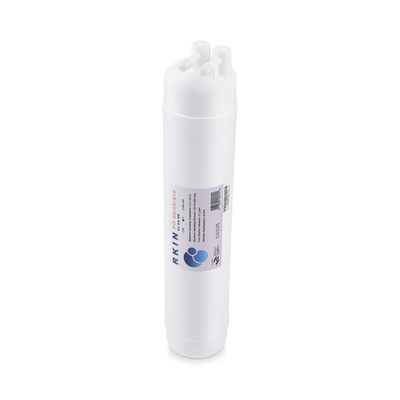
This is what the RKIN whole house water treatment lineup is built to help homeowners think through: the water before it reaches the appliance, not just the appliance after it fails.
For homes dealing with scale symptoms, RKIN can help you evaluate whether a whole-home scale-control setup makes sense. If you also want taste and odor improvement at every tap, carbon filtration may belong in the same conversation. If your main priority is drinking water at one sink, a countertop or reverse osmosis setup may be the better fit instead.
Tankless heater problems are not always water-related. Gas supply, venting, installation, flow sensors, and maintenance habits matter too. When visible buildup appears alongside repeated hot-water equipment complaints, put water hardness near the top of the checklist.
What to Ask Before Replacing the Heater
Before you replace a tankless unit, ask these questions:
- What is my measured hardness? Do not rely only on a city average or a salesperson's guess.
- How often has the heater been flushed? Compare the actual maintenance pattern to the manufacturer's guidance for your water conditions.
- Is scale showing up elsewhere? Shower doors, faucets, coffee makers, humidifiers, and dishwashers can all tell the same story.
- Does hot-water flow drop during high demand? That can point to scale, sizing, or installation issues.
- Will the new heater see the same water? If yes, replacing the unit without addressing water can repeat the cycle.
This is also the moment to be careful with quotes. If one company pushes only a water softener and another pushes only a carbon filter, ask what each option is supposed to solve. A carbon filter is not a hardness solution. A softener or conditioner is not the same as a drinking-water contaminant filter. The right recommendation should name the problem, the test result, the treatment method, and the expected maintenance.
Tankless Water Heater Scale FAQ
Does hard water damage a tankless water heater?
Hard water can contribute to mineral scale inside hot-water equipment. It does not mean every heater issue is caused by water hardness, but repeated scale, flow loss, or early descaling needs are good reasons to test the water before replacing parts.
How do I know if my tankless heater has scale?
Common clues include reduced hot-water flow, changing water temperature, service alerts, repeated descaling, and chalky residue on fixtures. A plumber can inspect the heater, but a hardness test helps confirm whether incoming water is part of the issue.
Will a carbon filter stop tankless water heater scale?
A carbon filter is mainly used for taste, odor, chlorine, and certain chemical concerns. Hardness and scale control require a different approach. Some homes need both carbon filtration and scale control, but they solve different jobs.
Do I need a salt-based water softener for a tankless heater?
Not always. Some homes use salt-based softening, while others consider salt-free conditioning. The right answer depends on hardness level, plumbing, local rules, maintenance preferences, and whether the goal is scale reduction or full mineral exchange.
Should water treatment go before or after the tankless heater?
For heater protection, treatment needs to be before the tankless heater. A filter placed after the heater may help a specific tap, but it cannot protect the heater from incoming minerals.
Ready to Stop Guessing?
If your tankless water heater keeps asking for service and your fixtures show hard-water residue, start with the water. Test hardness, check the pattern across the home, then size the solution around the real problem.
See RKIN's whole house water treatment options or contact RKIN for help matching the system to your water test and home layout.


0 comments