


chlorine water filter
Tap Water Smells Like Chlorine? What Homeowners Can Do

Short answer: tap water can smell like a swimming pool because your water utility is using chlorine or chloramine to keep water disinfected as it travels through miles of pipe. The smell is annoying, but it is also useful information: you are tasting the treatment method, not just the water.
If you rent, live in an apartment, or simply do not want a plumber in your kitchen, the fix has to be realistic. A pitcher may improve taste for a while. Bottled water adds storage and plastic waste. A no-plumbing reverse osmosis system gives you a stronger drinking-water option without changing the sink.
Why does tap water smell like chlorine?
Chlorine smell usually comes from disinfectant residual. Public water systems add disinfectants to control microbes in the distribution system, then keep a small amount in the water so it remains protected on the way to your home. The EPA's drinking water regulations list a maximum residual disinfectant level of 4.0 mg/L for chlorine and 4.0 mg/L for chloramine.
That does not mean every glass should smell strong. The odor can change by neighborhood, season, plumbing age, water temperature, and how long water has been sitting in the line. Warm weather often makes taste and odor complaints more noticeable because disinfectant demand can change and people drink more water straight from the tap.
Chloramine can be part of the story too. The EPA explains that chloramines are formed when chlorine and ammonia are combined, and many utilities use them because they last longer in distribution systems than free chlorine. That longer-lasting residual can be helpful for utilities, but it can leave a different taste profile at the kitchen sink.
The key point: a pool-like smell is not a diagnosis by itself. It tells you to check what your utility uses, flush the tap, and match your filter to the actual problem.
Quick checks before you buy a filter
Start with the simple steps. Fill a clean glass with cold water and smell it right away. Then let it sit uncovered for ten minutes and smell it again. If the odor fades, free chlorine may be the main issue. If the smell hangs around, chloramine or plumbing-related taste may be involved.
Next, compare taps. Does the bathroom sink smell the same as the kitchen? Does hot water smell stronger than cold? If hot water is the only problem, look at the water heater and plumbing, not just the drinking-water filter. If every cold tap smells the same, the source is more likely city treatment or building plumbing.
Check your annual water quality report. City utilities publish consumer confidence reports, often called CCRs, and those reports should tell you whether the system uses chlorine, chloramine, or another disinfectant process. The report may not answer every taste question, but it gives you a starting point.
If you are in an apartment, ask the property manager whether any plumbing work, hydrant flushing, or water-main work happened recently. Temporary changes can stir sediment or change odor. If the smell is sudden, severe, or paired with discoloration, contact the utility or building manager before assuming a countertop filter is the whole answer.
What does not work well for chlorine taste?
Boiling is not the right everyday fix for chlorine taste. It can drive off some free chlorine, but it takes time, uses energy, and does not give you a practical drinking-water routine. It is also not a full solution for chloramine, which is more stable than free chlorine.
A basic pitcher can help with taste when the filter is fresh and the flow rate is slow enough for contact time. The problem is capacity and consistency. In a busy kitchen, pitchers are easy to forget, easy to run dry, and dependent on replacement timing. If the cartridge is overdue, the water may taste better than the tap but still fall short of what you expected.
Refrigerator filters are similar. They can improve taste and odor, but many are designed around convenience and ice maker flow, not broad contaminant reduction. They also depend on the refrigerator's maintenance schedule.
Bottled water is a workaround, not a home water plan. It means lifting cases, storing plastic, and trusting that the bottle is better than the tap for your concern. For renters especially, the better question is: what can I put in the kitchen that does not require a lease-breaking plumbing change?
What kind of filter helps with pool-smelling tap water?
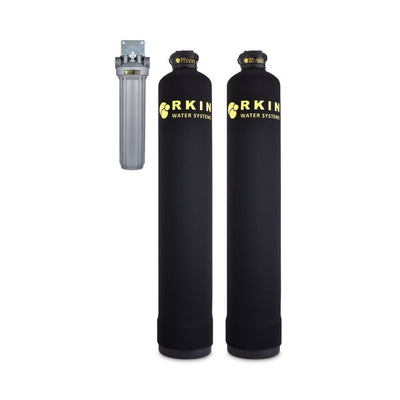
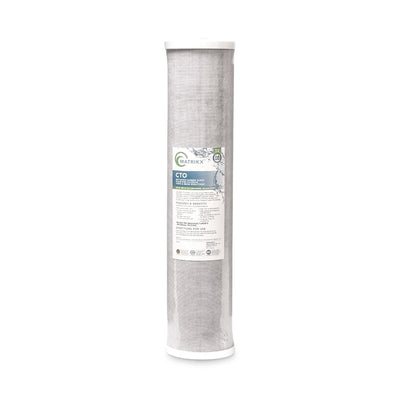
For chlorine taste and odor, activated carbon matters. Carbon can adsorb many taste-and-odor compounds, which is why it appears in pitchers, fridge filters, countertop systems, and whole-house carbon tanks.
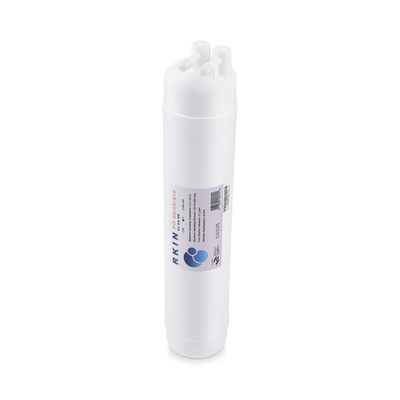
For a stronger drinking-water setup, reverse osmosis adds another layer. The Water Quality Association describes reverse osmosis as a process that uses pressure to push water through a membrane, reducing dissolved solids and other substances. In a well-designed RO system, carbon stages protect the membrane and improve taste, while the RO membrane addresses a wider set of drinking-water concerns than taste alone.
That distinction matters. If the only problem is a faint chlorine taste, carbon may be enough. If you are also thinking about PFAS, lead, fluoride, total dissolved solids, or bottled-water replacement, reverse osmosis deserves a closer look.
Look for the details, not the buzzwords. Does the system use real reverse osmosis? Are there carbon stages before or after the membrane? Are the claims specific? Is the system easy enough to maintain that you will actually keep using it?
Best no-plumbing option for renters and apartments
Renters have a different constraint than homeowners. You may not be able to drill into the sink cabinet, add a dedicated faucet, or change under-sink plumbing. Even if the landlord allows it, you may not want to pay a plumber for a place you do not own.
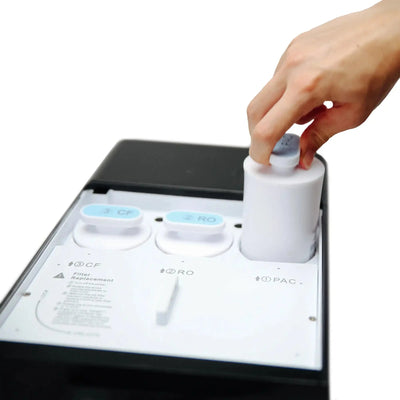
That is where countertop reverse osmosis makes sense. It gives you point-of-use drinking water without a permanent install. You put the system on the counter, connect or fill it according to the design, and use it where you drink and cook.
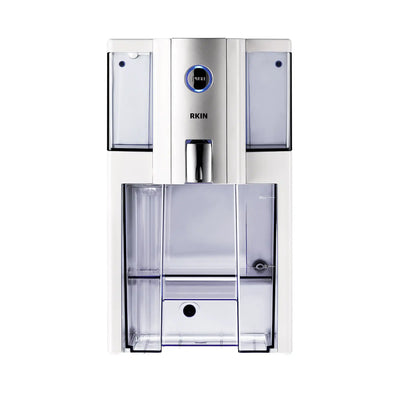
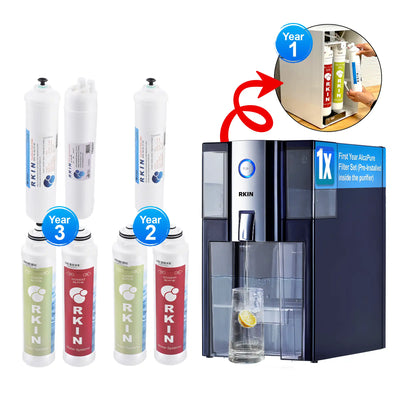
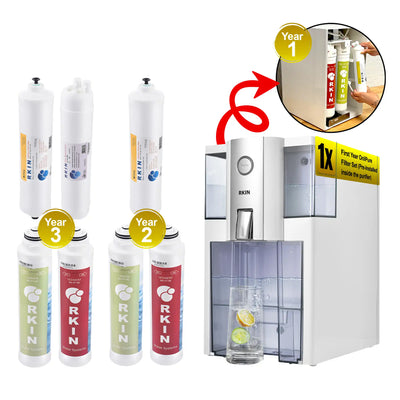
This is what the RKIN Zero Installation Purifier Countertop Reverse Osmosis Water Filter is designed for: reverse osmosis drinking water without drilling, cabinet changes, or a dedicated faucet. It is certified by IAPMO R&T to NSF/ANSI 58 for reduction of TDS, fluoride, lead, hexavalent chromium, and trivalent chromium.
The practical advantage is daily use. If the system is easy to fill and easy to live with, it has a much better chance of becoming your normal water source. A filter you avoid because it is awkward does not help much.
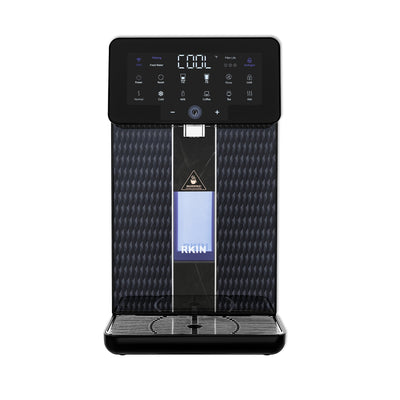
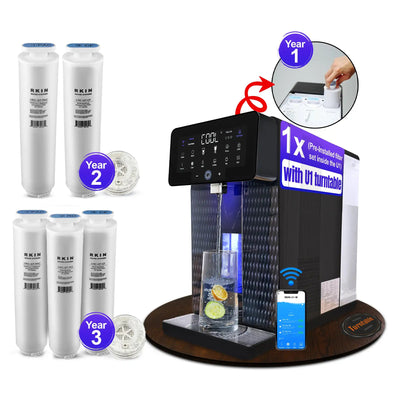
For customers who want a countertop RO system with UV and extra smart features, the RKIN U1 4-in-1 Water Filter System is another no-plumbing option. It sits on the countertop with a fill tank; it is not an under-sink system.
When should you call the utility or test the water?
Call the utility or property manager if the odor is sudden, very strong, or paired with brown, yellow, black, or cloudy water. Also call if neighbors notice the same change at the same time. That can point to flushing, line work, a treatment change, or a distribution issue.
If you use a private well, do not treat a chlorine smell like a normal city-water complaint. Wells have different issues, and any sudden odor change should be tested. A well owner should test based on the likely source: bacteria indicators, iron, manganese, sulfur, nitrate, hardness, and any local contaminants of concern.
If you are on city water and the chlorine smell has always been there, start with your CCR and a filter matched to the job. If the smell is new, document when it started, which taps are affected, and whether flushing changes it. That information makes the utility conversation more useful.
How to choose a chlorine filter without overbuying
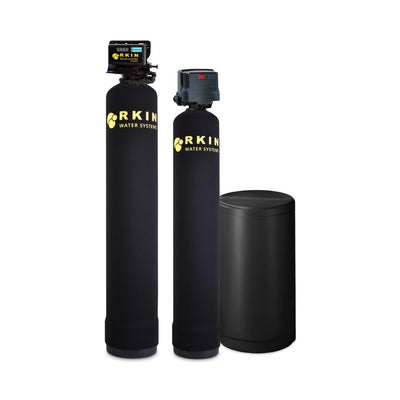
Match the filter to the problem. If your complaint is only taste at one tap, a point-of-use carbon or RO system may be enough. If every shower and faucet smells like chlorine, a whole-house carbon system may be worth discussing. If you want better drinking water and you rent, a countertop RO system is the cleanest first move.
Check certifications and claims. NSF/ANSI 42 is commonly tied to aesthetic effects like chlorine taste and odor. NSF/ANSI 58 applies to reverse osmosis drinking-water systems. Do not rely on a product page that says "advanced filtration" without telling you what is actually being reduced.
Also check maintenance. Carbon has a service life. RO membranes and post-filters have service lives. A good system should make replacement understandable, not mysterious.
The point is not to buy the largest system on the page. The point is to stop drinking water that tastes like a pool and choose a filter that fits your home, your lease, and your daily routine.
Frequently Asked Questions
Is chlorine smell in tap water normal?
A mild chlorine smell can happen on city water because utilities use disinfectants to maintain water quality in distribution pipes. The EPA sets residual disinfectant limits for chlorine and chloramine. If the smell is sudden, very strong, or paired with discoloration, contact your utility or property manager before relying on a filter alone.
Does leaving tap water out remove chlorine taste?
Leaving water uncovered can reduce some free chlorine smell, but it is not a reliable fix for chloramine and it is not convenient for daily drinking water. It also does not address other contaminants. If the odor is frequent, choose a filter built for taste and drinking-water concerns.
Do pitcher filters remove chlorine taste?
Many pitcher filters use activated carbon, which can reduce chlorine taste and odor when the cartridge is fresh. The downside is capacity, contact time, and maintenance. For a stronger no-plumbing option, a countertop reverse osmosis system adds carbon plus an RO membrane.
Does reverse osmosis remove chlorine?
In RO systems, carbon stages are usually the main protection for chlorine taste and for the RO membrane. The RO membrane then addresses a broader range of dissolved solids and other contaminants. Look at the full system design, not just the words "reverse osmosis."
What is the best water filter for renters with chlorine taste?
A countertop reverse osmosis system is often the best fit because it does not require drilling, a dedicated faucet, or under-sink plumbing changes. The RKIN Zero Installation Purifier Countertop Reverse Osmosis Water Filter is built for renters and homeowners who want RO drinking water without a permanent install.
Ready to Stop Drinking Pool-Smelling Water?
If your tap water smells like chlorine, start with your water report, then choose a filter that fits the real cause. For renters, apartments, and no-plumbing kitchens, the RKIN Zero Installation Purifier Countertop Reverse Osmosis Water Filter gives you a practical RO path without changing the sink.





0 comments