


sediment filter before pressure tank
Water Filter Before or After Pressure Tank? Well Guide

If you are on a private well and planning a whole-house filter, the most important question is not the brand, cartridge size, or micron rating. It is placement: should the water filter go before or after the pressure tank?
For most homes, the safe default is after the pressure tank and pressure switch. That one detail affects pump protection, pressure stability, filter service, and whether a clogged cartridge can create a bigger problem than the sediment you were trying to fix.
Why the pressure tank comes first in most homes
A private-well system is not just a pipe from the well to the faucet. It usually includes a pump, pressure switch, pressure tank, tank tee, pressure gauge, relief valve, and then the household plumbing. The pressure tank stores pressurized water so the pump does not have to start every time someone opens a faucet for a few seconds.
The pressure switch is the control point. When pressure drops to the cut-in setting, the switch starts the pump. When pressure rises to the cut-out setting, the switch shuts the pump off. The tank and switch need to “see” system pressure clearly for that cycle to work.
That is why a restrictive cartridge filter between the pump and pressure tank can be risky. As the cartridge loads, it can create a growing pressure restriction before the pressure switch has a chance to read the whole system accurately. In a standard layout, sediment filtration belongs after the pressure tank unless a manufacturer manual or well professional specifies a pump-safe pre-tank separator.
This does not mean every well layout is identical. It means a standard cartridge filter before the tank is a stop-and-verify condition. If an installer recommends it, ask which exact device, manual, pressure-control layout, and safety protection support that design.
What does not work when sediment is the problem
Moving a fine cartridge filter upstream is the common temptation. The logic sounds reasonable: catch sand before it reaches the tank. The problem is that a fine cartridge creates pressure drop, and that pressure drop gets worse as the cartridge loads. If it sits in the wrong place, it can interfere with pump control.
A bigger cartridge is not an automatic fix either. Oversizing can increase service life and flow, but it does not change the basic pressure-switch issue if the filter still sits between the pump and the pressure tank.
Stacking multiple filters without testing can also backfire. A 50-micron cartridge, then a 20-micron cartridge, then a 5-micron cartridge might look like a clean plan on paper. In a real house, it can reduce flow, shorten cartridge life, and make showers weaker if the sediment load, pipe size, pressure, and peak flow were never checked.
A pressure gauge alone is not enough. Gauges help diagnose pressure drop, but they do not make an unsafe placement safe. They need to be part of a layout that keeps the pump, tank, switch, relief protection, and treatment equipment working together.
The usual order for a well-water treatment train
For a typical private well with a submersible pump and pressure tank, the broad order is:
- Well pump and well line.
- Pressure tank, pressure switch, gauge, and tank tee.
- Main shutoff and serviceable filtration or treatment equipment.
- Sediment filtration or separator where appropriate.
- Softening, carbon, specialty media, or other whole-house treatment based on the lab report.
- Point-of-use drinking-water treatment where needed.
- Household fixtures and appliances.
That list is not a substitute for a local plumber or water-treatment professional. It is a planning map that helps you ask better questions.
The EPA recommends annual private-well testing for total coliform bacteria, nitrates, total dissolved solids, and pH, plus locally relevant contaminants when you suspect they may be present. That testing should shape the treatment train. Sediment, hardness, iron, manganese, sulfur odor, low pH, nitrates, arsenic, and bacteria are different problems. They should not all get the same equipment order.
Start with the lab report, not the parts shelf. Then match each device to the problem it is supposed to solve.
When a pre-tank device might appear in a design
There are exceptions, but they should be documented. A pump-safe sand separator, suction-side spin-out device, or engineered setup may be used in some wells with heavy grit or abrasive sediment. Those devices are different from dropping a restrictive cartridge housing into the line before the pressure tank.
Some spin-out separator manuals include special conditions around pump-side installation, filter placement, cleaning access, drainage, and check-valve location. That kind of detail is exactly why the exception should come from a manufacturer manual or engineered design, not from a guess.
If you are dealing with heavy sand, ask the installer these questions before approving the layout:
- Where is the pressure switch located?
- Where is the pressure relief valve located?
- What device is before the tank, if any?
- Can that device clog enough to restrict pump flow?
- What does the manufacturer manual say about placement?
- Are there pressure gauges before and after the filter?
- How will the device be cleaned without opening unsafe electrical or pressurized equipment?
- What bypass or isolation valves are included for service?
If the answer is “we always do it this way,” keep asking. Well systems have enough variation that placement should be drawn and labeled.
What to check before buying equipment
Before you choose a whole-house filter, collect the basics.
First, get a recent water test. If you have visible sediment, ask whether the lab or local professional recommends turbidity, iron, manganese, hardness, pH, total dissolved solids, bacteria, and any local contaminants of concern. If the water changed after flooding, land disturbance, a pump repair, or a new nearby activity, test before assuming the fix.
Second, record your plumbing layout. You do not need to open electrical controls or pressurized fittings. Me personally, I would photograph the layout and leave pressurized fittings to a qualified professional. Take clear photos of the pressure tank, pressure switch, gauge, well line entry, existing filters, softener, UV unit, bypass valves, outside faucet branches, and the line feeding the water heater. A professional can learn a lot from those photos.
Third, size for flow. A filter that is too small can make the shower weak when the washer starts. Ask about rated flow, pressure drop, cartridge capacity, backwash needs, and replacement schedule. If the home has a large tub, multiple showers, irrigation branch, or high sediment load, a basic housing may not be enough.
Fourth, plan service access. Whole-house equipment should have shutoff valves, enough room to change cartridges, drain access when needed, and labels that make the sequence clear. A filter that is hard to service is more likely to be neglected.
Where RKIN fits
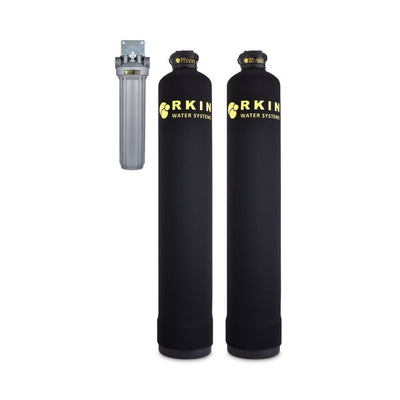
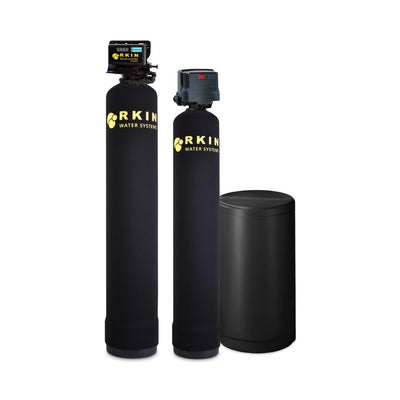
For homeowners trying to treat water at the point where it enters the home, RKIN Whole House Water Treatment is the right starting point. A whole-house plan can address problems such as sediment, hardness, chlorine taste, and well-water concerns depending on the water report and system design.
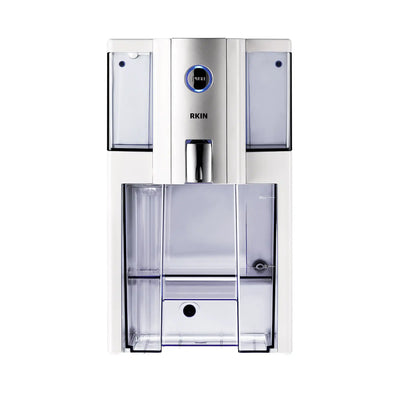
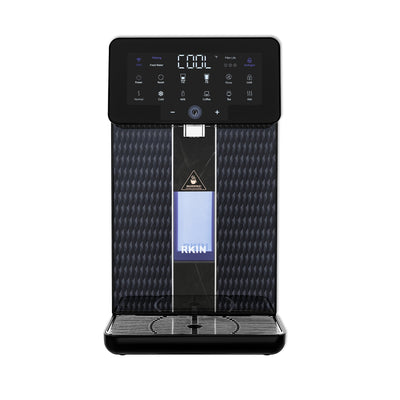
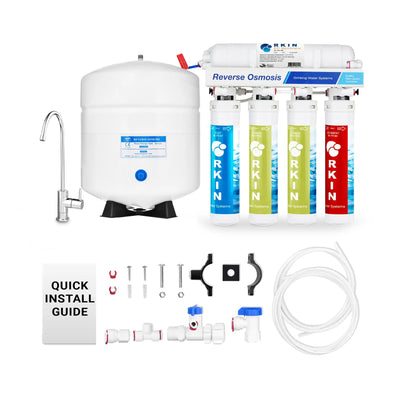
For drinking-water treatment at the kitchen, whole-house equipment may not be the full answer. A point-of-use RO system can sit after the home plumbing and focus on drinking and cooking water. If you want RO without plumbing changes, compare the RKIN Zero Installation Purifier Countertop Reverse Osmosis Water Filter. If you prefer an installed kitchen setup, compare the RKIN Flash Undersink RO System.
The best layout may use both: whole-house treatment for the water entering the home and RO at the kitchen for drinking water. The order still matters. Whole-house equipment belongs in a layout that protects the pump and pressure controls, not just in the spot with the most open wall space.
Frequently Asked Questions
Should a whole-house water filter go before or after the pressure tank?
For most private-well homes, a standard whole-house filter goes after the pressure tank and pressure switch. This lets the pump and tank control pressure before water passes through filtration. Any pre-tank device should be backed by a manufacturer manual or a qualified professional’s design.
Why is a filter before the pressure tank risky?
A cartridge filter can clog as it collects sediment. If that restriction sits between the pump and the pressure tank, the pressure switch may not read the pressure correctly. That can interfere with pump shutoff and create equipment risk. Do not move filters upstream without verifying the full pump-control layout.
What if I have heavy sand from my well?
Heavy sand may call for a pump-safe separator or a different well correction, not simply a fine cartridge before the tank. Ask a well contractor or water-treatment professional to identify the source of sediment, check pump protection, and specify equipment that does not restrict the pump incorrectly.
Should the filter go before or after the water softener?
Sediment filtration usually goes before a softener so dirt, rust, and particles do not load the softener first. The exact order depends on your lab report and equipment. Carbon, specialty media, UV, and RO branches each have their own pretreatment needs.
Can I install a whole-house filter myself?
Some homeowners can handle basic plumbing, but well systems include pressurized water, electrical controls, relief protection, and local code requirements. If you are unsure where the pressure switch, tank tee, shutoff, or relief valve is, use a qualified plumber or well professional.
Ready to Plan Your Well-Water Filter Layout?
Before buying equipment, get the water test, map the pressure tank and switch, and decide what each system is supposed to solve. Placement is not a small detail; it is part of protecting the whole well setup.
Start with RKIN Whole House Water Treatment to compare options, then talk with a qualified installer about the correct order for your well, pressure tank, and filtration goals.






0 comments