




city says no salt softener
Water Softener Alternatives When Your City Says No Salt

If your city, HOA, or utility says “avoid softener salt,” that does not mean you have to live with scale on every faucet. It means you need to separate two questions: what is the hard-water problem, and which treatment path fits the local salt-discharge concern?
That is a real homeowner decision, not a niche plumbing debate. Traditional ion-exchange softeners use salt as part of their regeneration cycle. Some communities discourage or limit brine discharge because chloride is hard to remove once it enters wastewater streams. The EPA notes that wastewater is one source of nutrient pollution, and local utilities often add their own rules for what they want kept out of the sewer system. Before you buy, read the local guidance and match the equipment to your water.
Why cities care about softener salt
A traditional softener exchanges hardness minerals for sodium or potassium ions, then flushes a brine solution during regeneration. That design can work well for hardness, but it also sends salty wastewater to a septic system or municipal sewer.
For a homeowner, the issue can feel confusing because the city may not say “you are banned.” It may say “we discourage self-regenerating softeners,” “reduce chloride discharge,” or “use alternatives where possible.” The wording matters. A utility suggestion is different from a local rule. Still, both should change how you shop.
If you are on a septic system, salt discharge is not the only thing to watch. The EPA septic care guidance tells homeowners to use water efficiently, avoid flushing harmful materials, and maintain the system. A softener that regenerates often adds water and brine to that system. That does not make every softener wrong, but it does make sizing and settings important.
If you are on city sewer, ask the utility what it actually wants reduced. Some cities care mainly about chloride loading. Others care about water use, discharge timing, or specific self-regenerating equipment. Do not guess from a forum thread. Get the local rule in writing.
Hard water is not one problem
“Hard water” usually means the water has dissolved calcium and magnesium. The usual signs are scale on fixtures, spots on dishes, cloudy film on shower glass, stiff-feeling laundry, and reduced performance in water-using appliances.
But homeowners often mix hard-water symptoms with other issues. Metallic taste, orange staining, black staining, sulfur odor, chlorine smell, and sediment are not automatically hardness. A salt-free conditioner may help with scale behavior, but it is not a fix for every stain, odor, or contaminant concern.
That is why the first step is a simple water map:
- Scale: White crust on faucets, shower doors, and heating surfaces.
- Taste or odor: Chlorine, sulfur, metallic, earthy, or plastic notes.
- Staining: Orange, black, blue-green, or brown marks.
- Drinking-water concern: A report, test, or local notice that points to a contaminant.
Each line can call for a different treatment method. If you buy a salt-free system expecting it to remove iron, chlorine taste, PFAS, or bacteria, you are asking the wrong tool to do the wrong job.
What salt-free conditioning can and cannot do
Salt-free conditioners are often called softener alternatives, but that phrase needs a plain-language explanation. A salt-free conditioner does not remove hardness minerals the way a traditional softener does. Instead, it is designed to change how hardness minerals behave so they are less likely to form hard scale on surfaces.
That distinction is important. If you test the water before and after a salt-free conditioner, the hardness number may not drop because the minerals are still present. The goal is scale control, not mineral removal.
For many homes, that is exactly the trade-off they want. They want help with scale, they want to avoid salt bags, and they want to respect local salt-discharge guidance. For other homes, it may not be enough. If the water is very hard, if the homeowner wants the slick feel of traditionally softened water, or if the issue includes iron and manganese, a salt-free conditioner alone may disappoint.
This is the honest way to frame it: salt-free conditioning is a scale-control path. It is not a magic replacement for every traditional softener outcome.
When carbon filtration or reverse osmosis belongs in the plan
If the utility says no salt and the homeowner also has taste or odor complaints, do not force everything into the hardness bucket. Carbon filtration and reverse osmosis solve different problems.
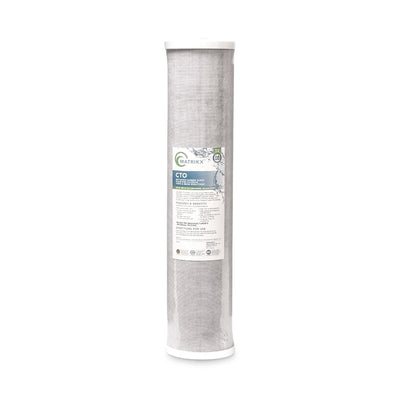
Whole-house carbon filtration can be useful when chlorine taste or odor affects water throughout the home. It may also be part of a larger whole-home plan based on the water report. It is not a water softener, and it should not be sold as one.
Reverse osmosis is usually a drinking-water decision. It uses pressure and a membrane to reduce many dissolved substances from water at one point of use. The EPA’s PFAS drinking-water rule has made more homeowners ask whether their kitchen water needs a separate treatment step. If the concern is drinking and cooking water, reverse osmosis may be a better fit than adding more whole-house equipment.
The right setup may be salt-free conditioning for scale behavior, carbon filtration for whole-home taste and odor, and reverse osmosis for drinking water. Or it may be only one of those. The local salt guidance tells you what to avoid; it does not tell you what to buy.
How to choose a no-salt path
Use this sequence before you approve a system.
First, confirm the local rule. Ask whether traditional softeners are prohibited, discouraged, or allowed with efficiency settings. If there is a rebate or approved-equipment list, use it.
Second, test the water or read the current report. City water customers should pull the annual Consumer Confidence Report. The EPA Consumer Confidence Report page explains how community water systems share annual drinking-water information. Private-well owners should use a current lab test, especially if there are stains, odors, or sudden changes.
Third, name the desired outcome. Do you want less scale? Better taste? Drinking-water filtration? A whole-home solution? Fewer maintenance tasks? Those answers point to different systems.
Fourth, ask what maintenance looks like. A no-salt system should still have filter-change needs, prefilters, or media considerations depending on the design. “No salt” does not mean “no maintenance.”
Fifth, make sure the quote does not promise more than the technology can do. A salt-free conditioner should not be described as removing hardness minerals. A carbon filter should not be described as reverse osmosis. A drinking-water reverse-osmosis system should not be presented as a whole-home scale fix.
Where RKIN fits
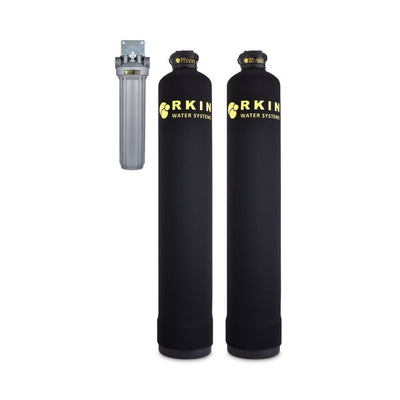
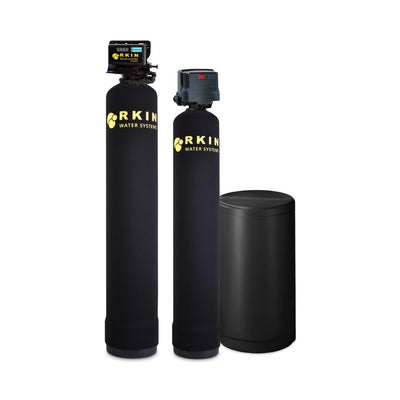
For homes where the goal is whole-home scale control without salt, start with the RKIN whole-house water treatment collection and choose the system from the water facts. RKIN salt-free conditioning options are designed for homeowners who want a no-salt approach to scale behavior, especially where salt brine is discouraged or simply unwanted.
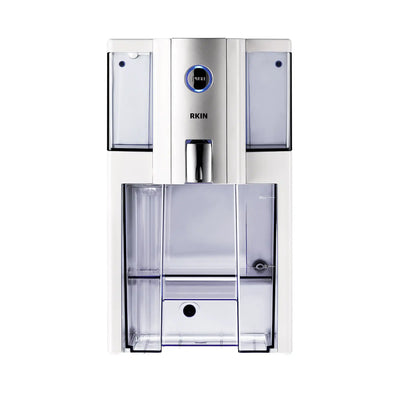
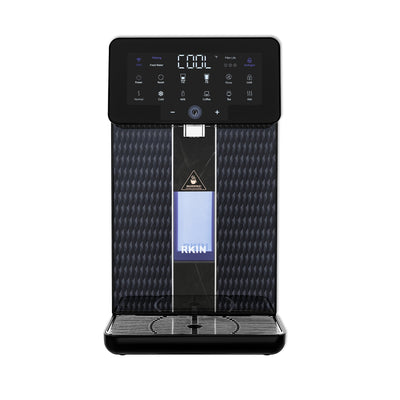
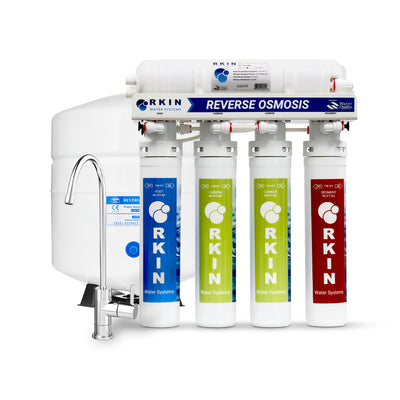
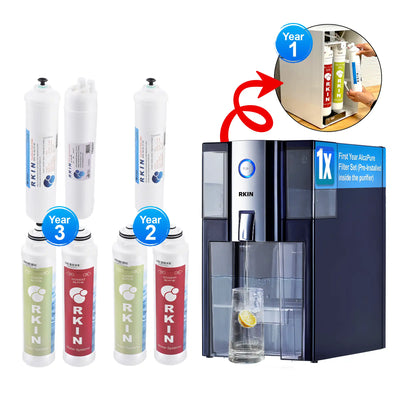
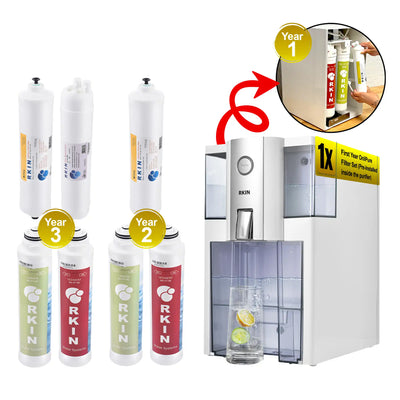
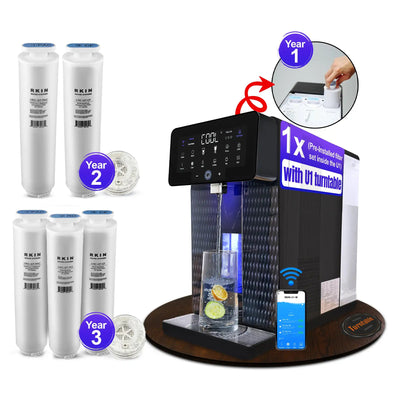
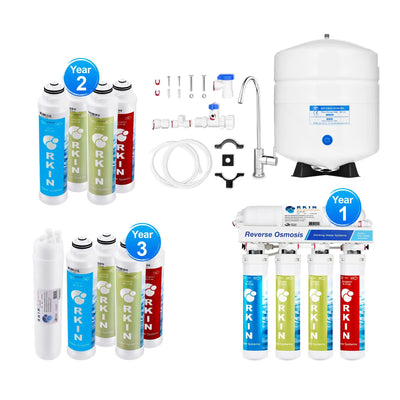
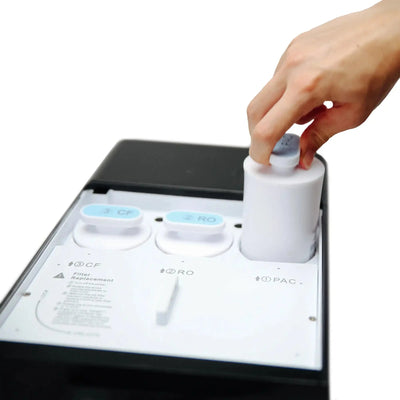
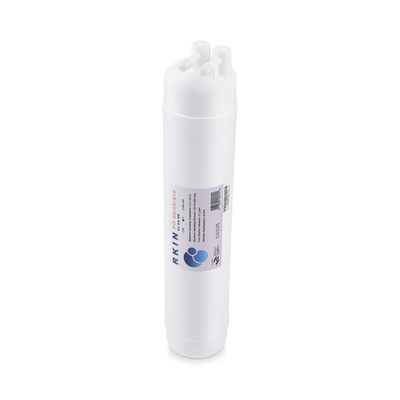
If the same home also has drinking-water concerns, pair the whole-home decision with the right point-of-use system. The RKIN Zero Installation Purifier is a countertop reverse-osmosis option with no plumbing project. The RKIN Flash Undersink RO System is for homeowners who prefer an under-sink reverse-osmosis setup at the kitchen.
In my house, I would not buy a salt-free conditioner to solve a drinking-water contaminant concern. I would not buy reverse osmosis to solve shower-door scale. I would match each system to one job and make the quote prove why it belongs.
A simple decision guide
Choose salt-free conditioning when the main problem is scale behavior and you want to avoid brine discharge. This is often the best fit when the local utility discourages salt and your main complaints are white scale, spots, and appliance buildup.
Choose whole-house carbon when the main problem is taste or odor across the home, especially chlorine taste from city water. If the water has well-specific odor, staining, or sediment, test before choosing the filter.
Choose reverse osmosis when the main concern is drinking and cooking water. That can be a countertop or under-sink choice depending on whether you want no plumbing or a permanent kitchen installation.
Choose lab testing first when the water has unusual staining, rotten-egg odor, sudden color changes, private-well risk, or a local contamination notice. Equipment should follow the result.
The best “no salt” solution is not the one with the biggest list of features. It is the one that respects the local rule and solves the actual water problem.
Frequently Asked Questions
What are the best water softener alternatives if my city says no salt?
The main alternatives are salt-free conditioning for scale behavior, whole-house carbon filtration for taste and odor, and reverse osmosis for drinking water. The best choice depends on whether your problem is scale, taste, odor, staining, or a drinking-water concern.
Does a salt-free water conditioner remove hardness minerals?
No. A salt-free conditioner is designed to change how hardness minerals behave so they are less likely to form hard scale. It does not remove calcium and magnesium the way a traditional ion-exchange softener does, so a hardness test may still show hardness minerals.
Why would a city discourage water softener salt?
Many utilities want to reduce salty brine discharge because chloride can be hard to remove once it enters wastewater systems. Local rules vary, so ask the utility whether softeners are banned, discouraged, or allowed with specific efficiency settings.
Can reverse osmosis replace a water softener?
No. Reverse osmosis is usually for drinking and cooking water at one faucet or countertop. It is not a whole-home scale-control system. If scale is the problem, look at whole-home conditioning or softening options that fit your local rules.
Do I still need a filter with a salt-free conditioner?
Maybe. A salt-free conditioner is aimed at scale behavior. If you also have chlorine taste, odor, sediment, PFAS concerns, or well-water issues, you may need carbon filtration, reverse osmosis, or lab testing. Do not expect one system to solve every water problem.
Ready to choose a no-salt water plan?
Start with the local rule, then match the system to the symptom. If your goal is scale control without salt, review RKIN whole-house water treatment options. If your goal is better drinking water, compare the RKIN Zero Installation Purifier and the RKIN Flash Undersink RO System with your report or test in hand.





0 comments