


how to maintain a water softener
Water Softener Maintenance: 2026 Homeowner Checklist

Water softener maintenance usually gets attention only after something feels wrong: soap stops lathering, glassware looks cloudy again, the brine tank forms a hard crust, or the system seems to run more often than it should. By then, you are guessing from symptoms instead of working from a simple routine.
The timing is good for a reset. In May 2026, the EPA WaterSense program updated its homeowner guidance on water softeners, noting that traditional cation exchange softeners can use meaningful amounts of water and salt during regeneration. The point is not that every home should avoid softening. The point is that hard water treatment should be maintained, programmed, and chosen with the actual water in mind.
Why maintenance matters more than most homeowners think
Hard water is not mysterious. The EPA WaterSense home maintenance guide points homeowners toward water softener checks, salt-bridge prevention, and hardness-based programming. At home, hardness can show up as scale on fixtures, cloudy glasses, soap scum, dry-feeling laundry, and buildup inside appliances.
A traditional water softener works by exchanging hardness minerals for sodium or potassium ions. Over time, the resin bed needs to be rinsed with brine so it can keep working. That rinse cycle is called regeneration. If salt is low, a salt bridge forms, the brine tank is dirty, or the system is programmed poorly, the softener may waste water, waste salt, or send hard water through the house.
That is why maintenance is not just a “keep it clean” chore. It affects performance, water use, salt use, and how predictable your water feels at showers, sinks, dishwashers, laundry, and coffee makers.
The 2026 water softener maintenance checklist
Start with the basics before adjusting settings or replacing equipment.
- Check the salt level and keep it within the range recommended by the manufacturer.
- Look for a salt bridge, which is a hardened layer that can make the tank look full even when salt is not dissolving correctly.
- Break up a bridge only with a safe blunt tool, never with sharp force that can puncture the tank.
- Clean the brine tank on the schedule recommended by the manufacturer.
- Confirm that the system is not regenerating on a fixed schedule when demand-based regeneration is available.
- Compare the programmed hardness setting with your current water test, not an old guess.
- Inspect bypass valves before and after big water-use activities.
- Note any sudden changes in taste, odor, color, pressure, or scale.
The EPA’s home maintenance guidance gives similar practical advice: check salt, watch for salt bridges, clean the brine tank yearly, and work with a professional or manufacturer to program regeneration based on incoming hardness or flow rather than a simple timer.
If you have never tested your water, do that before making big changes. A hardness number from a test is more useful than guessing from shower feel or dishwasher spots.
Salt bridges, brine tanks, and regeneration settings
A salt bridge is one of the most common softener problems. The tank can look full from the top, but the salt has hardened into a shelf. Under that shelf, water may not contact enough salt to form brine. The softener then regenerates without the brine strength it needs, and hard water symptoms return.
Brine tank sludge is another slow problem. Salt can include impurities that collect at the bottom of the tank. Over time, that buildup can affect brine draw and make the system harder to service. A yearly cleaning routine helps prevent a small maintenance issue from turning into a service call.
Programming matters too. The EPA WaterSense softener page notes that regeneration can use significant water and salt. Older or poorly set systems may regenerate more often than necessary. If your softener is set to regenerate every few days regardless of water use, ask whether the valve supports demand-based operation. A demand-initiated system regenerates from usage and hardness settings instead of a fixed calendar alone.
This is especially worth checking in fall. Many households shift routines in October: more laundry, more cooking, more guests, and more hot-water use. A setting that felt fine in summer may be off once the house starts using water differently.
What does not count as maintenance
Adding more salt is not the same as maintaining a softener. If the tank has a bridge, extra salt only sits on top. If the hardness setting is wrong, the system may still run poorly. If the resin bed is aging or fouled, salt alone will not fix it.
A shower filter is not a whole-house hard water plan. It may change the shower experience at one point, but it will not address scale in the dishwasher, laundry, water heater, or faucets across the home.
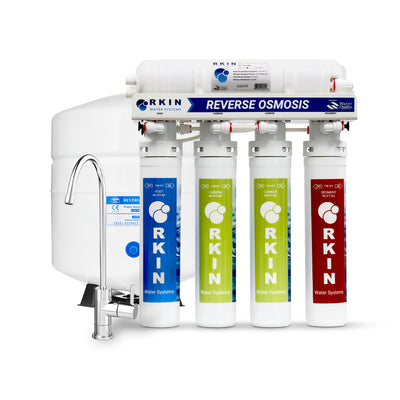
A drinking-water reverse osmosis system is not a water softener either. Point-of-use reverse osmosis is used for drinking and cooking water at a specific tap or countertop. It is not meant to change hardness behavior throughout the entire plumbing system.
Boiling water is not a hardness fix. If anything, boiling can make scale easier to see because water leaves as steam and minerals remain behind.
When salt-free conditioning is worth comparing
Traditional softeners remove hardness minerals through ion exchange. Salt-free conditioners do something different: they condition hardness minerals so scale is easier to manage, but they do not remove the minerals from the water.
That difference matters. If you want true soft water, compare a salt-based softener. If your goal is lower-maintenance scale control without salt refills or brine discharge, compare salt-free water conditioning. If your water also has chlorine taste, sediment, iron, sulfur odor, or well-water issues, you may need more than one treatment stage.
EPA’s WaterSense guidance says shoppers should consider both water efficiency and salt efficiency when choosing a cation exchange softener. That is a useful lens even if you are comparing salt-free options: look at maintenance, wastewater, salt handling, media life, and what the system is actually designed to do.
Do not choose from a label alone. Use a water test, match the treatment category to the problem, and check the product documentation before assuming one system handles everything.
Where RKIN fits
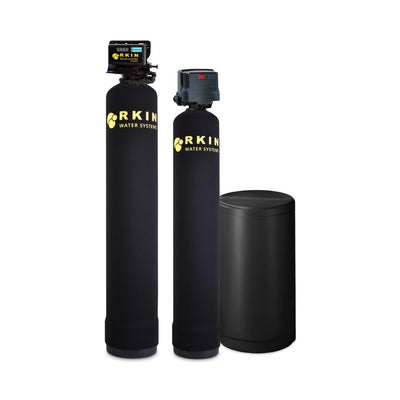
If hardness and scale are showing up across the home, start with the RKIN whole house water treatment collection. Whole-house systems are built for water problems that appear in multiple places, not just one glass at the sink.
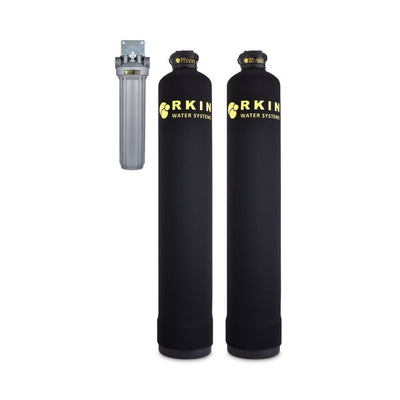
For salt-free scale control, the RKIN OnliSoft Salt-Free Water Conditioner is designed for homes that want a whole-house conditioning approach without routine salt refills. It is not the same as a salt-based softener because salt-free conditioning does not remove hardness minerals.
For homes that want salt-free conditioning plus carbon filtration in one whole-house setup, compare the RKIN OnliSoft Pro Salt-Free + Carbon Combo. The right fit depends on your water source, hardness level, taste and odor concerns, and whether a test shows other issues that need separate treatment.
Signs your current system needs attention
Treat these as clues that the softener or conditioner deserves a closer look:
- Soap suddenly feels harder to rinse.
- Shower glass, faucets, or dishes show more spotting than usual.
- The brine tank has a hard crust or an empty cavity below a salt shelf.
- Salt use changes sharply without a clear reason.
- Water feels hard even right after regeneration.
- The system runs at odd times or seems to regenerate too often.
- Pressure drops after recent service or a filter change.
- Well water changes after heavy rain, drought, or pump work.
Some of these point to maintenance. Some point to the wrong system for the water. Some point to a water source change. The safest order is test, inspect, service, then replace only if the evidence says replacement is the right move.
Frequently Asked Questions
How often should I maintain a water softener?
Check salt levels regularly, watch for salt bridges, and clean the brine tank on the manufacturer’s schedule. EPA home maintenance guidance recommends yearly professional service so the system performs well and uses water efficiently. If your water use or hardness changes, review the settings sooner.
What is a salt bridge in a water softener?
A salt bridge is a hardened layer of salt in the brine tank. It can make the tank look full while blocking salt from dissolving into the water below. When that happens, the system may regenerate without enough brine and hard water symptoms can return.
Should my water softener regenerate every night?
Not necessarily. A fixed nightly schedule can waste water and salt if the home does not need that much regeneration. Ask a qualified installer or the manufacturer whether your system supports demand-based regeneration using hardness and water-use settings.
Is a salt-free water conditioner maintenance-free?
Salt-free systems usually avoid salt refills and brine regeneration, but “no salt” does not mean “ignore it forever.” Check the product manual for prefilter, media, and service guidance. The treatment method is also different: salt-free conditioning manages scale behavior but does not remove hardness minerals like a traditional softener.
Do I need a softener if I already have reverse osmosis?
Reverse osmosis is usually point-of-use drinking-water treatment. A softener or conditioner is point-of-entry treatment for hardness behavior across the home. If scale shows up in showers, laundry, fixtures, and appliances, compare whole-house treatment rather than relying on a drinking-water system.
Ready to Get Hard Water Under Control?
A softener should not be a black box in the garage. Check the salt, inspect the brine tank, verify the settings, and match the system to a current water test.
If the goal is whole-home scale control, start with the RKIN whole house water treatment collection. Compare salt-based and salt-free options by water test results, maintenance preference, and the problem you actually need to solve.






0 comments