


apartment lead pipes
Apartment Lead Pipes: Best No-Drill Water Filter Guide

For an apartment with possible lead pipes, start with a certified tap-water test and a no-drill point-of-use filter with a verified lead-reduction claim. A renter-friendly setup must fit both the water result and the lease.
Lead risk is also hard to judge by sight. Clear water can still move through older service lines, old solder, brass fixtures, or building plumbing before it reaches your glass. A no-drill filter will not replace a city pipe or a landlord’s plumbing plan, but it can give renters a realistic point-of-use layer while they confirm what is in their water.
Why apartment lead pipes are a different problem
A homeowner can test, call a plumber, replace fixtures, and plan a permanent under-sink install. A renter usually has a shorter list: test the water, ask for records, document concerns, and choose a filter that does not damage the property. That changes the buying criteria.
The first step is finding out whether lead is plausible in the first place. The EPA explains that lead can enter drinking water when plumbing materials containing lead corrode, and that homes with lead service lines are often the highest-risk source. The same EPA guidance notes that lead pipes are more likely in older cities and homes built before 1986.
Apartment buildings add another layer: even if the city main is being upgraded, the water still travels through the building’s internal plumbing. Your landlord, utility, or city may know the service-line material, but they may not know every fixture or pipe inside the building. That is why the practical renter path is not guessing from the age of the neighborhood. It is collecting evidence.
Start with three checks:
- Ask your utility for the latest Consumer Confidence Report and any service-line inventory tied to the address.
- Ask the property manager whether lead service lines, lead solder, or fixture replacements are documented.
- Use a certified lab test if you need a clearer picture at your own tap.
What “no-drill” should mean for renters
A no-drill water filter should leave the apartment the way you found it. That usually means no cabinet holes, no permanent drain saddle, no new faucet hole, and no changes the landlord could call damage. If a system needs a dedicated faucet drilled into the sink deck, it may be a great fit for an owner-occupied kitchen but a bad fit for a strict lease.
No-drill does not mean low-performance. It simply means the system works at the point of use without a permanent plumbing change. Renters usually end up comparing three categories: pitchers, faucet-mounted filters, and countertop reverse osmosis systems.
Pitchers are easy to move and inexpensive to start, but they are slow, small, and the reduction claims vary by cartridge. Faucet-mounted filters can be convenient, but not every faucet is compatible, and the small cartridge size can matter when several people use the same sink. Countertop reverse osmosis systems take more counter space, but they can offer deeper treatment for dissolved contaminants when the product is properly tested and maintained.
The key is to look past the category name. A “lead filter” claim should be backed by the product’s own test data or certification listing, not just by broad marketing language.
What to look for in a lead-reduction water filter
For lead concerns, look for standards and claims that match the contaminant. NSF’s lead-reduction guidance states that water filters tested and certified to NSF/ANSI 53 or NSF/ANSI 58 can be evaluated for lead reduction, with the lead claim listed for that product. NSF/ANSI 53 is used for many filtration systems, while NSF/ANSI 58 is the reverse osmosis standard.
A useful label check has four parts:
- The product names lead as a reduction claim.
- The claim is tied to a recognized standard, such as NSF/ANSI 53 or NSF/ANSI 58.
- The cartridge or membrane replacement schedule is clear.
- The system design fits your faucet, counter, lease, and daily volume.
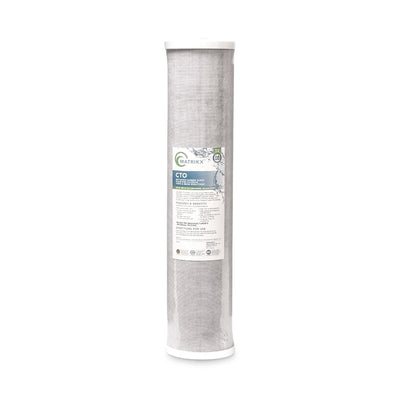
Do not assume every carbon filter handles lead. Carbon can help with taste, odor, chlorine, and some contaminants, but lead reduction depends on the media, design, contact time, and testing. Do not assume every reverse osmosis system is identical either. Reverse osmosis is a strong technology, but product design and maintenance still matter.
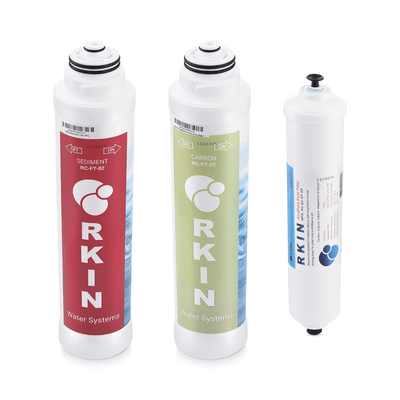
The maintenance point is especially important in rentals. A filter that is not changed on time can stop performing the way the buyer expects. Before you buy, confirm how often the filters are changed, whether reminders are easy to follow, and whether replacement parts are easy to identify by the full product name.
Why boiling and bottled water are not the clean answer
Boiling water can be useful for certain boil-water notices, but it is not a lead solution. Lead is not a living organism, and boiling can concentrate some dissolved substances as water evaporates. If the concern is lead from plumbing, the better path is testing, flushing when appropriate, fixture awareness, and point-of-use filtration with a verified lead-reduction claim.
Bottled water can be a short-term bridge, especially during a confirmed advisory, but it is a poor long-term plan for most households. It creates storage, cost, waste, and consistency questions. It also does not teach you anything about the water coming from your own tap.
Pitcher-only thinking can also lead renters to buy the easiest product instead of the right one. A small pitcher may improve taste and reduce some contaminants, but the label must still match the issue. If your concern is old plumbing and lead, the filter decision should start with the contaminant claim, not the shelf placement at a store.
Best fit: a no-drill countertop system with verified claims
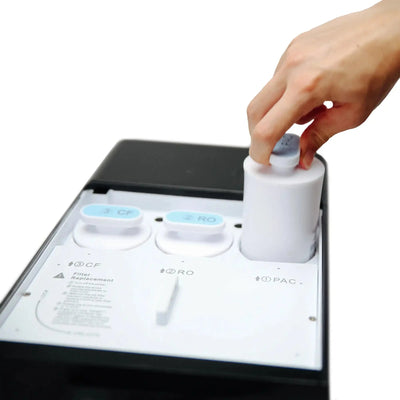
For renters who cannot modify plumbing, a countertop reverse osmosis system is often the clean middle ground: stronger treatment than a basic taste-and-odor filter, less property risk than a permanent installed system, and easier move-out than a drilled faucet.
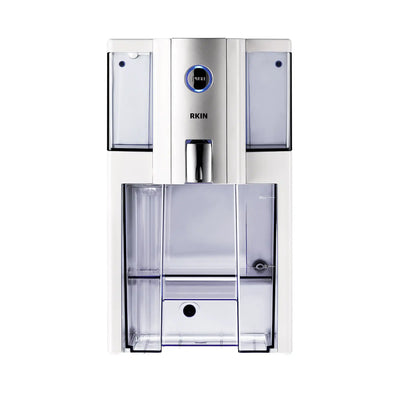
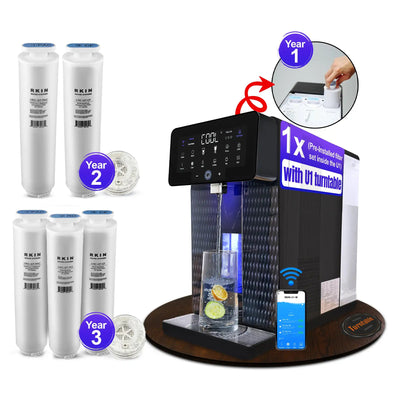
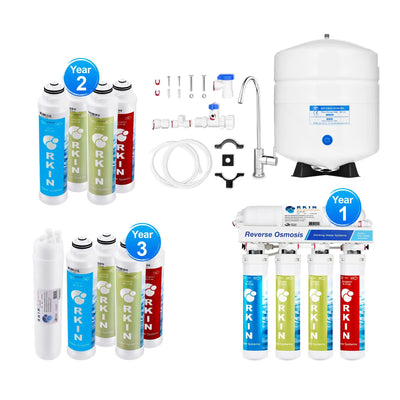
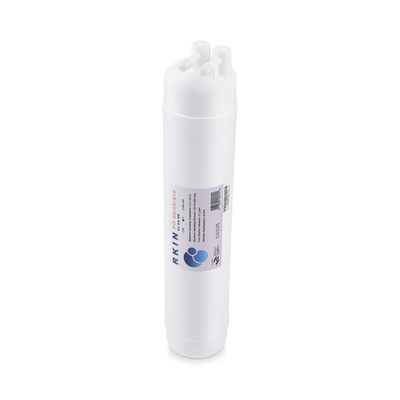
The RKIN U1-W Space-Saving 4-in-1 Water Filter System is designed for that no-drill reality. It sits on the countertop, uses a fill-tank workflow, and avoids permanent plumbing changes. For apartment households, that matters as much as the technology. If the system does not fit the lease, it does not fit the renter.
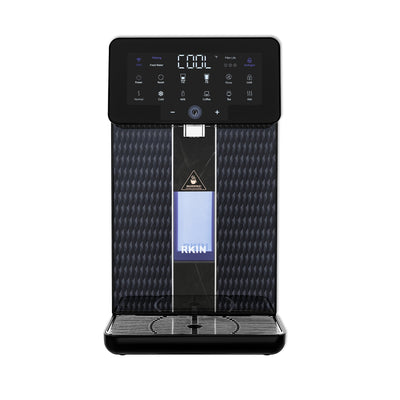
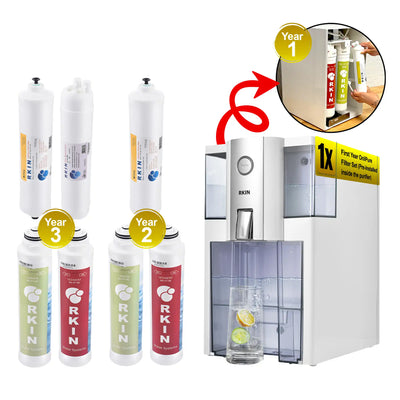
For shoppers comparing more than one no-install path, the Zero Installation Purifier Countertop Reverse Osmosis Water Filter is another countertop reverse osmosis option to review. Compare the full product names, the contaminant-reduction language, the filter replacement schedule, counter footprint, and whether the setup matches your faucet and daily use.
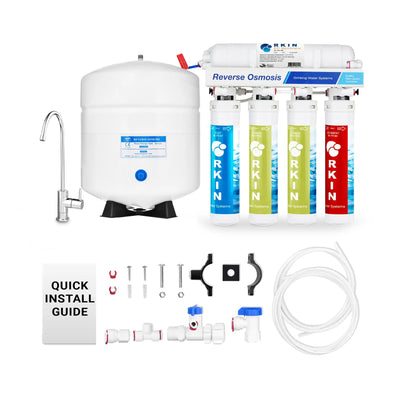
If you own the home, or your landlord allows plumbing changes in writing, an under-sink reverse osmosis system may also fit. Renters should get that permission before buying a system that requires under-sink connections or a dedicated faucet.
A renter checklist before you buy
Use this checklist before choosing a water filter for an apartment with possible lead pipes:
- Confirm the building age and ask about service-line material.
- Read the latest Consumer Confidence Report for your water system.
- If lead is a serious concern, order a certified lab test from your own tap.
- Look for lead-reduction claims tied to NSF/ANSI 53, NSF/ANSI 58, or equivalent third-party testing.
- Match the installation method to your lease: no drilling, no permanent drain connection, no sink modification.
- Check the filter replacement schedule before you commit.
- Keep a dated record of tests, landlord messages, and filter changes.
That last step sounds boring, but it helps. If you ever need to ask for plumbing records, fixture replacement, or permission for a permanent system, written notes beat memory.
Me personally, I would verify the lead claim and the lease before buying.
Frequently Asked Questions
What is the best water filter for apartment lead pipes?
The best fit is a point-of-use system with a lead-reduction claim that matches a recognized standard or third-party test, and an installation method your lease allows. For many renters, that points toward no-drill countertop reverse osmosis or a certified faucet/pitcher option, depending on space, water volume, and faucet compatibility.
Can renters install a reverse osmosis system?
Renters can often use countertop reverse osmosis systems because they do not require permanent under-sink changes. A traditional under-sink system may require landlord approval if it connects to the cold-water line, drain, or dedicated faucet. Check your lease before buying anything that changes plumbing.
Does boiling water remove lead?
No. Boiling is not a lead-reduction method. If your concern is lead from plumbing, use testing, utility records, fixture awareness, and a filter with a verified lead-reduction claim. Follow local advisories if your water system issues specific instructions.
How do I know if my apartment has lead pipes?
Ask your water utility for the service-line inventory and Consumer Confidence Report, then ask your property manager for building plumbing records. If you need tap-specific evidence, use a certified lab test. Lead risk cannot be ruled out by taste, smell, or color alone.
Is a pitcher enough for lead in apartment water?
It depends on the pitcher and cartridge. Some pitchers have lead-reduction claims, while others focus mainly on taste and odor. Read the label carefully, check the certification or test report, and follow the replacement schedule exactly.
Ready to choose a no-drill water filter?
If old plumbing is on your mind, do not start with a random filter category. Start with your contaminant concern, your lease limits, and the proof behind the product claim.
See the RKIN U1-W Space-Saving 4-in-1 Water Filter System for a countertop, no-drill option built for renters who want better drinking water without permanent plumbing changes.






0 comments