


boron in well water
Boron in Well Water: Does Reverse Osmosis Remove It?

Short answer: reverse osmosis can reduce boron, but performance depends on the membrane, water chemistry, and operating conditions. Test the well first and verify the exact boron-reduction claim for the system you are considering.
That makes boron a good example of a bigger rule for well water: do not buy equipment from one number. If a lab report says high boron, high total dissolved solids, or both, the next step is not panic. The next step is a better treatment plan.
What Boron Is and Why It Shows Up in Wells
Boron is a naturally occurring element that can enter groundwater as water moves through certain rocks and soils. It can also be associated with wastewater, fertilizers, pesticides, and industrial sources in some regions. The World Health Organization notes that most drinking-water supplies are judged to be below 0.5 mg/L, but concentrations vary by geology and wastewater influence.
In the United States, boron is not one of the routine numbers most homeowners see on a basic well panel. The California State Water Resources Control Board describes boron as an unregulated chemical without a federal Maximum Contaminant Level, while listing a California notification level for public-water tracking. That does not mean homeowners should ignore it. It means local context and lab interpretation matter.
Private wells are especially local. Two wells on the same road can behave differently because depth, construction, aquifer, nearby land use, and maintenance history all matter. If boron appears on one report, the safest move is to confirm the result with a certified lab and review the whole water chemistry, not just the boron line.
Why High TDS Changes the Conversation
Total dissolved solids, or TDS, is a broad measure. It does not tell you exactly what is dissolved in the water, but it tells you how much dissolved material is present. High TDS can affect taste, scaling, membrane performance, and how a treatment system is sized.
That is why boron plus high TDS needs more care than boron by itself. A homeowner may ask, “Does reverse osmosis remove boron?” The accurate answer is: sometimes, and performance depends on water chemistry and system design.
Boron chemistry is tricky because in the pH range of many drinking-water supplies, boron can exist in forms that are harder for a standard membrane to reject. High TDS can also make the system work harder. Pressure, pH, temperature, recovery rate, membrane type, and pretreatment all affect the final result.
Health Canada’s technical guidance on boron testing and treatment notes that lab methods can face matrix interferences from calcium, magnesium, sodium, silica, and TDS at certain levels. That is another reason a real lab report matters. A strip test or a single handheld meter cannot give you the detail needed for boron treatment design.
What Does Not Remove Boron Well
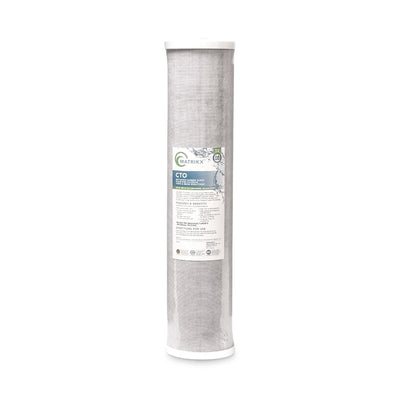
Start with the common misses. A standard water softener is not a boron filter. It is built for hardness minerals such as calcium and magnesium. A carbon filter can help with certain taste, odor, chlorine, and organic chemical issues, but it should not be treated as a boron solution. Boiling is not a boron fix either; water leaves as steam while dissolved material remains behind.
The California boron fact sheet is direct: boiling, over-the-counter pitcher or faucet filters, and water softeners are not effective ways to remove boron from water. That statement helps homeowners avoid the most common wrong turns.
Another mistake is treating boron as if it were the only issue. If the well also has high hardness, silica, iron, manganese, hydrogen sulfide odor, bacteria indicators, nitrate, arsenic, or high chloride, those numbers can change pretreatment and maintenance. A system that looks good on paper can fail early if the feed water is not prepared for the membrane or resin.
Do not build the plan from the product category. Build it from the water report.
Does Reverse Osmosis Remove Boron?
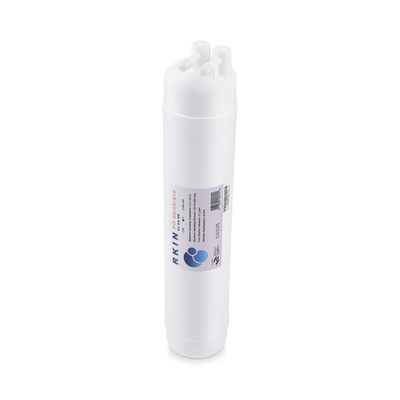
Reverse osmosis can reduce boron, but the details matter. WHO’s boron fact sheet says conventional treatment does not significantly remove boron, while ion exchange and reverse osmosis processes may enable substantial reduction in waters with high boron concentrations. Health Canada also notes that point-of-use reverse osmosis is likely the most applicable residential-scale treatment approach in many cases.
That is the useful part. The caution is that “RO” is not one fixed outcome. A basic point-of-use RO system, a high-rejection membrane, a boosted-pressure setup, and a double-pass design are not the same. Boron rejection can vary with pH and TDS, so the treated-water result needs to be verified after installation.
For a homeowner, the best process is simple:
- Test the raw well water through a certified lab.
- Ask for boron, TDS, pH, hardness, sodium, chloride, silica, nitrate, arsenic, iron, manganese, and bacteria indicators when relevant.
- Choose treatment based on the complete report.
- Test treated water after installation to confirm the system is meeting the target.
That last step is where many projects fail. A proposal is not proof. A post-install water test is proof.
Point-of-Use vs Whole-Home Treatment
Boron raises an important scope question: are you treating drinking water only, or every gallon entering the home?
Point-of-use treatment focuses on the water used for drinking and cooking. It is usually installed at the kitchen sink or placed on the countertop. This is often the most practical first lane when the goal is drinking-water reduction and the lab report supports RO as a fit.
Whole-home treatment is more involved. It may be considered when the water chemistry affects fixtures, appliances, irrigation, or many use points, or when the household wants the same treated water throughout the home. With high TDS and boron, whole-home RO can be a serious design project because it needs pretreatment, flow sizing, concentrate handling, storage, pressure, maintenance access, and post-treatment considerations.
This is where homeowners should slow down. A whole-home system should not be sold from a quick phone description. It should be designed from lab data, water usage, well yield, plumbing layout, and treatment goals.
How RKIN Fits a Boron Conversation
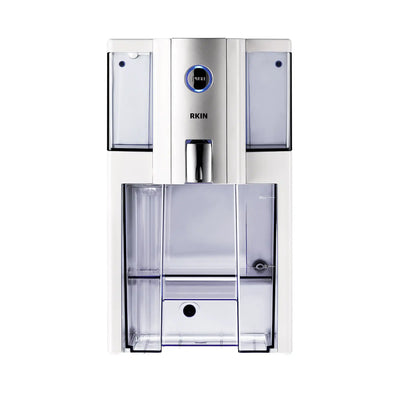
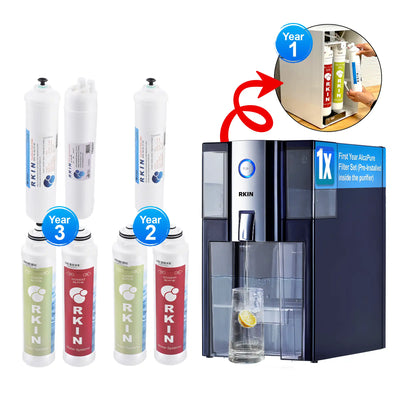
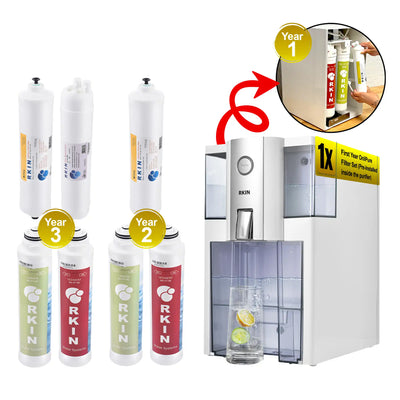
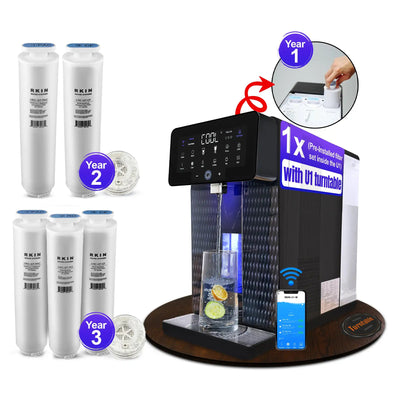
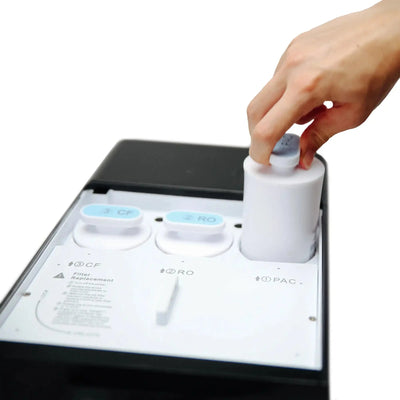
If your report shows boron and high TDS, RKIN’s first recommendation is testing and review, not guessing. For drinking-water use, the RKIN Zero Installation Purifier Countertop Reverse Osmosis Water Filter can be a practical countertop RO lane when plumbing changes are not ideal. If boron is the target contaminant, verify the treated-water result with a lab after installation.
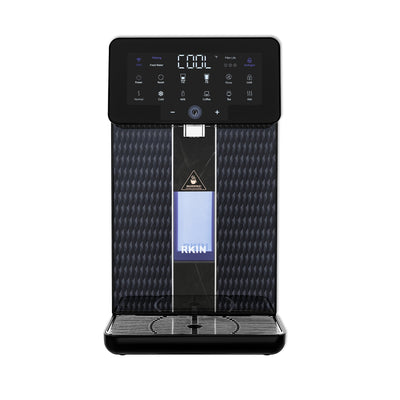
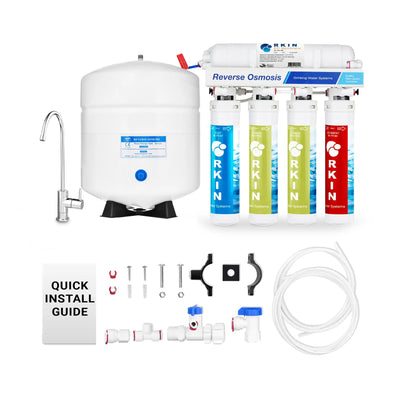
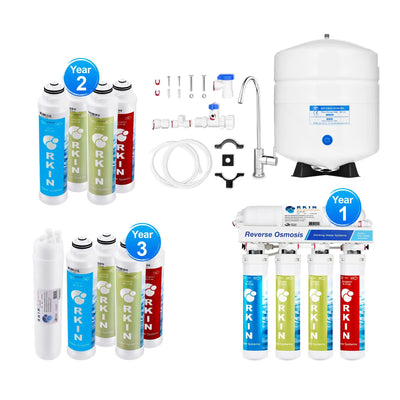
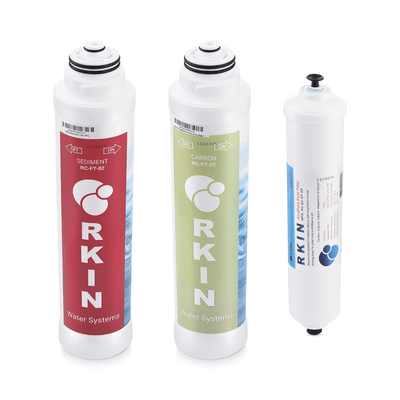
For under-sink drinking water, the RKIN Flash Undersink RO System gives homeowners a dedicated kitchen RO path. That can make sense when the goal is treated drinking water at the sink, especially when the broader whole-home system does not need to be redesigned.
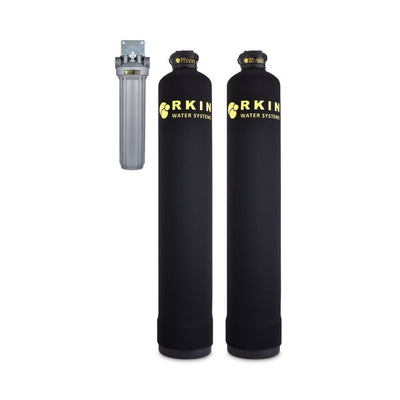
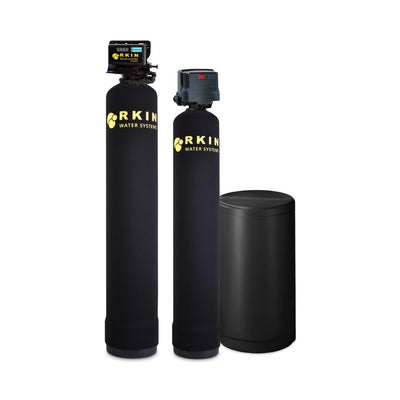
For homes where the full well chemistry points toward larger treatment, start with the RKIN whole house water treatment lane and be ready to share the lab report. Boron and high TDS are not the place for a generic one-size plan.
How to Read a Boron Lab Result
Lab reports may show boron in mg/L, µg/L, ppm, or ppb. The units matter. One mg/L is the same as 1,000 µg/L. One ppm is roughly the same as one mg/L in water. If a report uses ppb, that is roughly the same as µg/L.
Do not compare your number to a random internet threshold without checking the source, unit, and local guidance. WHO lists a guideline value. Some states publish notification levels or advisory values. Local health departments may have additional advice for private wells.
Also check whether the sample was raw water or treated water. A raw-water result tells you what the well is producing. A treated-water result tells you what the system is delivering. You need both if you are judging performance.
Finally, look at the rest of the report. pH, TDS, silica, hardness, sodium, chloride, and iron can all affect system design. If a proposal does not mention those supporting numbers, ask why.
Me personally, I would test boron first and verify the exact membrane claim before buying.
Frequently Asked Questions
Does reverse osmosis remove boron from well water?
Reverse osmosis can reduce boron, but removal depends on pH, TDS, membrane type, pressure, and system design. If boron is the target contaminant, use a certified lab before choosing equipment and test the treated water after installation to verify the result.
Will a water softener remove boron?
A standard water softener is not designed to remove boron. It targets hardness minerals like calcium and magnesium. If boron appears on a lab report, ask for treatment options matched to boron specifically, such as properly designed RO or specialty ion exchange.
Does boiling water remove boron?
No. Boiling is not a boron removal method. It can reduce water volume while dissolved material remains behind. If a lab report shows boron, use an appropriate treatment method and verify performance with treated-water testing.
Should I treat boron at the whole house or only at the tap?
That depends on your lab report and goals. Many homes start with point-of-use drinking-water treatment because it filters the water people drink and cook with. Whole-home treatment may fit when the chemistry affects many use points, but it needs a more detailed design.
What should I test with boron?
Test boron along with TDS, pH, hardness, sodium, chloride, silica, iron, manganese, nitrate, arsenic, and bacteria indicators when relevant. The supporting numbers help determine whether standard RO, specialty treatment, pretreatment, or a larger design is needed.
Ready to Stop Guessing From One Number?
If boron appears on your well report, do not buy the first filter that claims to handle “well water.” Get the full chemistry, decide whether the goal is drinking water or whole-home treatment, then verify the treated-water result.
For a drinking-water RO lane, review the RKIN Flash Undersink RO System or the RKIN Zero Installation Purifier Countertop Reverse Osmosis Water Filter. For larger well-water projects, start with RKIN support and share the lab report before choosing equipment.





0 comments