


reverse osmosis after water softener
Should Softened Water Go to Your Kitchen Cold Tap?

If your home has hard water, the most common mistake is treating every water problem like a softener problem. A softener can be the right tool for showers, laundry, water heaters, and scale-prone plumbing. It is not the same thing as a drinking water filter.
That distinction matters because homeowners often ask one question as if it has one answer: should the cold water line be softened too? The better question is this: which cold water line are we talking about, and what job does that line need to do?
The Short Answer: Split the Jobs
For many homes, softened cold water makes sense for utility use. That means the cold lines feeding laundry, toilets, some bathrooms, and appliances can benefit from reduced hardness minerals. Hardness is mainly dissolved calcium and magnesium. The U.S. Geological Survey classifies water above 120 mg/L as hard and above 180 mg/L as very hard, measured as calcium carbonate.
But the kitchen cold tap is different. That line is where taste, dissolved solids, sodium, chlorine, PFAS, lead, nitrate, arsenic, and other drinking-water questions tend to show up. A softener does not remove most of those. It trades hardness minerals for sodium or potassium ions. That can reduce scale, but it does not turn problem drinking water into polished drinking water.
A cleaner layout is to soften the home where hardness causes damage or nuisance, then use a dedicated drinking-water system at the kitchen tap or countertop. In plain English: let the softener do scale control, and let reverse osmosis do the drinking-water job.
What a Water Softener Actually Solves
A water softener is built for hardness. It helps with the white crust on fixtures, stiff laundry, soap that will not lather well, and scale that forms when hard water is heated. The 2026 EPA WaterSense guide says many U.S. homes are in hard-water regions and notes that hard water can allow scale buildup on plumbing fixtures and appliances, even though hardness itself is not treated as a health concern.
That is why softeners are usually installed near the main water line. The goal is to protect the parts of the house that see lots of water or heat: water heaters, dishwashers, washing machines, shower valves, and fixtures. Softening only the hot water can still help with water-heater scale, but it leaves cold-side fixtures and appliances exposed.
Softening the cold side is not automatically wrong. If your refrigerator ice maker, washer, or bathroom fixtures are scaling up, cold-side softening may be a good move. The issue is when the kitchen drinking tap gets lumped into that same plan without thinking through taste, sodium, and filtration.
That is where many homeowners get stuck. They hear “soft water” and assume it means cleaner water. It does not. It means less hardness.
Why the Kitchen Tap Needs a Different Standard
Your kitchen cold tap is not just another fixture. It is the water you drink, cook with, make coffee with, and use for pets. For that line, hardness is only one part of the report.
If you are on city water, review the annual water quality report for disinfectant residuals, disinfection byproducts, lead notices, PFAS updates, and any recent treatment changes. If you are on a private well, the EPA recommends annual testing for total coliform bacteria, nitrates, total dissolved solids, and pH, with added tests based on local geology and nearby activity. That guidance is meant to keep homeowners from guessing from taste alone.
A softener cannot tell you whether the water has a nitrate issue. It cannot confirm whether a well has bacteria after flooding. It cannot remove chlorine taste by itself. It cannot make a lead service line safe. And it is not a PFAS-specific treatment device.
So the right question becomes practical: should the drinking-water line receive softened water before the reverse osmosis system, or should it bypass the softener?
Softened Water Before Reverse Osmosis: When It Helps
In many hard-water homes, feeding softened water into a reverse osmosis system can make sense. The softener removes the calcium and magnesium that create scale. Less scale can reduce stress on the RO membrane and help the system maintain flow.
That does not mean every home should do it. If the incoming water has very high sodium, chloride, total dissolved solids, iron, manganese, hydrogen sulfide odor, bacteria concerns, or unusual well chemistry, the system design should be based on a lab report rather than a default plumbing layout. A softener can protect one part of the system while doing nothing for another problem.
Taste also matters. Some people notice softened water at the tap, especially when the source water is very hard. A reverse osmosis drinking-water system can reduce many dissolved ions after the softener, which is one reason RO is often paired with softening in high-hardness homes.
The practical layout often looks like this:
- Whole-home softener or conditioner handles hardness for the house.
- Kitchen drinking water runs through a dedicated reverse osmosis system.
- The homeowner tests source water first, then confirms the treated water after installation.
That is not overbuilding. It is assigning the right job to the right tool.
When to Keep the Kitchen Cold Tap Unsoftened
There are also cases where homeowners prefer an unsoftened cold line to the kitchen. Some people simply dislike the feel or taste of softened water. Others are watching sodium intake and want to reduce added sodium at the untreated tap. If that is the goal, the bypass needs to be intentional.
A bypassed kitchen tap is not the same as filtered drinking water. It is just unsoftened source water. If the water has chlorine taste, PFAS concerns, lead risk, arsenic, nitrate, or high TDS, bypassing the softener does not solve those issues. It only keeps the softener out of that line.
For a clean drinking-water plan, you still need a treatment step matched to the water report. That might be under-sink reverse osmosis, a countertop reverse osmosis system, or a larger design for homes with unusual well chemistry.
If you are planning plumbing during a remodel, ask for a dedicated line to the kitchen drinking faucet before the walls close. If you are not remodeling, a countertop or under-sink system can still solve the drinking-water lane without reworking the whole house.
What Does Not Work
The weakest plan is a one-tool plan. A softener alone is not a drinking-water filter. A carbon filter alone does not soften water. A pitcher filter is not a whole-home scale-control plan. Bottled water avoids the tap question but creates storage, plastic waste, and repeat buying.
The other weak plan is chasing taste without testing. “It tastes salty” could mean softener settings, source-water sodium, chloride, TDS, regeneration timing, or simply a taste change after moving from hard water to softened water. “It tastes like chlorine” points to a different lane entirely. “It leaves white dust in a humidifier” points back to dissolved minerals.
Start with the report. For hardness planning, get hardness in grains per gallon or mg/L as calcium carbonate. For drinking-water planning, add TDS, pH, chlorine, lead risk, nitrate if on a well, and any local contaminant concerns. If the water source is a private well, bacteria testing belongs in the baseline.
Then design the system around the results, not the other way around.
How RKIN Fits the Drinking-Water Lane
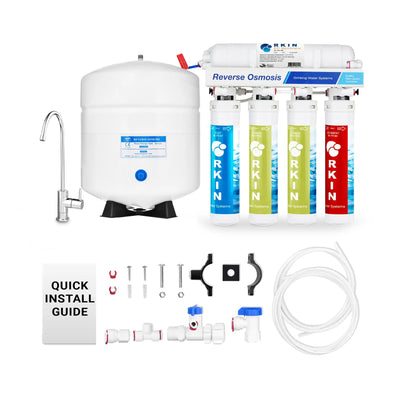
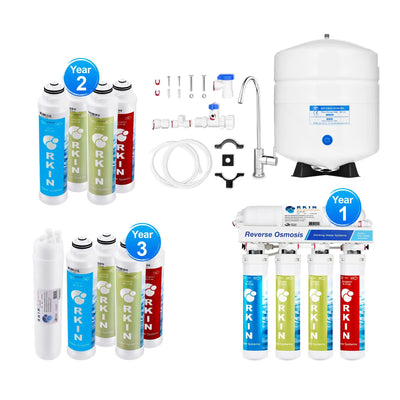
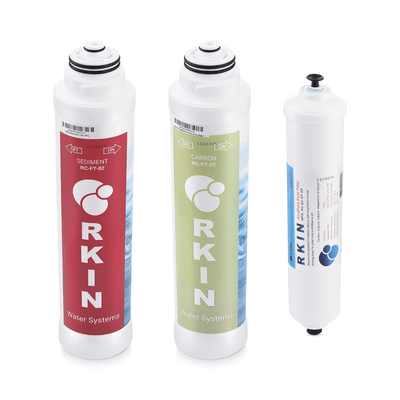
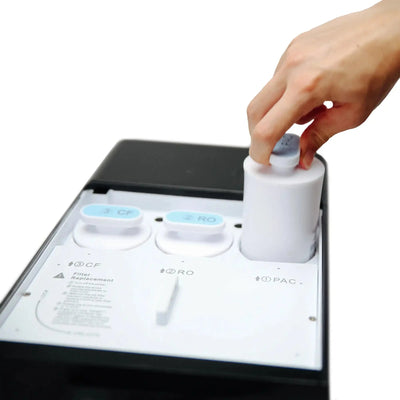
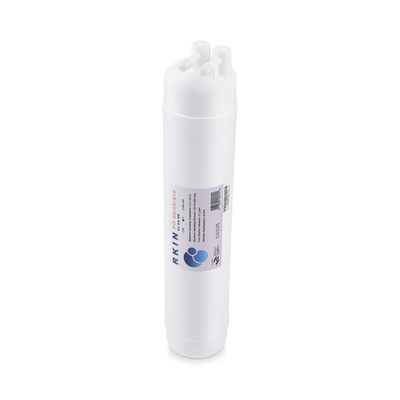
If the goal is better drinking water at the kitchen tap, the RKIN Flash Undersink RO System is designed for homeowners who want a dedicated under-sink reverse osmosis setup. It connects at the cold-water line and sends treated water to a separate faucet, keeping the drinking-water job separate from the whole-home hardness job.
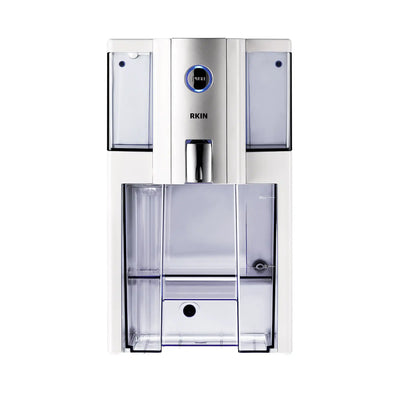
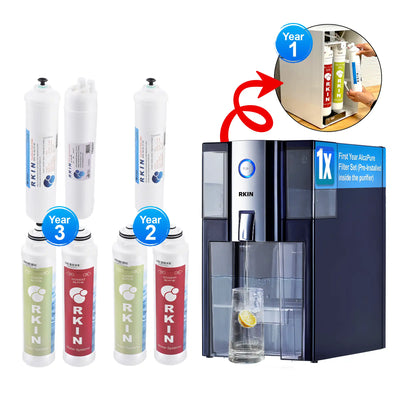
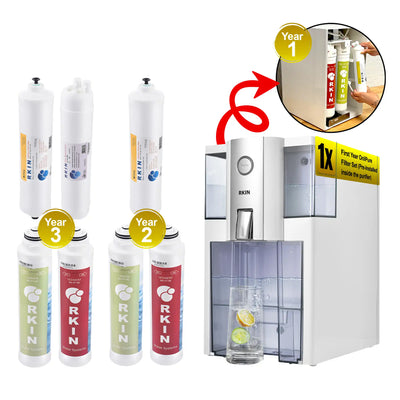
If you rent, cannot modify plumbing, or want a no-installation option, the RKIN Zero Installation Purifier Countertop Reverse Osmosis Water Filter gives you a countertop RO path without opening the cabinet. It is a better fit when the main question is drinking water, not whole-home scale.
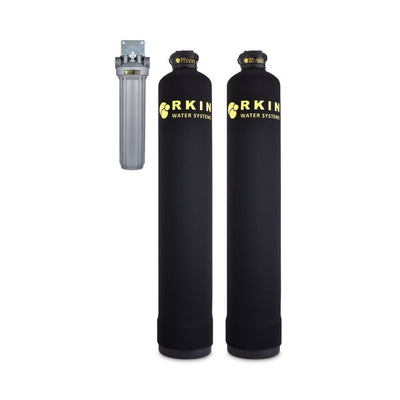
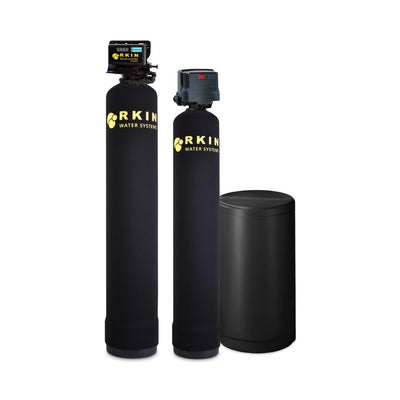
For homes with very hard water, well water, or mixed problems, we recommend testing first. The right answer may be a softener plus drinking-water RO, a salt-free conditioner plus RO, or a whole-home design. The point is not to buy more equipment. The point is to stop asking one product to do every job.
Me personally, I would decide separately what should protect the house and what should filter drinking water.
Frequently Asked Questions
Should cold water be softened?
Cold water can be softened when hardness is causing scale in fixtures, appliances, or plumbing. The kitchen drinking line deserves a separate decision because softening reduces hardness but does not remove many drinking-water contaminants. Many homes use softened water for the house and reverse osmosis for the drinking-water tap.
Is softened water safe to drink?
Softened water is commonly used in homes, but it may change taste and sodium or potassium levels depending on the system and source water. If drinking-water quality is the concern, test the water and use a treatment method matched to the results. A softener should not be treated as a drinking-water purifier.
Should reverse osmosis go before or after a softener?
In hard-water homes, reverse osmosis is often installed after the softener so the RO membrane sees less scale-forming calcium and magnesium. The final layout should still be based on water test results, especially for wells with iron, manganese, bacteria concerns, high TDS, or unusual chemistry.
Does a water softener remove PFAS, lead, or chlorine?
A standard softener is not designed as a PFAS, lead, or chlorine treatment system. It targets hardness minerals. Drinking-water concerns like PFAS, lead risk, chlorine taste, nitrate, arsenic, or high TDS need testing and a treatment technology selected for that contaminant group.
What is the best filter after a water softener?
For drinking water, reverse osmosis is often the best next step because it is designed for dissolved substances that a softener does not address. The RKIN Flash Undersink RO System fits homes that want an under-sink drinking-water setup, while the RKIN Zero Installation Purifier Countertop Reverse Osmosis Water Filter fits no-plumbing situations.
Ready to Fix the Drinking-Water Lane?
If hard water is beating up your fixtures, solve the hardness problem. If your kitchen tap is the concern, solve the drinking-water problem. Those are related, but they are not the same.
Start with a current water test or city water report, then choose the system that fits the lane. For under-sink reverse osmosis, review the RKIN Flash Undersink RO System. For a no-plumbing countertop option, review the RKIN Zero Installation Purifier Countertop Reverse Osmosis Water Filter.




0 comments