


countertop reverse osmosis filter
Countertop vs Undersink RO: Installation Checklist

Countertop and under-sink reverse osmosis systems can address a similar drinking-water goal while asking very different things from the room. The deciding factor is often installation, not the number of stages on a product page.
Walk the space before you compare models. This checklist covers counter clearance, refill habits, plumbing connections, drain access, power, faucet placement, storage, service access, and the practical difference between a portable appliance and a fixed system.
Define the One Tap or Appliance You Want to Serve
A point-of-use reverse osmosis system treats water at one location, usually the kitchen sink, a countertop dispenser, or a dedicated drinking water tap. That matters because most homeowners do not need reverse osmosis water at every shower, toilet, and hose bib. They usually want better drinking water, cooking water, coffee water, and ice.
The EPA’s WaterSense page for point-of-use reverse osmosis systems says some inefficient units can send up to ten gallons of reject water down the drain for every gallon of treated water produced. WaterSense-labeled point-of-use RO systems must stay at or below 2.3 gallons of reject water for every gallon of treated water. EPA also says choosing a labeled model can reduce water use by more than 3,100 gallons per year compared with a typical point-of-use RO system.
That does not mean every household should shop by the label alone. It means efficiency has become part of the real filter conversation. A system can have strong contaminant reduction claims and still be a poor fit if it is slow, wasteful, hard to maintain, or wrong for the installation space.
List Every Connection the System Requires
Reverse osmosis uses pressure to push water through a semi-permeable membrane. The membrane separates treated water from a reject stream that carries many dissolved substances away. Most drinking water RO systems also include prefilters and post-filters, often carbon-based, because different filter stages do different jobs.
The CDC’s home water treatment guide explains that reverse osmosis systems may reduce levels of several dissolved substances and that buyers should check the specific system label for the chemicals it removes. That last part is the step many homeowners skip. “RO” describes the technology, not every tested claim for every model.
When you compare systems, look for the performance data sheet and the exact reduction claims. A useful RO buying page should tell you what the system was tested for, what standard applies, how often filters should be changed, and whether the unit is meant for a countertop, under-sink, or other point-of-use setup.
Use Efficiency Information as One Comparison Point
WaterSense is best known for water-efficient toilets, faucets, and showerheads, but EPA now includes point-of-use reverse osmosis systems in its product specification list. The point is simple: if RO systems are going to be used in more homes, they should be designed to treat water without unnecessary waste.
EPA’s 2026 clarification did not turn WaterSense into a contaminant-removal label. It is still a water-efficiency and performance program. For homeowners, the practical takeaway is this:
- Ask how much reject water the system produces for each gallon of treated water.
- Ask whether efficiency claims are independently certified.
- Ask whether performance claims are tested to the right standard.
- Ask whether the system maintains a realistic membrane life.
- Ask whether the installation type matches your home.
That is a better checklist than choosing the biggest filter housing or the longest list of marketing claims.
Verify Product Claims at the Exact Model Number
The main standard homeowners see around drinking water RO is NSF/ANSI 58. NSF explains that NSF/ANSI 58 covers point-of-use reverse osmosis drinking water treatment systems, including material safety, structural integrity, total dissolved solids reduction, efficiency, recovery, and optional contaminant reduction claims.
The optional part matters. A system can be tested under a reverse osmosis standard without making every possible reduction claim. NSF lists optional claims that can include arsenic, chromium, nitrate/nitrite, fluoride, lead, VOCs, perchlorate, radium, and other substances. You should not assume a claim is covered unless the product literature says it is.
A practical homeowner screen looks like this:
- Is the unit a true reverse osmosis system, not only a carbon filter?
- Is it designed for the location where you will use it?
- Does the product data show the contaminants you care about?
- Are filter changes simple enough that you will actually keep up with them?
- Does the system avoid wasting more water than needed?
If your concern comes from a lab report, match the filter to the lab result. If your concern comes from taste, odor, or general tap water quality, use the local water quality report or a private test to narrow the decision.
Compare Countertop, Faucet-Connected, and Under-Sink Layouts
The right point-of-use RO system depends on the home, not just the water. A homeowner who owns the kitchen and can modify plumbing may prefer an under-sink setup. A renter, condo owner, college parent, or frequent mover may need a countertop option that does not require permanent changes.
Countertop RO systems are popular because they avoid drilling, dedicated faucets, and under-sink storage space. Under-sink systems can be a cleaner fit when you want the system hidden and you are comfortable connecting it to the cold water line. Faucet-connected systems can be simple, but they may be less convenient for everyday cooking and filling larger containers.
Also think about daily rhythm. If you fill large bottles, cook at home, or make coffee every morning, flow rate and reservoir design matter. If you only drink a few glasses a day, installation flexibility may matter more than maximum capacity.
Match RKIN Models to the Available Space
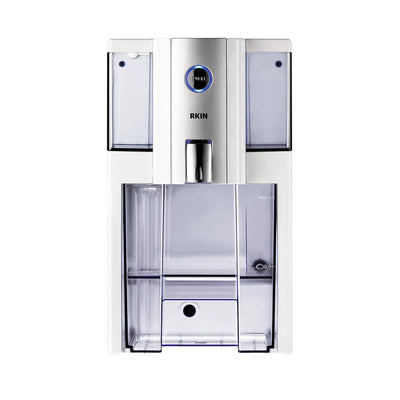
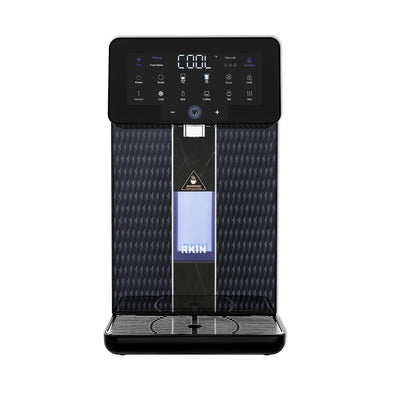
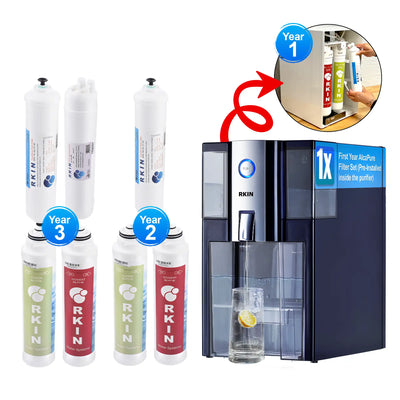
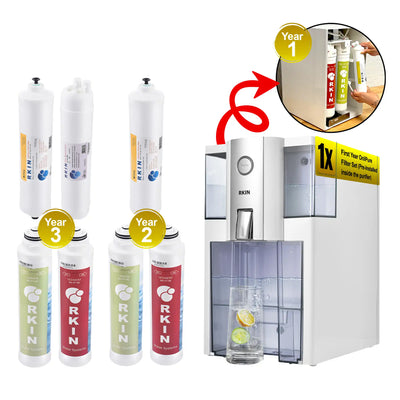
This is what the RKIN Zero Installation Purifier is designed for: point-of-use reverse osmosis without permanent installation. It is a countertop RO option for homeowners and renters who want treated drinking water without drilling into counters or changing under-sink plumbing.
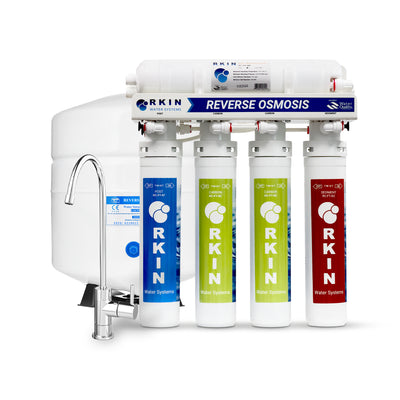
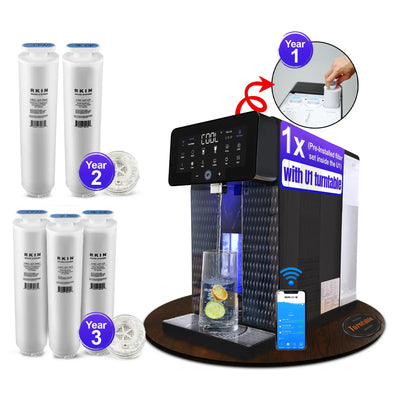
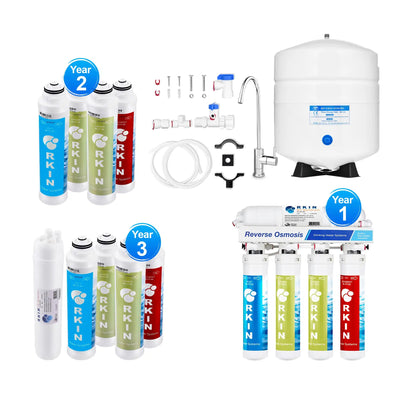
For a more compact countertop setup, the RKIN U1 4-in-1 Water Filter System is built for spaces where a fill-tank design makes more sense. If you want an under-sink option and are comfortable with a cold-water-line connection, the RKIN Flash Undersink RO System is the better product family to review.
Do not choose only by category name. Choose by install type, tested claims, maintenance needs, water use, and how your household will use the system every day.
Installation Mistakes to Catch Before Ordering
The first mistake is assuming every RO system has the same contaminant claims. The second is ignoring waste water. The third is buying an installation type that does not fit the home.
Pitcher filters and refrigerator filters can improve taste, but they are not the same as a point-of-use reverse osmosis system. Boiling water is useful in some advisory situations when local officials tell you to boil, but boiling does not remove dissolved substances the way RO can. Bottled water can be convenient during a short disruption, but it is not a satisfying long-term plan for most households.
The better approach is to decide what problem you are solving, then choose the simplest system that fits that problem. For many families, that means a point-of-use RO system at the kitchen rather than treating the whole house with RO.
Measure the Room Before You Choose the Format
Photograph the area and record dimensions with doors, drawers, and faucet handles open. For an under-sink system, locate the cold-water line, drain, electrical outlet if required, and the path for a dedicated faucet.
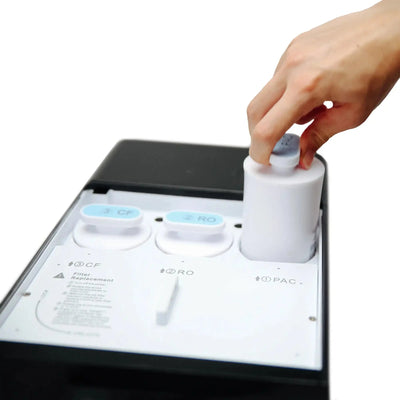
For a refill-tank countertop appliance, measure vertical clearance and the distance to an outlet. These systems generally do not require a permanent plumbing connection, but they do require a repeatable refill and cleaning routine.
- Measure usable counter or cabinet space, including service clearance.
- Identify water, drain, faucet, and power requirements for the exact model.
- Check whether drilling or landlord approval is needed.
- Estimate daily output and storage needs for the household.
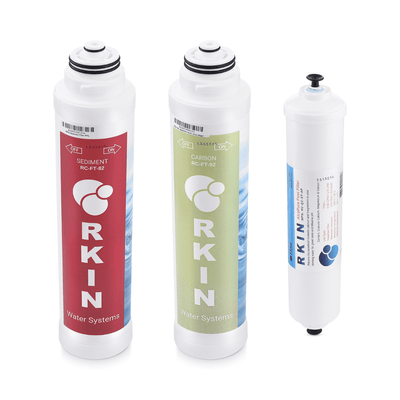
- Confirm how replacement filter cartridges can be reached after installation.
A layout that is easy to maintain will usually serve a household better than a larger system that is difficult to refill, sanitize, or service.
Frequently Asked Questions
Does every countertop RO connect to the faucet?
No. Some models connect to a faucet, while refill-tank countertop appliances are filled manually. Check the exact model.
What should I measure under the sink?
Measure cabinet dimensions and service clearance, then locate the cold-water line, drain, power source if needed, and faucet path.
Does an under-sink RO always need a dedicated faucet?
Many do, but installation details vary. Review the model's current manual before planning the hole or faucet location.
Which format is easier for renters?
A refill-tank countertop unit is often easier because it avoids permanent plumbing changes, but lease and counter-space limits still matter.
Should I compare stage count?
Stage count alone is not a reliable performance measure. Compare verified reduction claims, capacity, maintenance, and installation fit.
Choose the Layout That You Can Maintain
RKIN's countertop options emphasize no-plumbing placement, while under-sink systems trade portability for an installed drinking-water station. Confirm the current manual and specifications for the exact model before ordering.






0 comments