



dishwasher leaves cloudy glasses
Hard-Water Film vs Detergent Residue: Simple Test

White haze on glassware can come from mineral film, excess detergent, food soil, or permanent etching. Those problems look similar under kitchen light but call for different fixes.
Use this diagnostic before changing the dishwasher or buying water treatment. Test whether the film wipes away, responds to a small amount of vinegar, appears on hand-washed items, and changes with detergent dose or rinse-aid settings.
Why White Film Has More Than One Cause
White film forms when something remains on dishes after water evaporates. In many homes, that “something” is mineral residue. Hard water does not disappear in the dishwasher. Heat speeds drying, and drying leaves minerals behind on glass, plastic, stainless steel, and the inside of the machine.
The first clue is texture. Mineral film often feels chalky or gritty. It may be worse on clear glasses, dark bowls, and plastic containers. You may also see scale around the dishwasher door, on the heating element, inside a kettle, on shower glass, or near faucets. Those signs point to a water chemistry issue, not just a dishwasher issue.
High total dissolved solids can add to the problem. The EPA lists total dissolved solids under secondary drinking water standards, which are non-enforceable guidelines tied to taste, odor, color, and other nuisance effects. Secondary standards are not the same as safety limits. They are still useful because they explain why water that meets legal requirements can leave deposits or taste off.
Detergent is the other major variable. Modern dishwashers use less water than older machines, and detergents are concentrated. Too much detergent can leave residue, especially when water is soft or the load is light. Too little detergent can leave food soil behind, especially when water is hard. That is why guessing can waste weeks: the same white haze can have different causes.
Use a Small Vinegar Test to Separate Film From Etching
Before you shop for a filter or call an appliance repair tech, identify what you are seeing. Use a simple white-vinegar wipe test on one cloudy glass. If vinegar removes the haze after a few minutes, mineral film is likely. If the glass stays cloudy even after cleaning, the surface may be etched. Etching is tiny permanent damage to the glass, often caused by a mix of high heat, soft water, too much detergent, and long cycles.
Food residue looks different. It may collect in corners, on bowls that faced the wrong direction, or on items blocked from the spray arm. It can feel slippery, sandy, or greasy. Mineral film is usually more even, especially on glassware.
Also check the dishwasher itself:
- Clean the filter at the bottom of the tub.
- Make sure spray arms spin freely.
- Check that tall pans are not blocking water flow.
- Confirm that the rinse aid dispenser is filled and set correctly.
- Run the kitchen hot water before starting the dishwasher if your machine’s manual recommends it.
If the machine is clean, loaded correctly, and still leaves film, move upstream to the water.
Notice When Loading and Cooking Change the Pattern
Dishwasher film often feels seasonal because usage changes. In October, more homes shift toward cooking, baking, school-night routines, football weekends, and early holiday prep. The dishwasher runs more often. Clear glasses, serving dishes, and storage containers rotate through more cycles. A mild water issue that was easy to ignore in summer becomes visible fast.
Water conditions can also shift by location. Municipal systems may change sources, flush lines, or adjust treatment in ways that affect taste, smell, or mineral feel. Private wells can respond to rainfall patterns, dry spells, and changes in the aquifer. None of that means the water is automatically unsafe. It means a homeowner should treat repeated film as a clue, not just an appliance annoyance.
Start by reading your local water report if you are on a public system. The EPA Consumer Confidence Report page explains how utilities report detected contaminants and other water quality details. If you use a private well, public utility reports do not cover your household water. Testing is the better starting point.
Why More Detergent Can Make Residue Worse
Running hotter cycles may help cleaning, but it can also bake minerals onto glassware and speed etching on delicate items. It is not a water treatment plan.
Switching detergent can help when the issue is dosage or formula. It will not change the hardness minerals entering the machine. If your faucet aerators, shower glass, and kettle show scale too, detergent is only part of the story.
A drinking-water filter at the kitchen sink will not treat dishwasher water. Countertop and under-sink reverse osmosis systems are built for drinking and cooking water at one point of use. They are not connected to the dishwasher line unless a qualified installer designs a setup for that purpose. For whole-home scale behavior, the treatment belongs at the main water line.
Boiling water does not solve dishwasher film. Boiling can concentrate minerals as steam leaves the pot. That is why kettles can build scale even when the water looks clear.
When Whole-Home Hardness Treatment Is Relevant
If hard water is the real issue, focus on whole-home water treatment. A point-of-entry system treats water before it travels to the dishwasher, laundry, showers, and faucets. That is different from point-of-use drinking water treatment, which focuses on one sink or appliance.
Homeowners usually compare two categories for hardness behavior:
- Traditional water softeners exchange hardness minerals for sodium or potassium ions.
- Salt-free conditioners change how hardness minerals behave so scale is easier to manage, but they do not remove hardness minerals from the water.
Those categories are not the same, and the right choice depends on your water test, plumbing, expectations, local rules, and maintenance preferences. If your goal is less scale buildup without salt handling, a conditioner may fit. If your goal is true soft water, compare a softener. If your water also has taste, odor, sediment, or well-water concerns, the design may need more than one treatment stage.
Certifications and documented claims matter. NSF explains that water treatment standards cover different product claims. Do not assume one device handles every water issue because the label sounds broad. Match the system to your test results.
How RKIN Fits a Scale-Control Plan
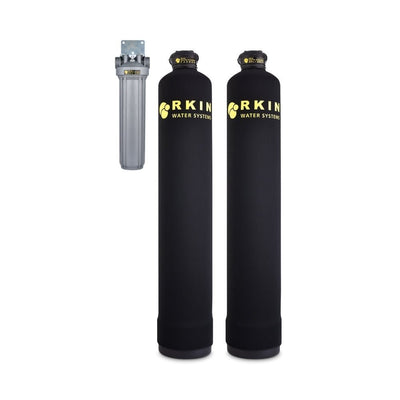
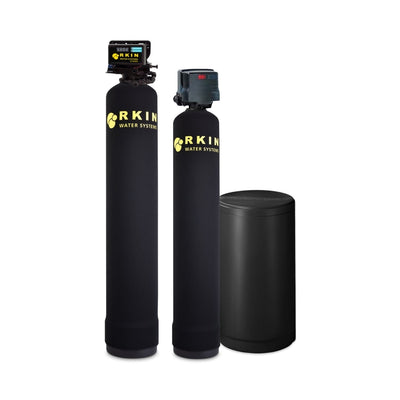
This is where the RKIN whole house water treatment collection is worth comparing. Whole-house systems are meant for problems that show up across the home, not just in one drinking glass. If the dishwasher, shower glass, fixtures, and laundry all point to scale, start with point-of-entry treatment rather than another pitcher.
For hardness and scale behavior, RKIN whole-home options include systems designed around water conditioning, carbon filtration, and combined treatment needs. The exact fit depends on whether you are on city water or well water, whether sediment is present, and what a water test shows. Use the collection as a starting point, then match the system to the problem instead of guessing from the dishwasher alone.
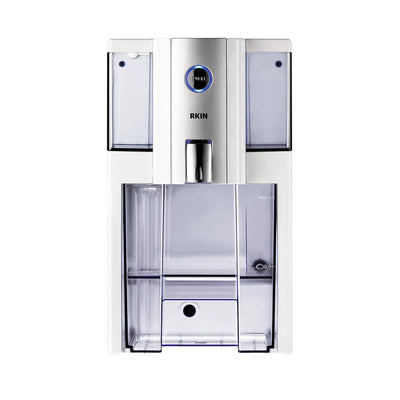
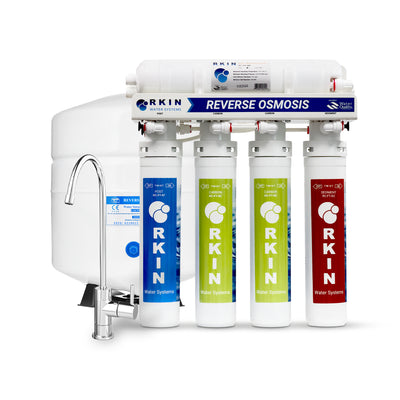
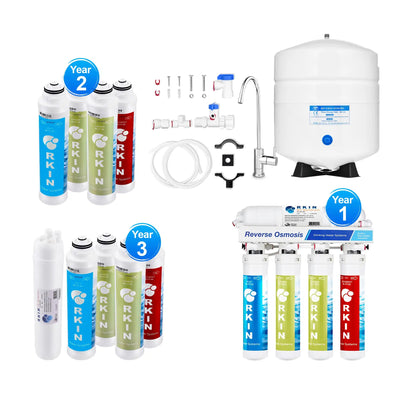
If your complaint is only drinking-water taste, odor, or dissolved solids at the tap, a point-of-use reverse osmosis system may make more sense. The RKIN Zero Installation Purifier Countertop Reverse Osmosis Water Filter focuses on drinking and cooking water without permanent installation. It is not a whole-home scale system, but it can be the right tool when the problem is what you drink, not what runs through every appliance.
Record the Result Before Buying Equipment
Use this order before you spend money on a fix:
- Clean the dishwasher filter and spray arms.
- Run the vinegar wipe test on cloudy glassware.
- Check detergent amount against the dishwasher and detergent labels.
- Fill and adjust rinse aid if your machine uses it.
- Look for scale on faucets, shower glass, kettles, and the dishwasher tub.
- Read your local Consumer Confidence Report if you use city water.
- Test your water if you use a private well or suspect a home-specific issue.
- Choose point-of-entry treatment for whole-home scale, or point-of-use treatment for drinking water.
Do not skip the water test if you are on a well, see sudden changes, or notice color, odor, or sediment along with film. A dishwasher symptom can be the first visible sign that your water deserves a closer look.
Run the Test on Two Matching Glasses
Choose two already-cloudy glasses. Clean one with a little white vinegar according to the glassmaker's care instructions and leave the other unchanged as a comparison. Rinse both well.
If the cloudiness clears, removable mineral film is likely part of the problem. If it remains and the surface looks scratched or rainbow-like, permanent etching may be involved.
- Check the detergent label and reduce overdosing.
- Confirm rinse-aid and dishwasher salt settings where applicable.
- Clean spray arms, screens, and the dishwasher filter.
- Compare a hand-washed glass with a machine-washed glass.
- Test water hardness before selecting whole-home treatment.
Do not mix cleaning chemicals, and never combine vinegar with chlorine bleach. Follow the dishwasher and glassware manufacturers' cleaning instructions.
Frequently Asked Questions
How can I tell hard-water film from glass etching?
Removable mineral film may respond to a small vinegar spot test, while permanent etching generally does not disappear.
Can too much dishwasher detergent leave a white residue?
Yes. Detergent dose, water hardness, loading, and rinse performance can all affect residue.
Does rinse aid remove hardness from the home's water?
No. It can improve sheeting and drying in the dishwasher, but it does not remove hardness minerals from the supply.
Should I test water hardness before buying a softener?
Yes. Measure hardness and confirm the symptoms so the equipment is sized for the actual water.
Does a salt-free conditioner soften water?
No. A salt-free conditioner such as SAC conditions hardness minerals to help reduce scale adhesion; it does not remove calcium or magnesium.
Choose Treatment Only After the Film Is Identified
If hardness is confirmed across the home, compare a traditional softener with scale-conditioning goals. RKIN's OnliSoft uses seed-assisted crystallization to condition hardness minerals and help reduce scale adhesion; it does not remove calcium, magnesium, hardness, or TDS.






0 comments