


bottled water nanoplastics filter
Microplastics vs Nanoplastics: What Filter Labels Prove

“Plastic particles” covers a wide size range, but filter labels often leave that range unstated. Evidence about visible or micrometer-scale particles cannot automatically be extended to much smaller nanoplastics.
Use this guide to audit a claim. It separates particle-size language from membrane descriptions, explains why a generic pore-size statement is incomplete, and shows which documents should support a reduction claim before you rely on it.
Why Particle Size Changes the Question
Microplastics are plastic particles smaller than 5 millimeters. Nanoplastics are smaller still, often discussed below 1 micrometer. That size difference matters because small particles are harder to measure, harder to compare across studies, and harder for homeowners to think about in everyday terms.
For years, most people heard about microplastics in oceans, seafood, and bottled water. Nanoplastics were less visible because the testing tools were not as common. The 2024 bottled water study got attention because it used a newer imaging method that could identify far smaller particles than older approaches. The result was a much higher particle count than many readers expected.
Regulators are also paying closer attention. EPA’s 2026 draft Sixth Contaminant Candidate List included microplastics as a contaminant group for further review under the Safe Drinking Water Act process. A contaminant candidate list is not the same as a finished federal limit. It is a signal that more research, monitoring discussion, and future decisions may follow.
For homeowners, the takeaway is simple: microplastics and nanoplastics are an emerging concern, not a settled one-size-fits-all filter claim. If you want to reduce tiny particles at the drinking-water tap, focus on filtration technology, real testing, and system maintenance.
Where Basic Particle Filters Reach Their Limit
Many common filters use activated carbon. Carbon is useful for taste, odor, chlorine, and some organic chemicals. It is why pitcher filters, refrigerator filters, and many inline filters can make water taste better. But carbon adsorption is not the same as membrane separation.
A basic carbon filter may catch some larger particles if it has a tight physical structure, but many everyday carbon filters are not designed or tested specifically for nanoplastics. The packaging might talk about taste, odor, chlorine, or sediment. That does not automatically mean it has meaningful performance for very small plastic particles.
Sediment filters are similar. A sediment cartridge can be helpful for sand, rust, and visible particles, but its micron rating matters. A 5-micron sediment filter is working in a different size range from nanoplastics. It may protect downstream equipment, but it is not the same as a drinking-water reverse osmosis membrane.
Bottled water is not a clean escape hatch either. The 2024 NIH summary focused on bottled water, not tap water, and the study found many particles in bottled samples. That is one reason more homeowners are looking for a drinking-water setup at home instead of carrying plastic bottles into the kitchen every week.
What an RO Membrane Contributes
Reverse osmosis uses pressure to push water through a semi-permeable membrane. Water molecules pass through; many dissolved substances and particles are rejected and routed away in the waste stream. Most home RO systems also use carbon and prefiltration before or after the membrane so the system handles taste, odor, chlorine, and membrane protection as a sequence.
That membrane step is the reason reverse osmosis comes up when people search for plastic particles in drinking water. RO is different from a pitcher filter because the membrane is designed for very small separation, not just taste improvement. EPA’s home filtration fact sheet tells consumers to match a filter to the substances they want reduced instead of assuming every filter does the same job in its filter guidance.
The careful answer is this: reverse osmosis can reduce many tiny particles, including many particles in the microplastic and nanoplastic conversation, when the system is properly designed, maintained, and matched to the concern. But no blog post should promise that every home RO unit removes every plastic particle under every condition. Particle size, shape, charge, membrane condition, water pressure, and filter age all matter.
If you are comparing systems, look for clear reduction claims, third-party testing where available, a real filter replacement schedule, and a product page that explains what the system is built to reduce. Avoid vague “removes everything” language.
Four Details a Useful Claim Should Include
Start with the technology. For drinking and cooking water, reverse osmosis is usually the strongest home category to research because it combines a membrane with supporting filtration. Carbon-only systems can be useful, but they should not be treated as interchangeable with RO for this question.
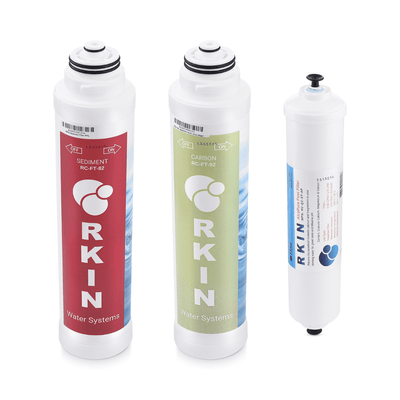
Next, look at maintenance. A neglected RO system is not the same as a properly maintained RO system. Prefilters protect the membrane. Post-filters polish taste. The membrane has a service life. If those parts are ignored, performance can drift and water quality can change.
Then look at installation fit. The best filter on paper does not help if it does not match your home. Renters may not be allowed to drill, add a dedicated faucet, or alter plumbing. Homeowners may prefer an undersink system. Families with wide water concerns may need a whole-house system for sediment, chlorine, or hardness clues, plus a point-of-use RO system for drinking water.
Finally, understand what the filter is not doing. RO is for drinking water at a point of use. It is not a replacement for official boil-water instructions. It is not a substitute for private well testing. It is not a reason to ignore a utility notice. It is one tool in a larger water plan.
How to Review RKIN System Information
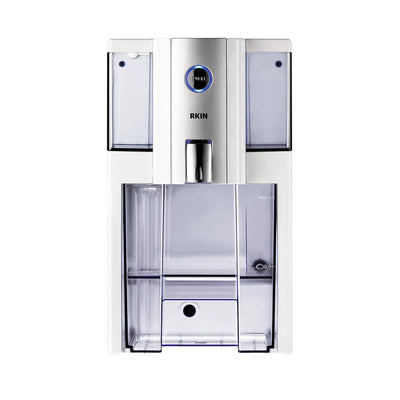
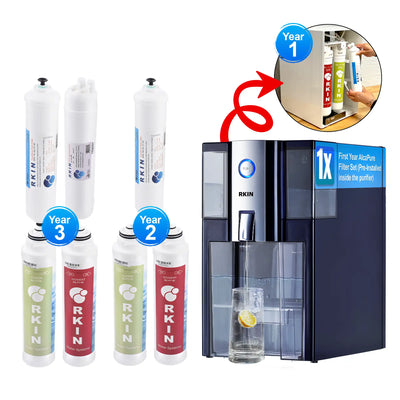
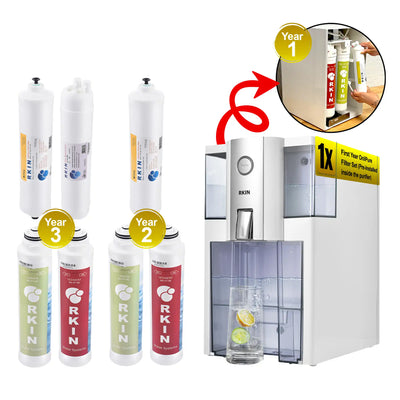
If your main concern is drinking and cooking water, the RKIN Zero Installation Purifier is designed for countertop reverse osmosis without permanent plumbing changes. That makes it a practical fit for apartments, rentals, offices, and homes where an undersink installation is not the next move.
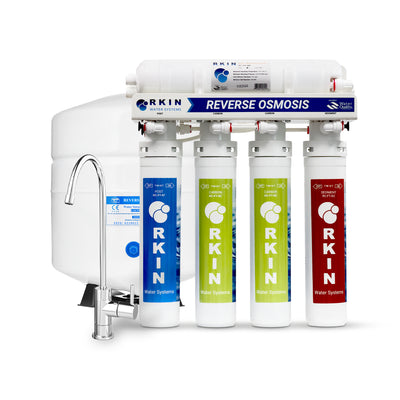
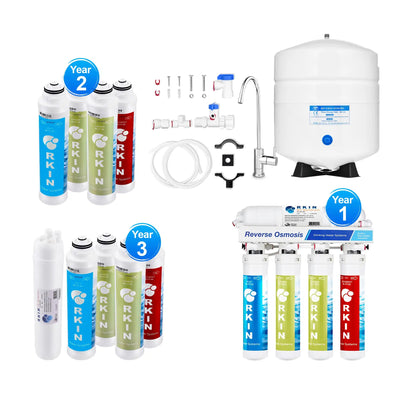
For homeowners who want a plumbed-in drinking-water setup, the RKIN Flash Undersink RO System is the built-in route. It connects at the sink area and keeps reverse osmosis drinking water available through a dedicated faucet.
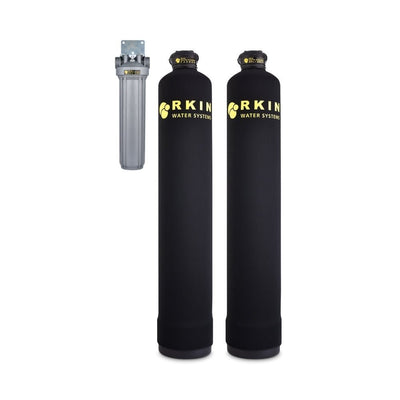
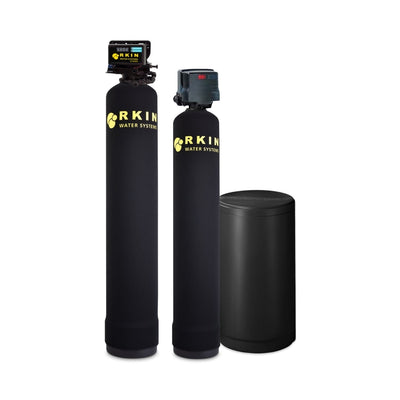
If your concern goes beyond drinking water and includes sediment, taste throughout the home, staining, hardness clues, or water that affects fixtures and appliances, start with the RKIN whole-house water treatment collection. Whole-house treatment and point-of-use RO solve different jobs, and many homes need the right combination rather than one oversized guess.
Reduce Avoidable Plastic Contact Without Chasing Certainty
A filter is one part of the plan. You can also reduce routine plastic contact by using refillable stainless steel or glass bottles, avoiding long-term storage of water in hot plastic containers, and filtering water at home instead of buying plastic bottles for everyday use.
Do not treat every headline as a final answer. Microplastic and nanoplastic science is moving fast, and methods are still being refined. A high-quality home plan should stay boring: use authoritative sources, match technology to the concern, maintain the system, and re-check your water when the source or plumbing changes.
If you use private well water, test before you buy. Microplastics may be part of the conversation, but wells can also involve bacteria, nitrate, arsenic, iron, manganese, hardness, sediment, pH, and total dissolved solids. Lab results tell you which issue comes first.
Audit the Claim Before Comparing Products
A defensible label should tell you more than the word “microplastics.” Look for the particle size or test challenge, the tested configuration, the reduction result, and the organization or laboratory behind it.
Membrane technology can be relevant, but the presence of a membrane is not the same as an independent system-level claim for every particle category.
- Find the exact particle term and size range used in the test.
- Check whether evidence covers the complete system or only one component.
- Verify the test standard, laboratory, and current model number.
- Separate a technology explanation from a certified reduction claim.
- Avoid extending microplastic evidence to nanoplastics without matching data.
If those details are missing, treat the statement as a description of possible filtration behavior, not proof of a specific household result.
Frequently Asked Questions
Are microplastics and nanoplastics the same size?
No. Nanoplastics are smaller, and evidence for one size category should not be assumed to cover the other.
Does a pore-size number prove nanoplastic reduction?
Not by itself. Real-world performance also depends on the material, system design, test conditions, and evidence for the complete configuration.
Does reverse osmosis automatically have a nanoplastics certification?
No. Reverse osmosis describes a treatment process; a specific certification or test claim must still be verified for the model.
What should a useful particle-reduction report identify?
It should identify the particle or challenge size, tested model and configuration, method, result, and responsible laboratory or certifier.
Should I replace filters on schedule?
Yes. Follow the manufacturer's current replacement and maintenance instructions because neglected components can reduce system performance.
Compare Evidence at the Model Level
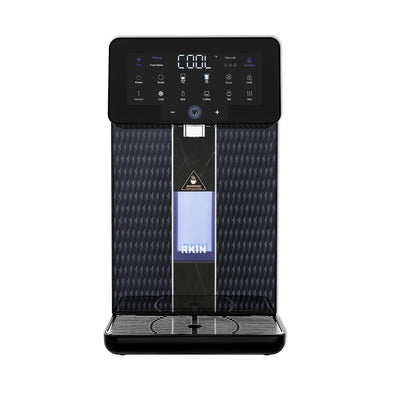
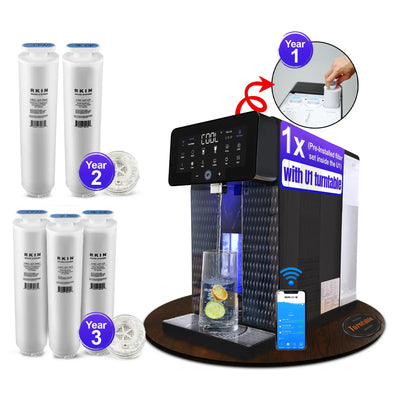
RKIN offers reverse-osmosis options in countertop and under-sink formats. Compare the current specifications for the exact model you are considering, and do not treat a general RO explanation as a blanket claim for every plastic particle.






0 comments