


reverse osmosis drinking water
UV Water Purifier vs Reverse Osmosis: Which Do You Need

A UV water purifier and a reverse osmosis system solve different water problems. Treating them as interchangeable is how homeowners end up with the wrong filter at the right sink.
The stakes are practical, not academic. One household may be trying to answer a private-well bacteria question after heavy rain. Another may be reading a city water report and seeing PFAS, lead, nitrate, or TDS. Those two families should not buy the same product for the same reason.
The timing matters. The EPA's private well guidance reminds homeowners that private wells are not managed by a public utility, and owners are responsible for testing and treatment decisions. EPA explains that here: Private Drinking Water Wells. City-water customers are asking similar questions as PFAS rules, lead-service-line inventories, storm notices, and boil-water alerts make water treatment feel less optional than it used to.
So if you are comparing a UV water purifier vs reverse osmosis, start with the contaminant type. UV is a light-based disinfection step. Reverse osmosis is a membrane-based filtration step. Both can belong in a good water plan, but they are not the same tool.
What a UV Water Purifier Does
A UV water purifier uses ultraviolet light to inactivate many microorganisms as water passes through a chamber. The water needs to be clear enough, the lamp needs to be strong enough, and the flow rate needs to match the system design. If those conditions are off, UV performance can drop.
That is why UV is usually discussed for biological concerns, especially private wells. A well can look clear and still need testing. After flooding, repairs, nearby septic issues, or a sudden change in smell or clarity, the EPA advises well owners to inspect, disinfect, sample, and test before returning to normal use. EPA's post-flood well guidance is here: What to Do With Your Private Well After a Flood.
UV does not remove dissolved minerals. It does not remove PFAS, lead, arsenic, nitrate, fluoride, lithium, salt, or total dissolved solids. It also does not improve chlorine taste in the way carbon filtration can. Think of UV as a targeted treatment step for microorganisms, not a broad drinking-water filter.
Maintenance matters too. A UV lamp loses output over time even if it still lights up. Quartz sleeves can foul from minerals or sediment. If the water has iron, manganese, hardness scale, or cloudiness, pre-treatment may be needed so the UV light can reach the water properly.
What Reverse Osmosis Does
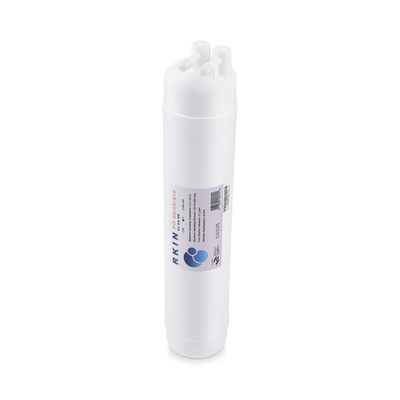
Reverse osmosis pushes water through a semipermeable membrane. That membrane rejects many dissolved substances that pass through ordinary taste-and-odor filters. RO is why homeowners search for drinking-water treatment after seeing terms like PFAS, lead, arsenic, nitrate, fluoride, high TDS, or lithium on a report.
The EPA's home filtration fact sheet explains that home systems should be matched to the contaminant you want to reduce, and that different technologies handle different problems. You can read it here: Home Drinking Water Filtration Fact Sheet.
RO is not a magic answer for every water issue. It is usually a point-of-use drinking-water system, not a whole-house treatment step. It works best when prefilters are maintained, the membrane is replaced on schedule, and the water pressure and source-water quality fit the system. A basic carbon pitcher is not the same thing as RO, and a UV lamp is not the same thing as RO.
The simple version: reverse osmosis is the stronger category when your concern is dissolved contaminants in drinking and cooking water. UV is the targeted category when your concern is microbes and the system is designed, maintained, and fed with clear water.
What Does Not Work as a Shortcut
Do not use taste as the test. Clear water can still carry dissolved contaminants. Bad-tasting water can be caused by chlorine, metals, algae byproducts, plumbing, or harmless seasonal changes. You need data before choosing equipment.
Do not assume boiling replaces either system. Boiling can be part of an official emergency advisory, but it does not remove dissolved metals, PFAS, nitrate, or many other chemical concerns. It also is not a substitute for repairing and testing a private well after flooding.
Do not assume a UV unit makes every water problem disappear. If your report shows arsenic, nitrate, lead, fluoride, or high TDS, a UV lamp is pointed at the wrong problem. If your concern is biological contamination in a well, an RO system alone should not be treated as a full well-disinfection plan.
Do not buy based on a product label alone. Look for the actual technology, the treatment claim, the flow rate, the maintenance schedule, and whether the system is point-of-use or whole-house.
How to Choose Between UV and Reverse Osmosis
Start with one question: are you trying to reduce dissolved contaminants, microorganisms, or both?
If the issue is drinking-water contaminants named on a report, such as PFAS, lead, arsenic, nitrate, fluoride, lithium, or high TDS, compare reverse osmosis systems first. This is especially true when the water looks normal but the report tells a different story.
If the issue is a private well with bacteria concerns, recent flooding, septic risk, or repeated failed bacteria tests, talk with a licensed well contractor or local health department. UV may be part of the treatment plan, but it often needs sediment, iron, or hardness control ahead of it.
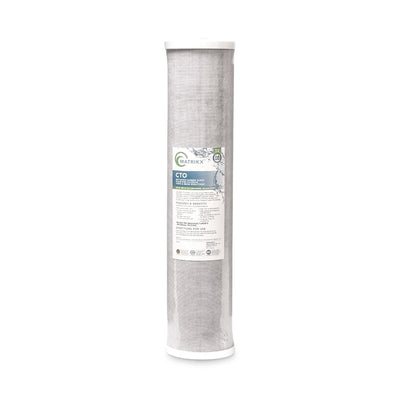
If the issue is city-water taste, chlorine odor, or chloramine, look at carbon plus RO depending on whether you want taste improvement only or broader drinking-water reduction. A whole-house carbon system may be the right fit when the issue shows up at every tap, while RO is often the kitchen drinking-water layer.
If the issue is mixed, use layers. Whole-house treatment can protect plumbing and fixtures. Point-of-use RO can handle drinking water. UV can be added where biological risk is real and properly tested.
Where RKIN Fits
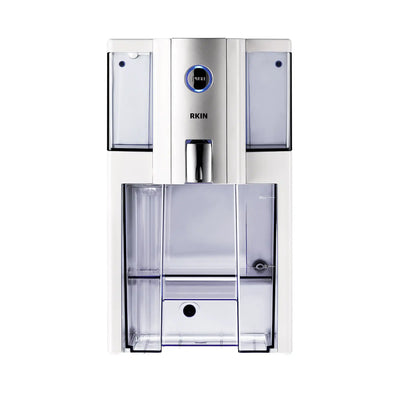
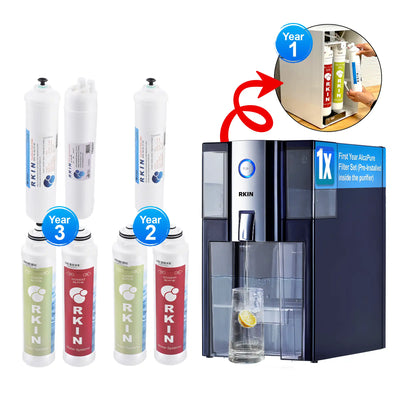
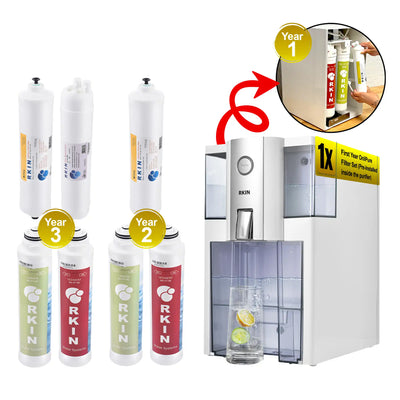
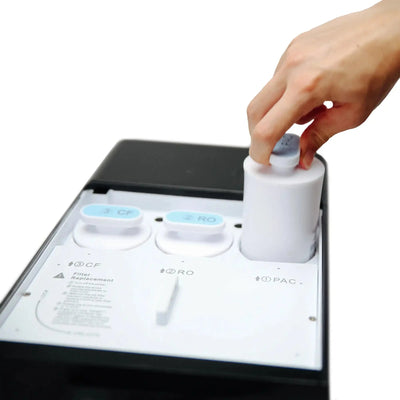
For homeowners focused on drinking and cooking water, the RKIN Zero Installation Purifier is the no-plumbing countertop RO path. It uses a refill tank on the counter, does not connect to the faucet, and fits homes that want reverse osmosis without a permanent install.
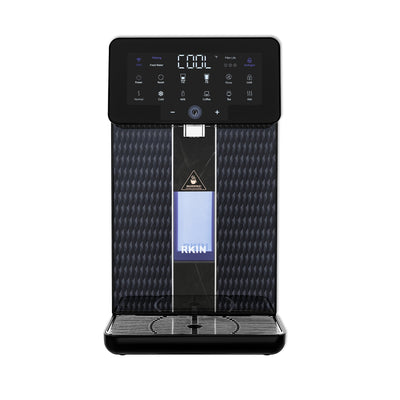
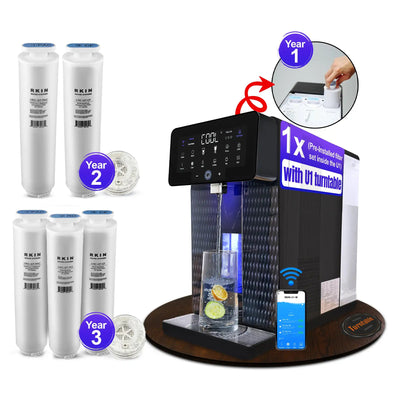
If you prefer a countertop system with a fill tank and extra treatment stages, the RKIN U1 4-in-1 Water Filter System combines sediment filtration, carbon filtration, reverse osmosis, UV, and post-filtration in one countertop unit. It sits on the counter and does not mount under the sink.
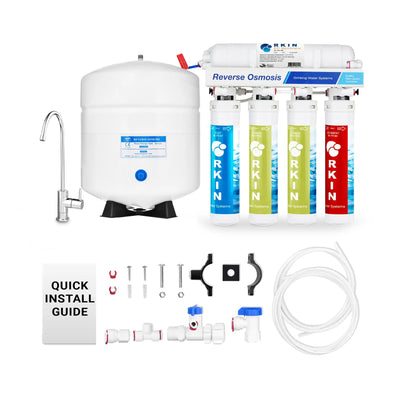
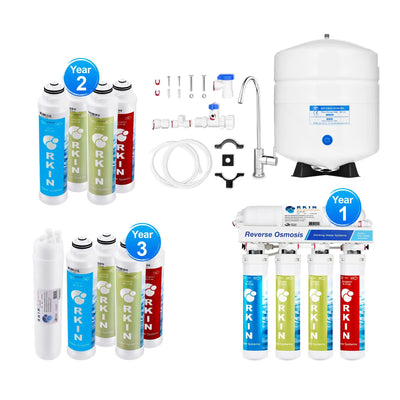
For a built-in kitchen setup, the RKIN Flash Undersink RO System connects to the cold water line and stores filtered water in a compact tank. If testing points to a microbial concern, discuss a properly sized whole-home UV system and any required pretreatment with a qualified water professional.
Your test results may point to one system or a combined setup. The right choice depends on the organism or dissolved substance identified.
Frequently Asked Questions
Is UV better than reverse osmosis?
Not across the board. UV and reverse osmosis treat different problem types. UV targets microorganisms when the system is sized and maintained correctly. Reverse osmosis targets many dissolved contaminants in drinking water. If your concern is PFAS, lead, nitrate, arsenic, fluoride, or high TDS, RO is usually the category to compare first.
Does reverse osmosis remove bacteria?
Reverse osmosis membranes can reduce many particles, but a drinking-water RO system should not be used as the only plan for unsafe well water or an official boil-water advisory. If bacteria is the concern, start with testing, source correction, disinfection guidance, and a treatment plan built for that water source.
Does UV remove PFAS or lead?
No. UV light does not remove PFAS, lead, arsenic, nitrate, fluoride, lithium, or TDS. Those are dissolved-contaminant questions. For drinking water, reverse osmosis is usually the more relevant technology to compare.
Do I need UV if I already have reverse osmosis?
Maybe, but not automatically. City-water homes focused on taste and dissolved contaminants may not need a separate UV step. Private well homes with biological concerns may need UV or another disinfection approach, often alongside pre-treatment and testing.
Can I use UV and reverse osmosis together?
Yes. Many water plans use layers. A well home might use sediment treatment, UV disinfection, and a drinking-water RO system for different jobs. The order and sizing should be based on test results, not guesswork.
Ready to Match the Filter to the Problem?
Start with the water data, then choose the technology. If your concern is drinking-water contaminants, compare the RKIN Zero Installation Purifier, the RKIN U1 4-in-1 Water Filter System, and the RKIN Flash Undersink RO System. If your concern is well disinfection, test first and size the UV system to the actual source water.





0 comments