


do refrigerator water filters remove PFAS
How to Verify a Refrigerator Filter’s PFAS Claim

A refrigerator cartridge can have several certifications and still lack a PFAS reduction claim. The model number, named contaminant, test standard, rated capacity, and certifier listing all need to line up.
This is a verification guide, not a yes-or-no answer for every fridge filter. Use it while viewing the package, the manufacturer's performance data sheet, and the certifier's current public listing.
Why Similar-Looking Filter Labels Can Mean Different Things
Refrigerator water filters often list several NSF/ANSI numbers. Those numbers are useful, but they are not all the same. One standard may address aesthetic effects like chlorine taste and odor. Another may address health-related contaminant reduction. A material-safety standard does not mean the filter removes the contaminant you care about.
EPA guidance says filters certified to NSF/ANSI 53 or NSF/ANSI 58 with a PFAS designation can help filter out PFAS. The key phrase is “with a PFAS designation.” A label that mentions NSF/ANSI 53 without listing PFAS, PFOA, or PFOS should not be read as a blanket PFAS promise.
The same logic applies to NSF/ANSI 42, which is commonly tied to chlorine taste and odor. Better-tasting water is useful, but taste does not tell you whether PFAS were reduced.
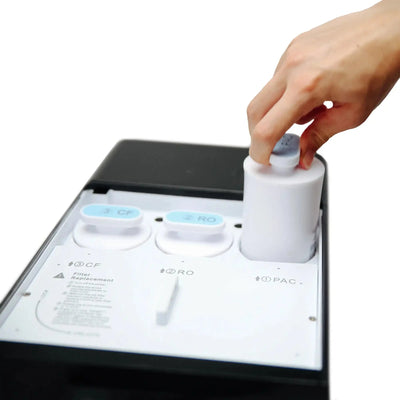
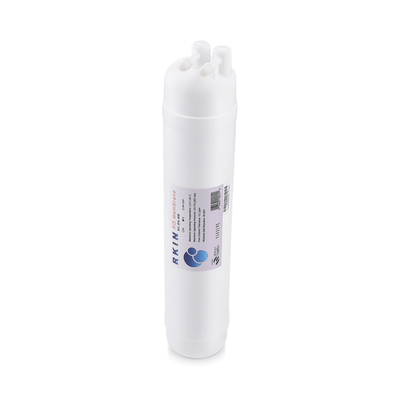
Before you trust the filter, find the model number printed on the cartridge or in the refrigerator manual. Then look up the certified claims from the manufacturer or an accredited certification body. Do not rely only on a marketplace listing.
Name the PFAS Compound in the Claim
PFAS are a group of human-made chemicals used in many industrial and consumer applications. They are often called “forever chemicals” because some break down very slowly in the environment.
In April 2024, EPA finalized the first national drinking-water regulation for certain PFAS in public water systems. EPA also used UCMR 5 to collect national monitoring data for 29 PFAS compounds and lithium from 2023 through 2025, with the final UCMR 5 dataset released in August 2026.
For homeowners, those dates explain the spike in questions. More people are seeing PFAS in water reports, utility notices, local news, or state databases. The practical issue is no longer “has anyone heard of PFAS?” It is “which filter claim should I trust?”
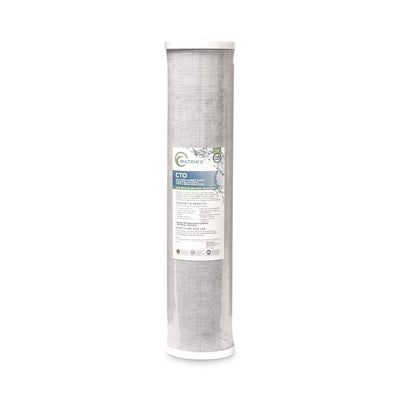
EPA’s own PFAS filter guidance says point-of-use systems using granular activated carbon, ion exchange, and reverse osmosis can greatly reduce PFAS levels when properly selected and maintained. That does not make every refrigerator filter equal. It means the media, certification, flow rate, capacity, and maintenance all matter.
Separate Taste-and-Odor Performance From PFAS Evidence
A refrigerator filter can be a good fit when the goal is better taste, better-smelling ice, and basic reduction of listed contaminants. It is convenient because the dispenser and ice maker already run through it. For many homes, that convenience means the filter actually gets used.
Common fridge-filter strengths include:
- Chlorine taste and odor: Many refrigerator filters are built around carbon filtration.
- Particles: Some filters reduce visible sediment or fine particles, depending on the certified claim.
- Specific health-related contaminants: Some models carry claims for lead, cysts, VOCs, or PFAS, but only when listed for that exact filter.
The weakness is capacity and contact time. Refrigerator cartridges are compact. Water moves through quickly because people expect a dispenser to fill a glass without a long wait. That design can limit what a small cartridge can do compared with a dedicated drinking-water system.
If the cartridge is overdue for replacement, performance may also drop. A certified claim assumes the filter is installed correctly and changed on schedule.
Read the Standard, Capacity, and Operating Conditions
When checking a fridge filter for PFAS, do not stop at the big standard number. Look for the specific contaminant reduction claim.
A stronger label or certification listing will clearly connect the exact model to PFAS, PFOA, PFOS, or a current PFAS claim under an accepted standard. If the listing only says NSF/ANSI 42, it is usually about taste and odor. If it says NSF/ANSI 53, read the individual claims. If it says NSF/ANSI 58, that typically applies to reverse osmosis systems, not a standard fridge cartridge.
The EPA’s PFAS filter guide points consumers toward independently certified filters and explains the main treatment categories: granular activated carbon, ion exchange, and reverse osmosis.
Also check for replacement instructions. A PFAS-certified cartridge that is used past its rated capacity should not be treated as if it is still performing at its original level.
One more detail matters: the certified claim should match the way you use the water. A dispenser-only cartridge does not treat the kitchen faucet unless your refrigerator is the source for every glass, bottle, pot, and coffee maker. That sounds obvious, but it is the gap many families miss when they move from reading a filter label to changing daily habits.
Know When a Different Treatment Layout Is Worth Comparing
A refrigerator filter may not be enough if your water report shows PFAS, lead, arsenic, high TDS, or multiple contaminants that require different treatment methods. It also may not solve a cooking-water gap. If you fill pots, coffee makers, baby bottles, pet bowls, or humidifiers from the kitchen sink instead of the fridge dispenser, then the fridge filter is only covering part of your real water use.
That gap is one reason homeowners look at point-of-use reverse osmosis. RO treats the water at the tap or countertop before it becomes drinking or cooking water. EPA notes that reverse osmosis systems force water through a membrane that separates chemicals from treated water and that studied point-of-use RO systems can greatly reduce PFAS.
A fridge filter can still be useful. It is just not the same as a dedicated PFAS plan unless the exact cartridge is certified for the exact claim and you use that water for the exposure points you care about.
The other issue is maintenance visibility. Refrigerator filters are easy to forget because they sit behind a grille, inside the compartment, or below the door. A warning light helps, but it does not tell you whether unusual sediment, recent plumbing work, or a long vacation changed what the filter had to handle. If you are relying on a health-related claim, replacement discipline is part of the system.
How RKIN Fits a Broader Drinking-Water Plan
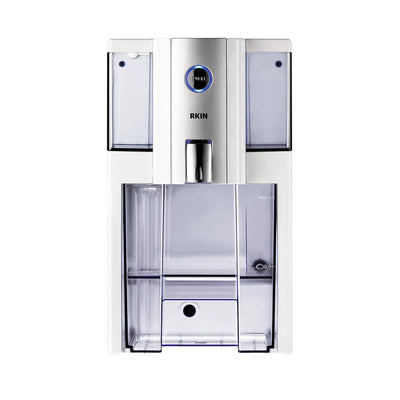
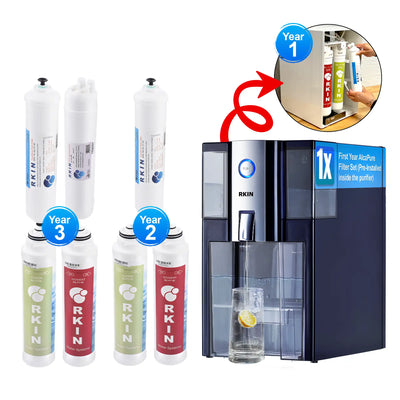
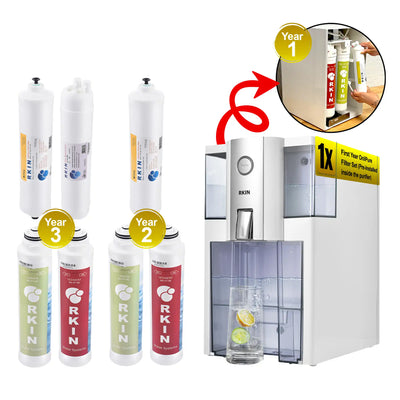
If you want a no-plumbing drinking-water option beyond a refrigerator cartridge, the RKIN Zero Installation Purifier is a countertop reverse osmosis system designed for homes, apartments, offices, and kitchens where you do not want to drill or modify plumbing.
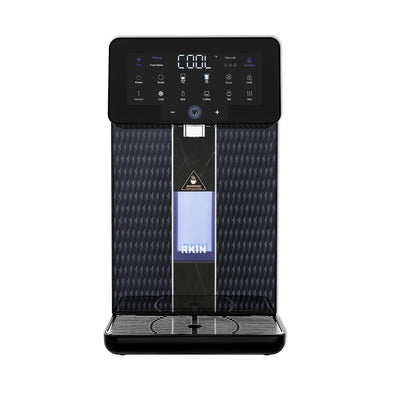
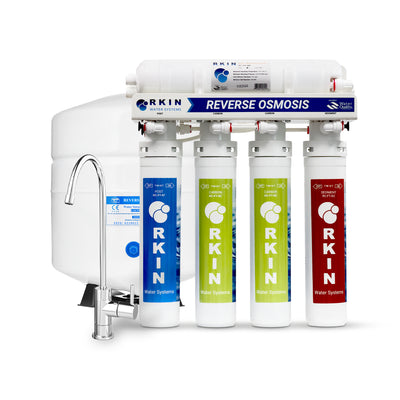
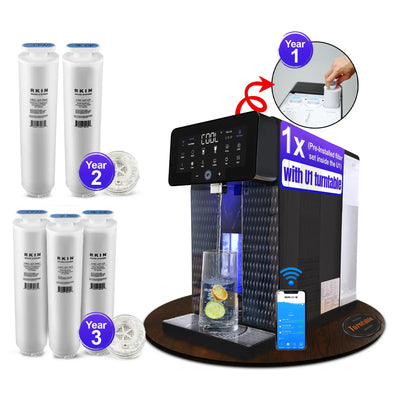
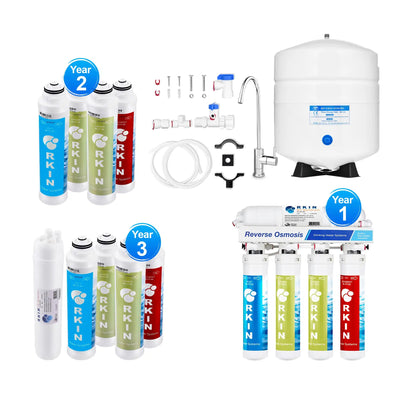
For a compact countertop setup with RO, UV, and post-filtration, the RKIN U1 4-in-1 Water Filter System is another no-plumbing option. If you prefer a plumbed kitchen setup, the RKIN Flash Undersink RO System puts RO filtration under the sink with a 3.2-gallon storage tank.
The best choice depends on your report and how your household actually uses water. If the only water your family drinks comes from the refrigerator dispenser and the cartridge is certified for the claims you need, that may be enough. If you cook, make coffee, fill bottles, or want RO at the sink, a dedicated point-of-use system is often a better fit.
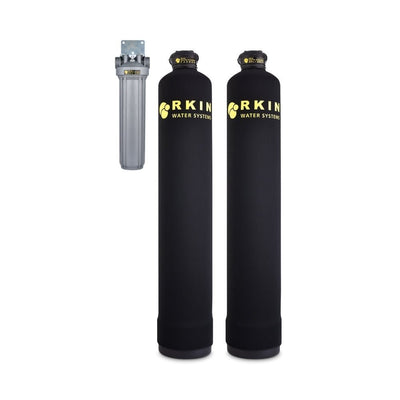
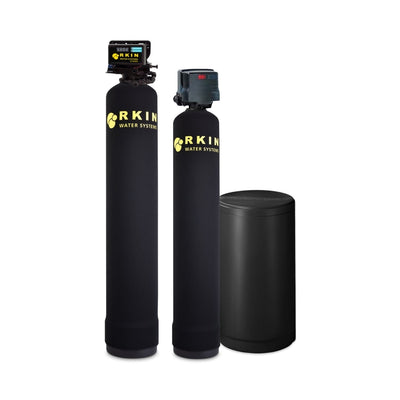
For whole-home concerns such as sediment, well-water staining, or hard-water scale, start with the RKIN whole house water treatment collection and a current water test. PFAS questions usually begin at the drinking-water tap, but real homes often have more than one water problem.
Run a Six-Point Certification Check
Start with the exact replacement cartridge and refrigerator model. A claim for a related cartridge, a component, or a different capacity does not automatically transfer.
PFAS is a chemical class. Older product literature may name only PFOA and PFOS, so read the specific reduction claim rather than treating the class name as interchangeable with every compound.
- Match the cartridge model number character for character.
- Find the named PFAS compound or compounds in the performance sheet.
- Confirm the standard and certifying organization.
- Check rated gallons, flow, pressure, and replacement interval.
- Verify the listing is current and covers the complete cartridge.
- Replace the cartridge under the stated operating conditions.
If one of these details is missing, ask the manufacturer or certifier before relying on the claim. A badge elsewhere on the box may cover a different performance category.
Frequently Asked Questions
Does NSF certification always mean a refrigerator filter reduces PFAS?
No. Certification is tied to particular standards and claims. Read the listing for the exact model and named contaminant.
Are PFOA and PFOS the same as all PFAS?
No. They are two PFAS compounds. A claim naming them should not be expanded to every PFAS compound.
Where can I verify a filter certification?
Use the certifying organization's public product listing and the manufacturer's current performance data sheet.
Does a taste-and-odor claim prove PFAS reduction?
No. Taste-and-odor performance and PFAS reduction are separate claims that require their own evidence.
What if the cartridge is past its rated capacity?
Replace it according to the manufacturer's instructions. A verified claim applies under stated capacity and operating conditions.
Compare the Claim Before You Compare the Format
If a verified refrigerator cartridge does not cover the compounds in your report, compare other point-of-use options by exact model and evidence. RKIN's countertop and under-sink RO systems offer different installation paths, but each claim still needs model-level verification.






0 comments