


reverse osmosis after softener
Water Filter Before or After Softener? Homeowner Guide

A lot of homeowners build water treatment backward: they notice spots on shower glass, dislike the taste at the kitchen sink, then start stacking equipment until the utility room looks like a science project. The better question is simpler: what problem should each stage solve, and where should it sit in the line?
The short answer is that sediment filtration usually comes before a softener, a carbon filter often comes before or near the softener depending on the setup, and reverse osmosis belongs at the drinking-water tap. A softener is for hardness. It is not a catch-all water filter.
Why order matters
Water treatment is not just a list of products. It is a sequence. Put the wrong device first and you can shorten filter life, leave the main problem untouched, or send water through equipment it was never meant to handle.
Think of it like washing a car. You rinse off sand before you scrub the paint. You do not polish first and then blast grit across the surface. Water treatment works the same way. The early stages should handle the rough incoming problems, and the later stages should polish the water for the use case.
EPA's 2026 drinking-water contaminant tables separate enforceable primary standards from secondary guidance for nuisance issues such as taste, odor, color, iron, manganese, chloride, sulfate, and total dissolved solids. You can review EPA's current contaminant list here: EPA Drinking Water Regulations and Contaminants. That matters because hardness, chlorine taste, sediment, PFAS, iron, and sulfur are different problems. One piece of equipment rarely handles all of them well.
If it is okay, start by naming the complaint in plain language: white scale, chlorine smell, rusty staining, sulfur odor, cloudy water, or drinking-water contaminants. The order follows the complaint.
The usual order for a whole-house setup
For many homes, the practical sequence looks like this:
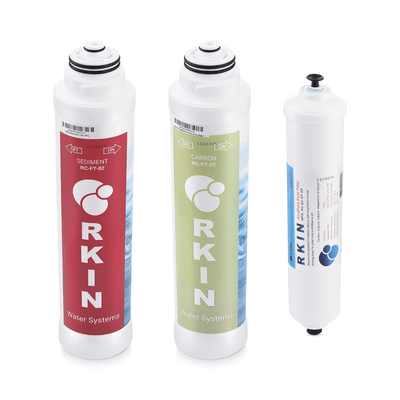
- Sediment first: A prefilter catches sand, grit, rust flakes, or visible particles before they reach valves, media tanks, cartridges, and appliances.
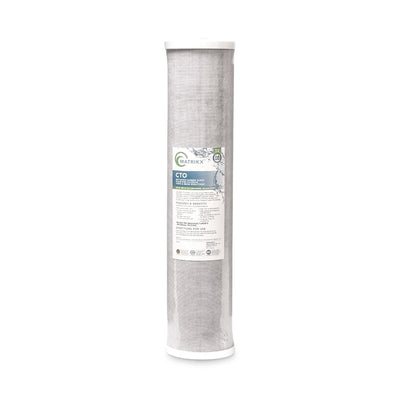
- Carbon or specialty media next: Carbon can reduce chlorine taste and odor on city water, while specialty well media may address iron, sulfur, or manganese when the water test supports it.
- Softener or conditioner after protection stages: A softener removes hardness minerals through ion exchange. A salt-free conditioner changes scale behavior but does not remove hardness minerals.
- Reverse osmosis at the drinking tap: RO is usually point-of-use because it is built for drinking and cooking water, not every gallon used by showers, toilets, and irrigation.
That is the simple map. The exact answer changes with water source and chemistry.
On city water, chlorine or chloramine is often part of the conversation because utilities disinfect the water before it reaches the home. On well water, the early stages may need to address sediment, iron, sulfur, manganese, pH, or bacteria indicators before hardness is even discussed. The reason I am asking about source first is because city water and well water usually need different first moves.
Should a sediment filter go before a softener?
Yes, in most whole-house layouts, sediment filtration goes before a softener. A softener has resin inside the tank. That resin is built to exchange hardness minerals, not to act like a dirt trap. Sending sand, rust, and grit into it can make the system work harder and age faster.
A sediment prefilter is especially useful if you are on a private well, have older pipes, see particles in faucet aerators, or notice dirty water after plumbing work. It is also common before carbon tanks, well filters, and other whole-house systems because those systems are not meant to be the first catch point for loose debris.
There is one honest limit: a basic sediment filter will not remove dissolved hardness, chlorine, PFAS, lead, nitrate, or most dissolved minerals. If the water looks clear but leaves white scale, the issue is probably dissolved calcium and magnesium, not visible sediment. If it smells like a swimming pool, sediment is not the issue. If it stains orange, you need to know whether the iron is dissolved, oxidized, bacteria-related, or mixed with manganese.
In my house, I would rather spend the first few minutes sorting those categories than buy a bigger system than needed. A simple prefilter is helpful when there is grit. It is not a diagnosis.
Should carbon go before or after a softener?
Carbon placement depends on what you are trying to protect and what your water contains. On many city-water systems, carbon is placed before the softener so it can reduce chlorine taste and odor before water reaches the rest of the treatment train. That can also help protect some downstream equipment from disinfectant exposure.
But carbon is not the answer for every city-water complaint. It can improve taste and odor, but it is not the same as reverse osmosis for drinking-water contaminants. It also has capacity limits. A small cartridge at one sink is a different tool than a whole-house carbon system sized for the main water line.
EPA's current Secondary Drinking Water Standards list taste, odor, color, chloride, sulfate, iron, manganese, and total dissolved solids as nuisance items rather than federal health-based limits. See EPA's 2026 secondary guidance here: EPA Secondary Drinking Water Standards. That is why taste and odor complaints deserve their own treatment path instead of being lumped into hardness.
If your home has both hard water and chlorine taste, carbon plus a softener or conditioner can make sense. If you only care about drinking water at the kitchen sink, a whole-house carbon system may be more than you need.
Where reverse osmosis fits
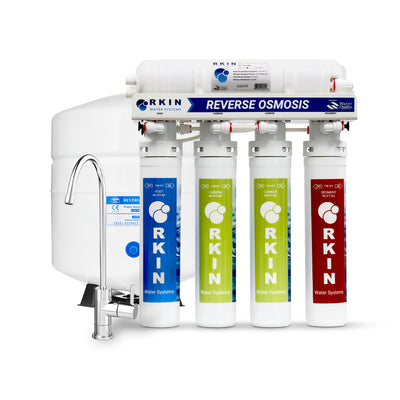
Reverse osmosis usually belongs at the point where you drink and cook: the kitchen sink, a countertop unit, or an undersink system. It is not usually installed before a softener as a whole-house step because RO filters water slowly and produces a smaller stream of purified water for drinking use.
The EPA finalized national drinking-water standards for several PFAS in 2024, including 4 parts per trillion maximum contaminant levels for PFOA and PFOS. EPA's PFAS page is here: EPA PFAS Drinking Water Information. That does not mean every home needs the largest possible system. It means drinking-water concerns should be matched to equipment that is tested or certified for that kind of reduction.
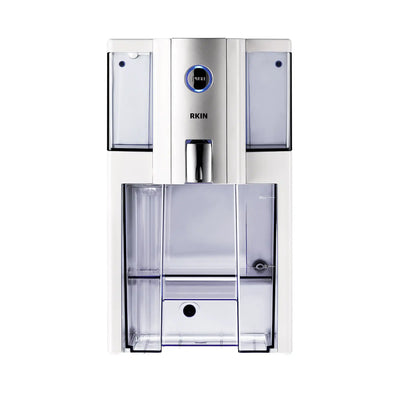
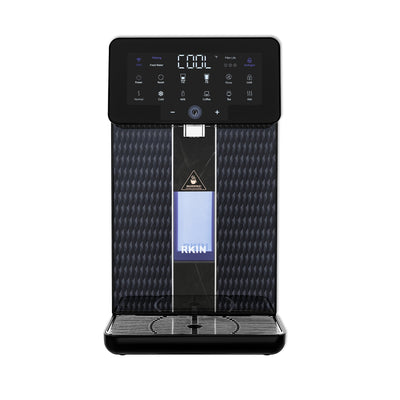
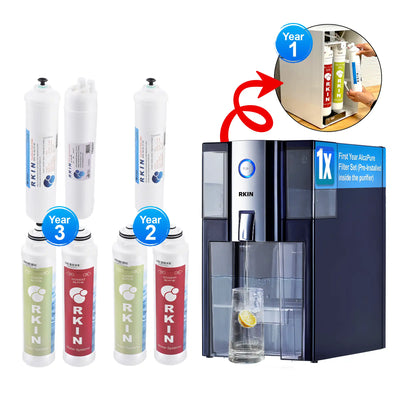
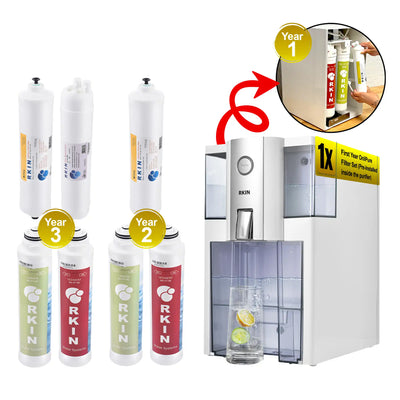
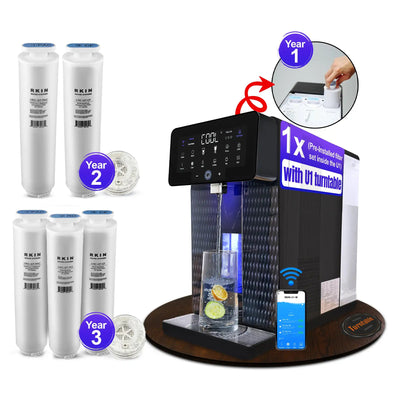
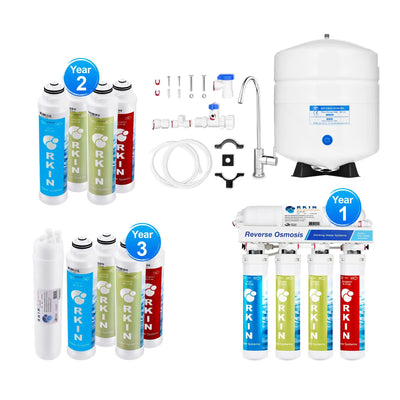
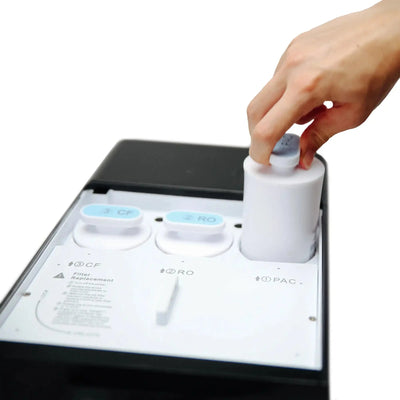
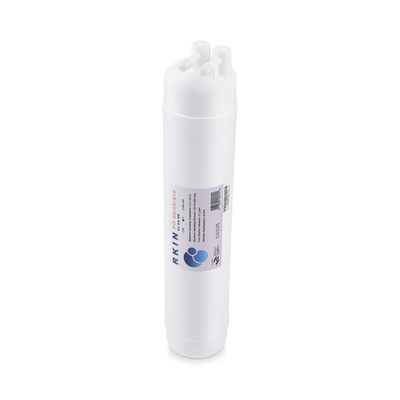
For renters or homeowners who do not want plumbing changes, the RKIN Zero Installation Purifier is a countertop reverse osmosis option for drinking water. For homeowners who prefer an undersink path, the RKIN Flash Undersink RO System is the more permanent kitchen setup.
Those are drinking-water tools. They do not stop scale on shower glass, and they do not treat every fixture in the home. That is where whole-house treatment comes in.
City water: a practical starting order
If you are on city water and your main complaints are chlorine taste plus hard-water scale, the usual decision tree is straightforward.
Start by checking your water quality report. Look for disinfectant type, hardness if reported, total dissolved solids, and any local notices. Then decide whether the pain is whole-house or kitchen-only.
- Kitchen taste only: Start with drinking-water RO at the kitchen tap. No need to turn the whole house into a project if the problem is one faucet.
- Scale around the house: Compare a water softener with a salt-free conditioner based on hardness level and whether you want mineral removal or scale control.
- Chlorine taste and odor throughout the home: Consider whole-house carbon as part of the system plan.
- PFAS, lead, or drinking-water contaminants: Use a drinking-water system rated for those contaminants instead of assuming a softener will handle them.
Well water: test before choosing the order
Well water needs more caution because you are not just dealing with utility disinfectant and hardness. Private wells can have sediment, iron, sulfur odor, manganese, tannins, low pH, bacteria indicators, nitrate, or local contaminants depending on the property.
EPA's private well guidance says owners are responsible for testing and maintaining their own water, especially after changes in taste, odor, color, flooding, repairs, or nearby land disturbance. See EPA's private well page here: EPA Private Wells: Protect Your Home's Water.
For wells, do not assume the softener is the first major system. Iron, manganese, sulfur, or sediment may need treatment before or alongside hardness control. A softener can be fouled by certain iron conditions, and drinking-water RO should not be asked to solve whole-house staining.
The safe sequence is test, diagnose, then design the order. If the report shows multiple issues, the order should be built around the problem that would damage or foul the next stage.
Where RKIN fits
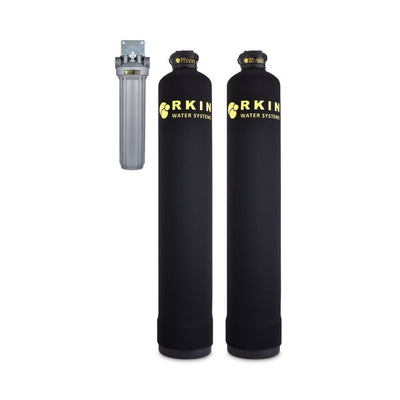
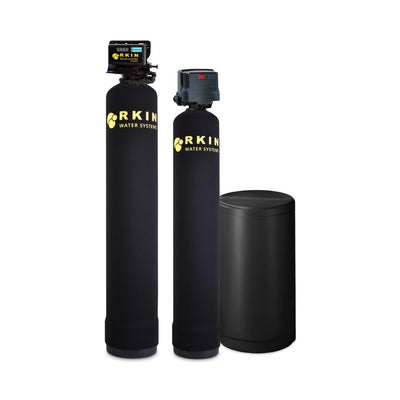
The RKIN whole-house water treatment collection is built around matching the system to the problem: scale control, softening, carbon filtration, well water treatment, and other main-line needs. The right fit depends on water source, hardness, flow rate, home size, and whether the complaint is taste, scale, stains, odor, or drinking-water contaminants.
If the whole house has scale, spots, or city-water taste issues, start with whole-house options. If the main concern is what you drink and cook with, start with a drinking-water RO path such as the RKIN Zero Installation Purifier or RKIN Flash Undersink RO System.
Me personally, I would not buy the biggest stack first. I would test the water, name the top complaint, then choose the smallest setup that handles that complaint cleanly.
Frequently Asked Questions
Does a water filter go before or after a softener?
A sediment filter usually goes before a softener so grit and particles do not enter the softener resin. Carbon placement depends on the goal, but many city-water systems place carbon before or near the softener. Reverse osmosis usually belongs at the drinking-water tap.
Can a water softener replace a water filter?
No. A softener is mainly for hardness minerals such as calcium and magnesium. It is not a drinking-water filter for PFAS, lead, chlorine taste, nitrate, VOCs, sediment, iron bacteria, or every well-water issue.
Should I filter all water before it reaches the softener?
Filter visible sediment before the softener when particles are present. Do not assume every contaminant needs to be removed before the softener. The order should be based on a water test and the equipment manufacturer's requirements.
Do I need reverse osmosis if I already have a whole-house filter?
Maybe. A whole-house filter and a drinking-water RO system solve different problems. Whole-house treatment handles water before it reaches fixtures. RO is usually for drinking and cooking water at one tap.
What should I test before buying a softener and filter?
For city water, start with your water quality report and hardness data. For well water, test for hardness, iron, manganese, pH, total dissolved solids, turbidity, sulfur-related indicators, bacteria indicators, nitrate, and local concerns recommended by your county or state.
Ready to build the right order?
Start with the problem, not the equipment list. If your whole home has scale, taste, odor, or staining issues, review RKIN whole-house water treatment systems. If the issue is drinking water at the kitchen tap, compare the RKIN Zero Installation Purifier and the RKIN Flash Undersink RO System.






0 comments