


whole home reverse osmosis
Whole House Reverse Osmosis System: Tanks and Pumps Explained

A whole house reverse osmosis system uses a holding tank to store purified water and a delivery pump and pressure tank to supply the home. RKIN includes a 300- or 500-gallon holding tank, a 20 GPM delivery pump and a separate 20-gallon pressure tank. Understanding their different jobs helps you plan the space and questions to discuss before installation.
The large holding tank and the smaller pressure tank do different jobs. This guide explains how RKIN's membrane, tanks, pumps and controls work together, and why the carbon filter changes position between municipal and well-water setups. Bring your water report and available-space measurements to RKIN so we can help plan the equipment around your home.
What a Whole House Reverse Osmosis System Actually Does
Reverse osmosis is a membrane process. The EPA describes RO as a separation process that forces water at high pressure through a semi-permeable membrane, which blocks many dissolved substances (EPA overview of drinking water treatment technologies). An under-sink unit does this for one faucet. A whole-home system does it for every gallon that enters the house.
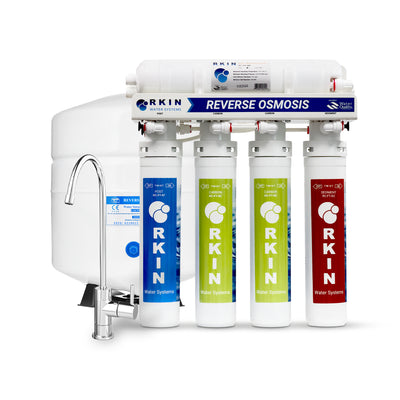
That difference changes the design. RKIN's Flash Undersink RO System stores purified water in a 3.2-gallon tank. A house needs water fast, for showers, laundry and several taps at once. So a whole house RO system makes purified water ahead of time, stores it in a large tank, and then repressurizes it for the home.
Here is what the RKIN Whole Home Reverse Osmosis System includes, as listed on its product page:
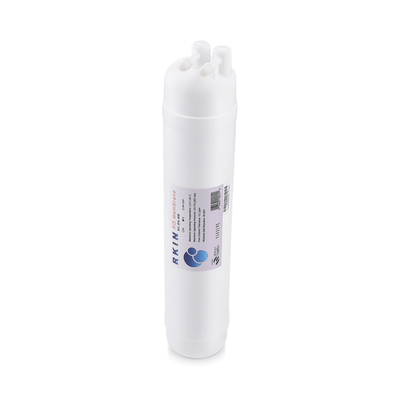
- A reverse osmosis module with the RO membrane
- An electronic controller and a booster pump
- A 5 micron sediment filter
- A powder-coated frame
- A pure water holding tank: 300 gallon capacity for 1-3 bathroom homes, 500 gallon capacity for 4+ bathroom homes
- A 20 GPM delivery pump with inline pump control
- A 20 gallon pressure tank and a float switch control
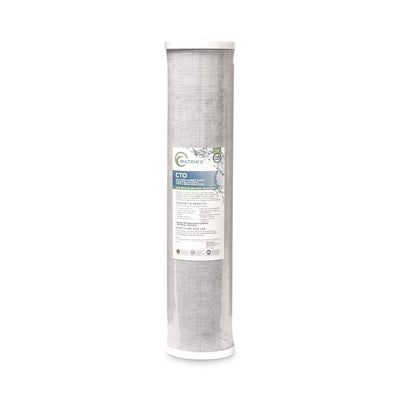
- A carbon filter, used as a pre-filter on municipal water and as a post-filter on well water
- An AlcaPure post-filter, used to return pH to an alkaline level
Each part has a job. The sediment filter provides pretreatment. On municipal water, the carbon filter also sits before the RO membrane; on well water, it sits after RO, and additional pretreatment may be required. The holding tank lets the membrane work steadily instead of trying to keep up with a running shower. The delivery pump and pressure tank give the home normal water pressure from stored water.
Who Needs Whole-Home RO, and Who Doesn't
Start with the reason you want RO water. If your concern is what you drink and cook with, point-of-use RO is the simpler answer. You get RO water at the sink, with far less equipment.
Whole-home RO is worth a look when:
- A lab test shows a dissolved problem you want treated at every tap, not just at the kitchen sink. Ask a water treatment specialist whether RO is the right treatment for that result before you buy.
- You want RO-quality water for bathing, laundry and every faucet, and you accept the equipment and space that come with it.
- You have room for the system. The holding tank alone is sized in hundreds of gallons, so plan for floor space in a garage, basement or utility room.
- You have a drain nearby. Every RO membrane sends part of the incoming water to drain. Plan where that drain water will go before you size the system.
A drinking-water RO system is usually enough when:
- Your main concern is drinking and cooking water.
- Your city water report and test results don't point to a problem you need treated at every outlet.
- You rent, or you don't have room for large tanks and pumps.
If hardness or scale is the real complaint, compare softening and RO before choosing.
Holding Tank, Delivery Pump and Pressure Tank: Different Jobs
| RKIN component | What it does | What to confirm before installation |
|---|---|---|
| 300- or 500-gallon holding tank | Stores purified water produced by the RO module | The selected tank's dimensions, access and installation space |
| 20 GPM delivery pump with inline pump control | Sends stored purified water to the home | The delivery arrangement for your home's demand and plumbing |
| 20-gallon pressure tank | Works with the delivery pump to supply pressurized water | The installation location and pressure settings specified for your setup |
| Booster pump and electronic controller | Support operation of the RO module | Electrical and installation requirements for the selected system |
The holding-tank capacity, delivery-pump rating and RO production rate describe different parts of the system. The product page lists a 20 GPM delivery pump; that is not a claim that the membrane produces 20 gallons of purified water per minute. Ask RKIN to confirm production and delivery requirements separately for your home.
City Water vs Well Water: Pretreatment Comes First
The same system is set up differently depending on your source.
On municipal water, the RKIN system uses its carbon filter as a pre-filter. City water is disinfected, and the carbon stage treats that water before it reaches the membrane.
On well water, the carbon filter is used as a post-filter instead. Well water brings its own issues. RKIN's product page states that additional pretreatment on well water may be required to address contaminants that could damage the reverse osmosis membrane early, and asks buyers to contact an RKIN representative before purchasing. In practice that means a lab test first. Iron, manganese, sulfur, sediment and hardness each change what has to sit in front of the membrane.
On a private well, the EPA recommends testing private wells every year for total coliform bacteria, nitrates, total dissolved solids and pH, plus anything else you suspect (EPA private well guidance).
What to Ask Before You Buy
A whole house RO system is a bigger decision than a faucet filter. Bring these questions to any seller, including us:
- What does my water test show? Base the decision on a certified lab report, not a guess or a TDS reading alone.
- Which tank size fits my home? RKIN sizes the holding tank by bathroom count: 300 gallons for 1-3 bathrooms, 500 gallons for 4 or more.
- What pretreatment does my water need? Especially on a well, ask what protects the membrane.
- Where will the drain water go? Plan the drain connection before installation day.
- Where will the equipment sit? Measure the space for the tank, frame and pumps, and plan for power.
- How will the treated water's pH be checked? RKIN includes an AlcaPure post-filter to return pH to an alkaline level. Ask RKIN how the finished water will be checked for compatibility with your plumbing.
Frequently Asked Questions
What is a whole house reverse osmosis system?
A whole house reverse osmosis system treats all the water entering a home with an RO membrane. Because RO makes water slowly, the system stores purified water in a large holding tank and uses a delivery pump and pressure tank to send it to every faucet, shower and appliance. The RKIN Whole Home Reverse Osmosis System also includes sediment, carbon and AlcaPure stages.
Do I need whole-home RO or just drinking water RO?
If you only want RO water for drinking and cooking, an undersink or countertop system may cover that goal. Whole-home RO fits when a lab test shows a dissolved problem you want treated at every tap, or when you want RO water throughout the house and have room for a large holding tank, pumps and a drain.
How big is the storage tank on a whole house RO system?
RKIN offers the holding tank in two sizes: 300 gallon capacity for homes with 1-3 bathrooms and 500 gallon capacity for homes with 4 or more bathrooms. The system also includes a 20 gallon pressure tank. Plan floor space for both, plus the frame, pumps and filters.
Can a whole house reverse osmosis system be used on well water?
Yes, with the right setup. On well water, RKIN uses the carbon filter as a post-filter, and the product page notes that additional pretreatment may be required to address contaminants that could damage the membrane early. Test your well water at a certified lab and contact RKIN before purchasing.
Does a whole house RO system waste water?
Every reverse osmosis membrane sends part of the incoming water to drain while it makes purified water, so a whole-home system needs a drain connection. Ask for the expected drain water for your home and water conditions before you buy.
Talk to RKIN Before You Choose
A whole house reverse osmosis system can put RO water at every tap, but only the right setup for your water and your space will work the way you expect. Start with a water test, then let our team match the tank size and pretreatment to your home.
Contact RKIN with your water report and bathroom count. We'll help you decide whether whole-home RO fits and match the tank size and pretreatment to your home.






0 comments