


water softener drain line
Water Softener Drain Line: Where It Goes and How to Set It Up

A water softener drain line carries salty regeneration water to a drain approved for that discharge. Set the hose outlet above the approved drain's flood-level rim with an air gap that meets both the manufacturer's instructions and local plumbing code. A properly installed air gap helps prevent drain water from flowing back into your softener. Before installation day, confirm the drain location, hose route and air gap with your installer.
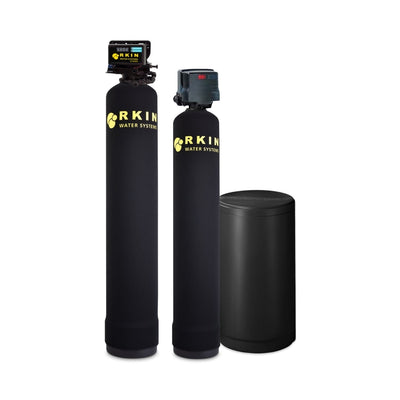
The good news: RKIN's salt-based Water Softener System ships with a 15 ft drain line hose in the box. Here's what the drain line does, where it can go, and what to confirm before you install.
What the Drain Line Actually Does
A salt-based softener removes calcium and magnesium by ion exchange. The resin bed holds on to those hardness minerals while softened water flows to your taps. As the resin takes up hardness minerals, its capacity to soften more water drops. During regeneration, brine from the salt tank restores that capacity. The spent brine and rinse water leave through the drain line.
The EPA's overview of cation exchange explains that spent brine carries the substances removed from the water and leftover salts such as sodium and chloride. The regeneration discharge needs an approved place to go.
A drain can be close to the softener and still be a poor fit. It needs enough capacity for the regeneration flow, and the hose needs a route where it can stay secure and protected from freezing.
Where a Water Softener Drain Line Can Go
Ask your installer which of these receiving points local plumbing code allows and which can handle the regeneration flow.
- Laundry standpipe: common when the softener is in a garage or utility room next to the washer. Your installer should check whether local code allows a shared standpipe and whether it can handle both flows at once.
- Floor drain: common in basements. The line should be secured so it can't whip around or slip away during a cycle.
- Utility or laundry sink: ask your installer whether it can accept the regeneration flow and how to secure the hose above the flood-level rim with the air gap required by local code.
What about running the line outside? Some homeowners ask about sending the discharge to the yard. Rules on where softener discharge may go vary by location, and cold weather can freeze an exposed line. Check with your local plumbing authority before choosing an outdoor route.
On a septic system? Talk with your septic professional before you choose a route. We cover that question in our guide to using a water softener with a septic system.
The Air Gap: The One Detail You Can't Skip
An air gap is the open vertical space between the hose outlet and the flood level of the approved receiving drain. The hose discharges into the drain without touching the water in it and without being sealed into the pipe.
Here's why it matters. If the drain ever backs up, a hose that's pushed deep into the pipe or sealed into a fitting can end up sitting in dirty drain water. An open gap means the hose outlet stays above the water, so drain water has no direct way back toward your softener and your home's water.
Three habits keep the gap working:
- Secure the hose outlet. Follow the manual and local code for the mounting method, fitting and required vertical clearance.
- Don't tape or seal the hose into the standpipe. It may look tidier, but it removes the gap.
- Don't push the hose deeper to stop splashing. Use a proper air gap fitting instead.
For the RKIN Water Softener System, the Connected Series guide specifies a 4-inch gap between the drain-line outlet and the open drain. Have your installer confirm the setup meets the guide and local plumbing code.
Plan the Route Before You Install
Before you pick a spot for the softener, find the approved drain and measure the route. The RKIN Water Softener System includes a 15 ft hose, so you and your installer can check whether the included hose reaches and the valve supports the run.
- Distance and height: measure from where the softener will sit to the drain. RKIN includes a 15 ft drain line hose; ask your installer to confirm the allowable run, rise and tubing diameter for your setup, and whether local code allows the included flexible hose.
- Kinks and freezing: support the hose in smooth bends, keep it clear of anything that could pinch it, and route it through a space protected from freezing.
- Power: the RKIN control valve runs on 12V DC through its AC adapter. The Connected Series guide calls for a nearby grounded, unswitched 120V outlet.
- Brine tank overflow: RKIN's brine tank uses a safety float system that helps prevent overflow. The RKIN Connected Series guide calls for a separate gravity line from the brine tank overflow. Have your installer run the overflow line downhill to an approved drain below the overflow fitting. Keep it separate from the control-valve drain line and follow the guide and local code.
After installation, watch one full regeneration cycle. Check that water flows freely into the drain, the hose stays in place, nothing backs up and every connection stays dry.
Signs Your Drain Line Needs Attention
Already have a softener? These signs point to the drain side:
- Water on the floor during regeneration: the hose may have slipped, or the drain may not be keeping up with the flow.
- A gurgling or backed-up standpipe: the receiving drain may be partly blocked or shared with the washer at the same time.
- A hose pushed deep into the pipe or taped in place: the air gap is gone. Have the outlet secured with the air gap required by local code.
- A kinked, pinched or frozen section: regeneration water can't leave the tank properly, so reroute or protect that stretch.
Fixing these early protects your floors and keeps regeneration working the way it should.
Why RKIN Softeners Make the Drain Side Easier
The RKIN Water Softener System comes with a 15 ft drain hose, so you can measure the run before installation day. Show your plumber where the softener will sit and where you want the hose to end. They can confirm whether the included hose fits the job and where to place the air gap.
The RKIN Water Softener System also helps on the drain side every day:
- Metered regeneration: The valve tracks household water use. RKIN says the softener regenerates at least once every seven days during normal operation.
- Settings backup: the valve keeps its settings during a power outage.
- Included parts: the softener and salt basket, bypass valve, AC adapter, two 1" MNPT elbow fittings, the 15 ft drain line hose and the installation manual.
No Good Spot for a Drain? Consider a Salt-Free Conditioner
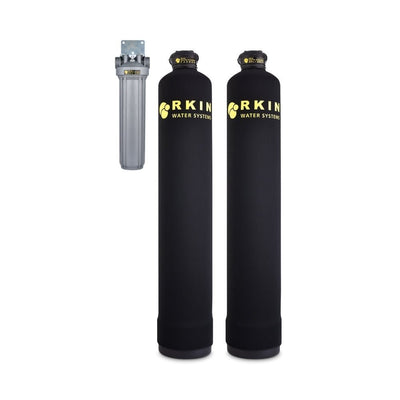
If your home has no practical drain near the main water line, a salt-free conditioner may be the simpler fit. The OnliSoft Pro Salt-Free Water Conditioner and Whole House Carbon Filter System pairs carbon filtration with a Template Assisted Crystallization (TAC) conditioner that needs no salt or regeneration drain.
The trade-off is what it does. A salt-free conditioner doesn't remove hardness minerals the way a softener does. The OnliSoft Pro's TAC media converts hardness minerals into microscopic crystals that stay suspended and pass through the plumbing, helping limit scale buildup. If you want fully softened water, a salt-based softener with a well-planned drain line is still the answer.
The Bottom Line
Before installation day, show your plumber where the softener will sit and where you want the hose to end. Ask them to confirm the discharge location, air gap and allowable rise. The RKIN Water Softener System includes a 15 ft hose.
Measure from the softener to the approved drain, then see what comes with the RKIN Water Softener System. It includes a 15 ft drain hose. Your installer can confirm whether that hose suits the run and rise.
Frequently Asked Questions
Where should a water softener drain line go?
A laundry standpipe, floor drain or utility sink may work if local code allows it and the drain can handle the regeneration flow. Follow the manufacturer's instructions and local code for the air gap and discharge location.
Does a water softener drain line need an air gap?
Yes. The hose should discharge into the drain through an open air gap, not be sealed or pushed into the pipe. The gap keeps backed-up drain water from reaching the hose outlet. Follow the softener manufacturer's air-gap instructions and local plumbing code.
Can a water softener drain line run outside?
Rules on where softener discharge may go vary by location, and an outdoor line can freeze. Check with your local plumbing authority before running the line outside.
How long is the drain line on an RKIN water softener?
The RKIN Water Softener System comes with a 15 ft drain line hose. Check the model's installation instructions or ask RKIN to confirm allowable distance and rise.
Does a salt-free water softener need a drain line?
The OnliSoft Pro Salt-Free Water Conditioner and Whole House Carbon Filter System uses TAC to help control scale. Its conditioner uses no salt and needs no regeneration drain. Hardness minerals remain in the water.






0 comments