


irrigation rust stains
Sprinkler Rust Stains From Well Water: Filter Guide

Those orange sprinkler stains on concrete, siding, fences, and garage doors usually start in the water, not on the surface. If your irrigation system pulls from a private well, iron and manganese can leave marks every time the sprinkler runs and the water dries in the sun.
The stain is annoying, but it is also a clue. Your well water may be carrying minerals that affect more than the driveway. The same source water can show up as reddish toilet rings, metallic taste, clogged fixtures, or rusty-looking sediment. Before you buy a cleaner or a filter, test the water and separate three problems: the well, the irrigation line, and the water used inside the home.
Why Sprinklers Leave Orange Stains
Sprinkler rust stains often come from dissolved iron in well water. The water can look clear when it leaves the sprinkler head, then turn orange-brown as iron reacts with oxygen and dries on concrete or painted surfaces.
Manganese can create darker brown or black staining. Sulfur can add a rotten-egg odor. Sediment can leave grit in sprinkler heads and fixtures. These issues are common enough that EPA secondary drinking water standards list iron, manganese, and odor-related items as nuisance concerns because they can affect taste, color, staining, and household use.
The important point: the stain does not prove the water is unsafe to drink. It proves you need better facts. EPA private well guidance puts testing and maintenance on the well owner, especially after flooding, repairs, or other events that may affect the well.
For sprinkler stains, start by asking:
- Does the irrigation system use the same well water as the house?
- Do stains appear only where sprinklers hit concrete or siding?
- Do indoor fixtures show orange, brown, or black residue too?
- Does the water smell like rotten eggs at any tap?
- Has the well, pump, pressure tank, or irrigation system changed recently?
Those answers tell you whether the issue is only outdoor staining or part of a broader well water problem.
Test Before You Treat
Do not guess at iron levels by looking at the stain. A water test helps you choose the right fix and avoid treating the wrong line. If the irrigation system branches off before the home treatment equipment, a whole-house filter installed after that branch will not change sprinkler water. If the branch is after treatment, then the filter may affect both indoor and outdoor water.
A basic well water workup for this situation should include:
- Iron
- Manganese
- pH
- Hardness
- TDS
- Sulfur or hydrogen sulfide indicators
- Turbidity or sediment
- Bacteria when the well has been disturbed or flooded
Use a certified lab when the result matters for drinking water decisions. Store-bought strips can be useful for a quick clue, but they are not a substitute for a lab result when you are sizing treatment equipment.
Sampling location matters. If you test only the kitchen sink, you may miss what is happening at the irrigation line. If you test only a hose bib, you may miss what the family drinks. Label each sample location and keep the results with your well records.
Why Cleaning Alone Does Not Fix It
Rust removers can take stains off concrete or siding, but they do not change the water that caused the stain. If sprinklers keep spraying iron-rich water, the marks will return.
That does not mean cleaning is useless. It can reset the surface after the water problem is handled. But if you clean first and never test the well, you may end up in the same cycle every few weeks: spray, stain, scrub, repeat.
Also be careful with harsh cleaners around plants, pets, painted surfaces, and metal fixtures. Follow the cleaner label and test a small area first. Some surfaces hold mineral stains more deeply than others, especially porous concrete and older stucco.
The better path is simple:
- Test the water.
- Confirm where the irrigation line branches.
- Treat the source or the correct branch.
- Then clean the surfaces.
That order saves work and prevents you from blaming the wrong surface.
When a Whole-House Well Filter Helps
A whole-house well water system can help when the same well water feeds the home and the problems are tied to iron, sulfur, manganese, or sediment. It is installed on the main line, usually after the pressure tank and before the water reaches indoor fixtures.
The exact setup depends on the water chemistry. Iron that is dissolved behaves differently than iron particles. Sulfur odor may need oxidation and filtration. Manganese can be harder to treat when pH is low. Sediment may need a prefilter. This is why a test matters before the equipment decision.
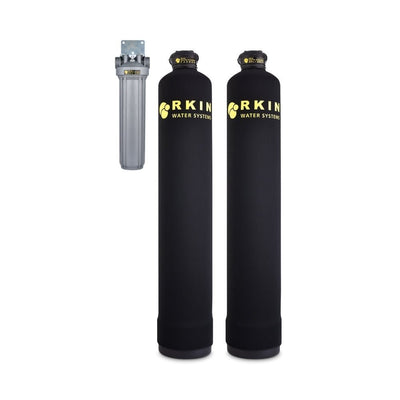
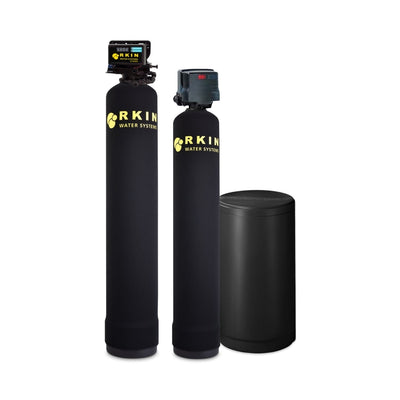
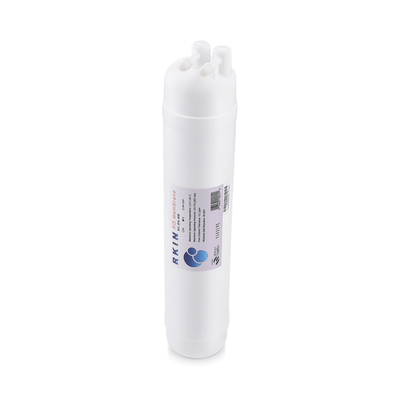
The RKIN Sulfur, Iron, Manganese Well Water Filter System is built for well water treatment where iron, sulfur, and manganese are the core concerns. It is meant for the water entering the home, not as a cosmetic surface cleaner. If your indoor water and outdoor water share the same treated line, it can be part of the fix for both household water quality and staining issues.
If your irrigation branches off before the treated home line, ask a water professional how to handle that branch. You may need a separate irrigation solution, a plumbing change, or a decision to treat only the water used inside the home.
Do Not Confuse Rust Stains With Hard Water Spots
Hard water spots and iron stains can look similar at a glance, especially on glass, tile, and light concrete. They are not the same problem.
Hardness is mainly calcium and magnesium. It often leaves white scale, cloudy spots, crust around fixtures, and buildup in appliances. Iron tends to leave orange, red, or brown marks. Manganese can leave darker stains.
Some homes have more than one issue. A well can have hardness and iron. A home can need conditioning for scale and filtration for iron, sulfur, or sediment. Treating only one issue may leave the other visible.
Use the test result to separate them:
- Iron points toward oxidation and filtration.
- Manganese needs treatment matched to pH and concentration.
- Hardness points toward softening or conditioning.
- Sediment points toward prefiltration and well inspection.
- Sulfur odor points toward well-water treatment designed for odor-causing compounds.
A stain pattern also helps. White crust around faucets points toward hardness. Orange arcs on the driveway where sprinklers hit point toward iron in irrigation water. Black deposits can point toward manganese or other conditions worth testing.
Where to Install Treatment
Well water treatment depends on plumbing order. A typical home may have a well, pump, pressure tank, main shutoff, treatment equipment, and then branches to the house. Irrigation can branch at different points.
If sprinklers branch before treatment, the lawn water bypasses the filter. If they branch after treatment, the sprinkler water may use treated water. That can reduce staining, but it also means your irrigation is using filtered water, which may not be the most efficient setup for every home.
Before buying equipment, trace the line or ask a plumber to confirm it. Take photos of the pressure tank, valves, filter housings, and irrigation branch. Those photos help a water specialist understand what is possible.
If your goal is only to stop driveway stains, say that clearly. If your goal is better water for the whole home, say that too. The right design changes when the goal changes.
Seasonal Timing Matters
Fall is a good time to look at sprinkler staining because the pattern is visible after months of watering. It is also a smart time to test before holiday guests, seasonal home use, or a winter maintenance window.
For Florida and other warm-weather areas, irrigation may run through much of the year. That means the staining cycle does not always stop on its own. Waiting can make stains harder to remove and can leave sprinkler heads dealing with the same mineral load.
For northern homes, fall shutdown is a useful inspection point. Before the system is winterized, note where stains are appearing, whether any sprinkler heads are clogged, and whether indoor fixtures show the same orange or brown residue.
A short checklist helps:
- Photograph the stains before cleaning.
- Test the well water at the house and, if needed, near irrigation.
- Confirm where irrigation branches from the main line.
- Check sprinkler heads for grit or reduced flow.
- Review your treatment system service schedule if one is already installed.
Frequently Asked Questions
What causes sprinkler rust stains from well water?
Sprinkler rust stains are often caused by iron in well water. The water may spray clear, then turn orange-brown as iron reacts with oxygen and dries on concrete, siding, or fences. Manganese can create darker staining, so testing is the right first step.
Will a water softener remove sprinkler rust stains?
A water softener is designed for hardness minerals, not as a universal iron filter. Some systems can handle limited iron under specific conditions, but heavy iron, sulfur, or manganese usually needs well-water treatment selected from a water test. Do not size treatment by the stain color alone.
Should I test indoor water or irrigation water?
Test both if the lines may be different. Indoor water tells you what the home is using. Irrigation water tells you what is hitting concrete, siding, and lawn areas. Label each sample location so the results make sense later.
Can I clean the stains without filtering the water?
You can clean the surface, but the stains may return if the sprinkler keeps using iron-rich water. Treating the source or the correct water branch usually matters more than repeated cleaning. Clean after you understand the water and plumbing layout.
Does a whole-house filter help irrigation stains?
It can help if the irrigation water passes through the treated line and the filter is matched to the tested water chemistry. If irrigation branches before the treatment system, the sprinklers may bypass the filter. Confirm the plumbing order before you buy.
Ready to Stop Guessing About Well Water Stains?
Orange sprinkler stains are a sign to test, trace the plumbing, and treat the right water line. Start with the facts, then choose equipment that matches the well and the way your home is plumbed.
Explore the RKIN Sulfur, Iron, Manganese Well Water Filter System if iron, sulfur, or manganese show up in your well water test.






0 comments